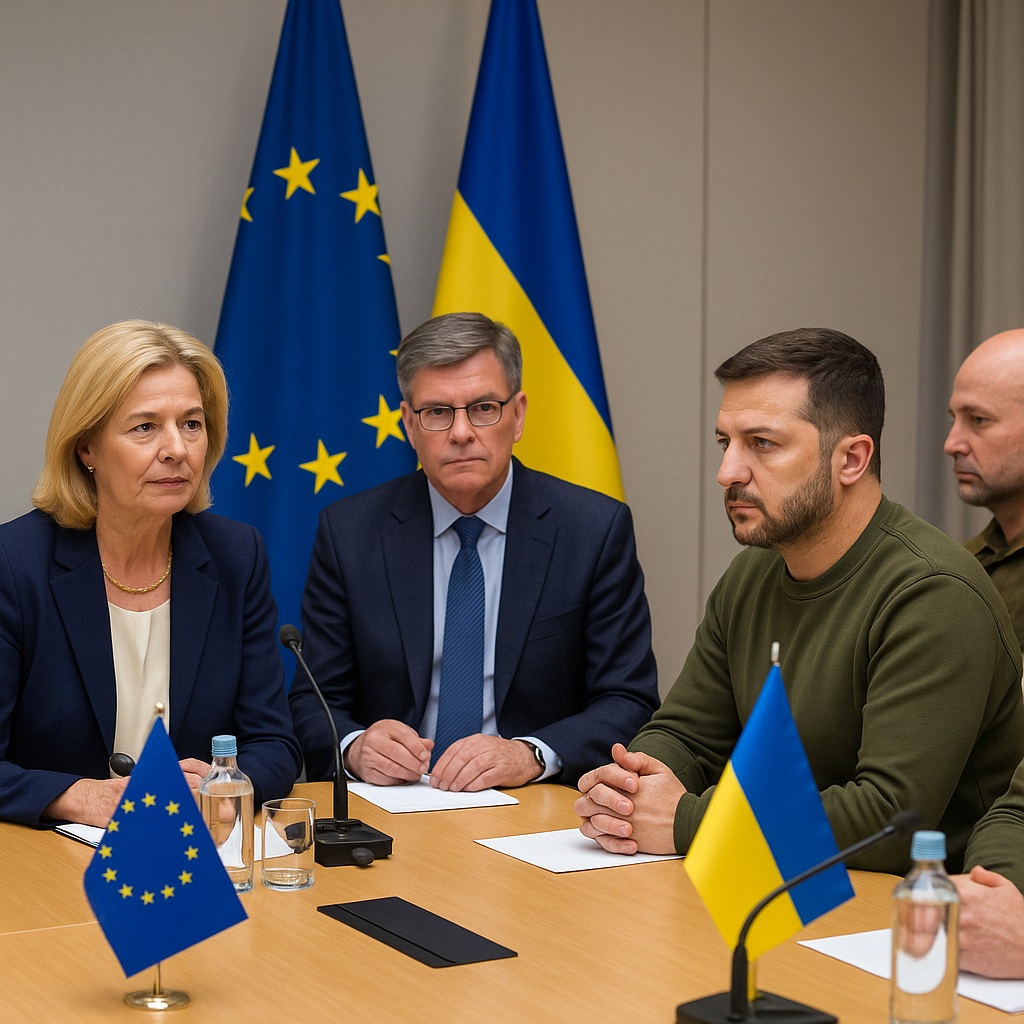
Brussels warns Kyiv that future support may hinge on visible and verifiable anti-graft reforms as a major energy-sector scandal rattles political trust.
The relationship between the European Union and Ukraine reached a moment of renewed tension this month after a sweeping corruption scandal in the country’s energy sector prompted Brussels to issue one of its strongest warnings in recent years. As Ukraine continues its wartime struggle while depending heavily on international support, European officials made it clear that the continuation of political, military, and financial assistance could be jeopardized unless Kyiv accelerates concrete anti-corruption reforms.
At the center of the uproar is an alleged procurement scheme within Energoatom, Ukraine’s state-owned nuclear energy company, involving inflated contracts, kickbacks, and insider networks. The scandal exploded into public view after investigative work by Ukraine’s anti-corruption agencies, leading to the dismissal of senior officials and an urgent call from EU leaders for transparent investigations and systemic reforms. While such corruption cases are not unprecedented in Ukraine’s post-Soviet governance history, the timing of this scandal—amid a grinding conflict and ongoing Western aid—has amplified the stakes and deepened concern in Brussels.
European foreign-policy chief Kaja Kallas characterized the situation as “deeply troubling” and warned that Ukraine’s EU integration ambitions require demonstrable progress in the rule of law and public-sector integrity. Her statement was echoed by several member-state leaders, who privately and publicly reminded Kyiv that political goodwill cannot substitute for structural reform. The tone, while measured, reflects a simmering anxiety inside the EU: that corruption could undermine the very efforts European taxpayers are funding.
Kyiv has responded swiftly, dismissing multiple senior officials linked to the case and promising full cooperation with investigators. President Volodymyr Zelenskyy underscored that no official would be shielded from scrutiny, framing the scandal as an opportunity to reinforce, rather than derail, the reform agenda. His administration has long promoted anti-corruption efforts as central to Ukraine’s national transformation, tying them explicitly to the broader mission of aligning the country with European standards.
Still, European officials are looking for more than political rhetoric. Brussels expects judicial follow-through that goes beyond symbolic dismissals—clear indictments, transparent trials, and published results. Energy-sector procurement is another focal point; EU representatives have insisted that major contracts must undergo independent audits and be reviewed by oversight bodies that operate without political interference. Agencies such as NABU and SAPO, which have built reputations as credible anti-corruption institutions, are seen as key pillars—but only if their independence is protected.
If Kyiv delivers visible progress, European leaders are likely to reaffirm and potentially expand their support. However, if reform stalls or investigations appear compromised, EU member states could push for stricter conditionality on funding, slower advancement of integration milestones, or deeper oversight mechanisms for future aid packages.
For Ukraine, the stakes of this moment are profound. Corruption has long been a destabilizing force in the nation’s political system, and while significant progress has been made in the last decade, systemic challenges persist. Wartime conditions have heightened both the urgency of reform and the risks of backsliding. With energy infrastructure repeatedly targeted, procurement needs have grown more complex—creating vulnerabilities that corrupt actors can exploit.
For the European Union, the scandal serves as a reminder that foreign aid, even when motivated by geopolitical necessity, must be anchored in accountability. EU leaders face domestic pressure to ensure that taxpayer funds are used responsibly, especially at a time of rising populism and budget scrutiny across several member states. Public trust becomes a strategic asset, and corruption—real or perceived—can erode political willingness to support Ukraine’s long-term recovery and integration.
In the coming weeks, attention will focus on the pace and transparency of the Ukrainian investigation, the publication of audit results, and signals from Brussels regarding the conditionality of future aid. Diplomats on both sides acknowledge that the partnership remains deeply important—and deeply intertwined with Europe’s broader security landscape. Whether this moment becomes a catalyst for deeper reform or a warning sign of friction ahead will depend largely on Kyiv’s next steps.



 The Tower Post