
Ukraine’s President appeals for a united European front and the release of frozen Russian assets to sustain the fight against Moscow’s aggression.
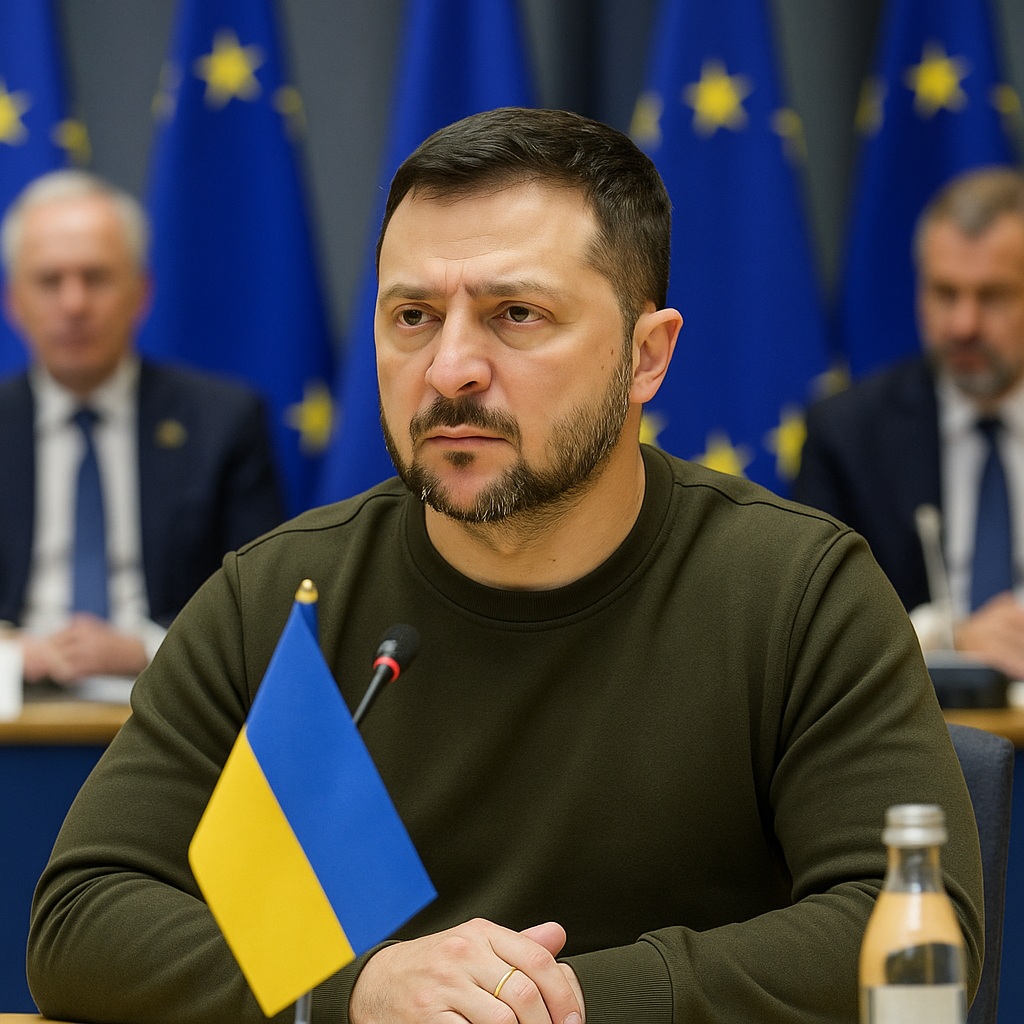
In a forceful address to his European allies, Ukrainian President Volodymyr Zelenskyy called on the continent’s leaders to act without delay—proclaiming that Ukraine’s survival hinges on new streams of financial support and the strategic use of frozen Russian assets. The appeal, made in the twilight of November, underscores the mounting pressure Kyiv faces as it strains to maintain defence operations against an emboldened adversary.
Drawing attention to the vast reserves of Russian state funds immobilised throughout Europe, Zelenskyy argued these assets could be weaponised—not simply as a gesture of solidarity, but as tangible backing for Ukraine’s defence and reconstruction. He emphasised that using these assets would strike at the heart of the Kremlin’s financial network, sending a symbolic and practical message of Europe’s resolve.
He appealed to European Union states to cast aside legal hesitations and push forward on a mechanism that would channel tens of billions of euros to Kyiv. “This is a matter not just of financing, but of Europe’s own security,” he remarked, urging unity among NATO and EU partners.
The stakes laid bare
Since Russia’s invasion of Ukraine, European states have frozen significant Russian central‑bank reserves, with estimates reaching well over €170 billion. While the interest generated on these assets has been used for Ukraine’s benefit, the full bulk remains untapped due to legal and logistical obstacles.
At the same time, Kyiv faces an intensifying resource squeeze. Zelenskyy warned that without additional funds, critical weapon procurement and production—especially of air‑defence systems and drones—could falter. The financial lifeline, he argued, is now inseparable from Ukraine’s ability to defend itself and to remain a meaningful bulwark for European security.
Europe’s internal friction
Despite broad rhetorical backing, the European Union has yet to reach a consensus on the form and timing of using frozen Russian assets. The current proposal under discussion would not amount to outright confiscation—but rather a reparation‑linked mechanism that would allow Ukraine to receive funds backed by these immobilised reserves.
Some member states, notably Belgium—where a large tranche of the assets is held through major financial institutions—have raised stark legal concerns. Critics warn of potential violations of fiduciary duty or international law if the assets are used without Russia’s consent.
The result: a delay in decisions and a growing sense of frustration in Kyiv. Zelenskyy reminded EU leaders their indecision has consequences beyond budget sheets—that delays could contribute to battlefield setbacks.
What Zelenskyy wants—and why now
The Ukrainian leader spelled out three key demands:
- Unlocking frozen Russian assets for immediate use in defence and reconstruction.
- Sustained multi‑year European financing, not just short‑term support.
- A unified European strategy that treats Ukraine as the strategic frontline of Europe itself.
His message resonates not only in Kyiv, but across Brussels and capitals throughout Europe. With winter approaching and front‑line pressures intensifying, Zelenskyy insisted this is not a moment for wavering—either for Ukraine or its allies.
Implications for Europe—and for the war
If European states agree to use the frozen assets, it would mark a landmark pivot: turning Russia’s own economic tools into Ukraine’s defensive budget. Such a move could deepen Moscow’s isolation and provide Ukraine with the breathing space it desperately needs.
Conversely, continued delays threaten to undermine Europe’s credibility—and Ukraine’s resilience. A weakened Ukraine would raise the likelihood of destabilisation across Eastern Europe and weaken broader Western deterrence against Russian aggression.
For Zelenskyy, the ask is not merely financial—it is existential. The message is clear: Europe must either step up now or risk facing a far larger crisis down the line.
Looking ahead
As European leaders prepare for their upcoming deliberations, all eyes are on whether they will decide to move from rhetoric to action. Zelenskyy’s public appeal places them on notice: the next decision will signal not only support for Ukraine, but Europe’s willingness to lead. The long winter looms, the war grinds on—and Europe’s moment of reckoning may be nearer than it seems.
 The Tower Post