
A landmark step-forward for Tirana as Brussels welcomes the opening of the last negotiation chapter — and Albania opens a liaison mission in Brussels.
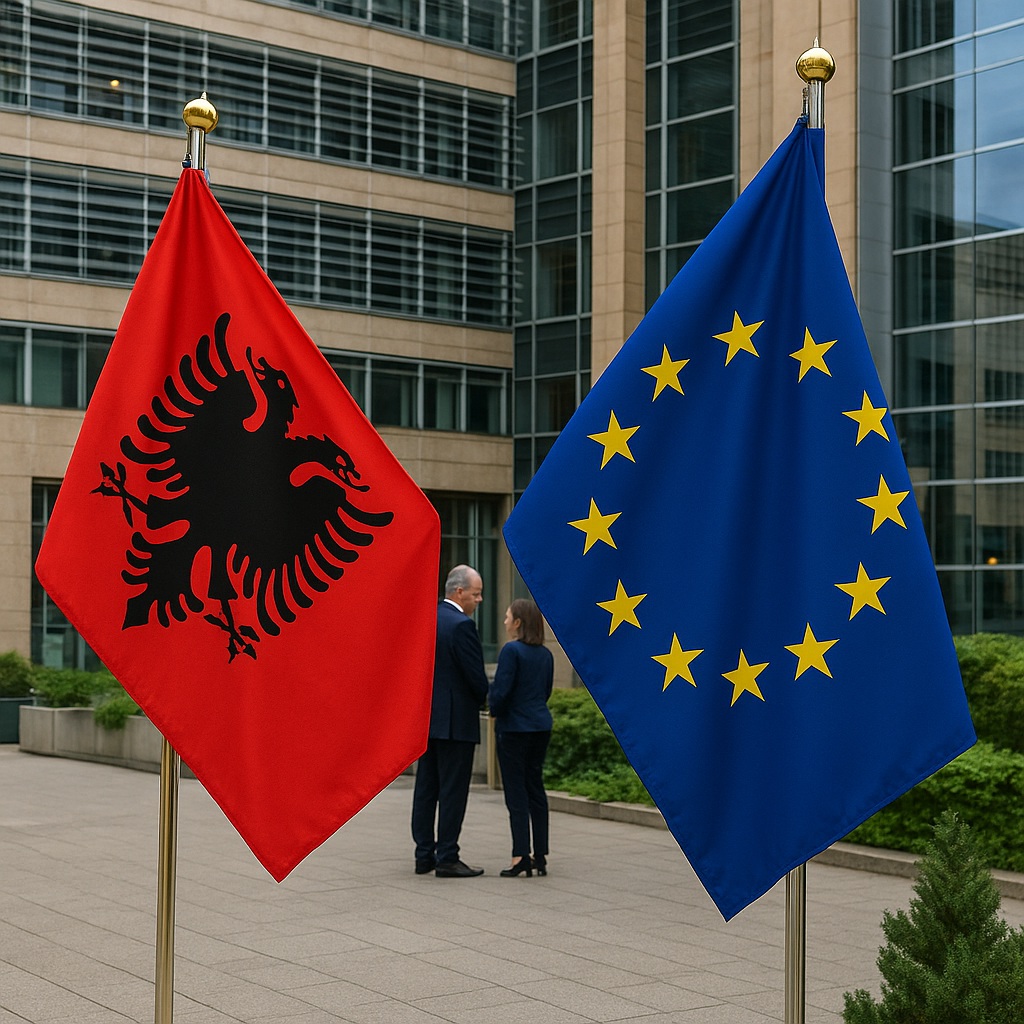
In a decisive moment for the Western Balkans, Albania has opened the final cluster in its accession negotiations with the European Union, marking the near completion of the opening phase of its membership process. The launch of the last negotiation cluster, focused on resources, agriculture, and cohesion policies, signals Albania’s transition into the most demanding stage of the EU accession journey. At the same time, Tirana has inaugurated its new liaison mission in Brussels, a move that strengthens Albania’s engagement with the Union’s daily institutional processes and enhances diplomatic coordination.
The final negotiation cluster includes essential policy areas such as agriculture and fisheries, food safety systems, veterinary and phytosanitary standards, regional development strategies, and financial governance. With all clusters now officially open, Albania stands among the most advanced Western Balkan candidates, shifting the process from formal openings to the substantive phase of implementation and chapter closure, where real institutional transformation begins.
This progress comes at a time when the European Union is re-evaluating enlargement as a strategic priority in response to broader geopolitical dynamics. Albania’s alignment with EU foreign and security policy, alongside its contributions to regional stability, has strengthened its position within the accession framework. In an era of heightened geopolitical uncertainty, the Western Balkans—once viewed primarily through the lens of administrative reform—are increasingly recognized as integral to Europe’s security architecture and long-term cohesion.
The establishment of Albania’s liaison mission in Brussels reinforces this shift. Beyond its symbolic value, the mission provides a permanent on-the-ground mechanism for facilitating technical dialogue, supporting reform progress, and strengthening Albania’s visibility within EU institutions. It serves as a bridge between national authorities and EU bodies, helping synchronize the complex work required during the negotiation process.
However, the challenges ahead remain substantial. Moving from legislative alignment to practical implementation demands deep structural reforms, particularly in agriculture, public administration, anti-corruption efforts, and regional development management. The EU will closely observe Albania’s capacity to apply new standards effectively, manage structural funds transparently, and demonstrate measurable improvement in governance across multiple sectors.
The regional implications of this milestone are significant. Albania’s progress may influence the expectations placed on neighboring candidates, reinforcing the EU’s message that advancement is tied to credible, consistent reform. For Brussels, Albania’s trajectory will serve as a test of the EU’s ability to maintain a realistic and strategic enlargement policy in a rapidly changing geopolitical environment.
With the final negotiation cluster now open and a reinforced presence in Brussels, Albania enters a decisive phase of its EU aspirations. The coming years will determine whether the country can sustain momentum, close negotiation chapters, and translate its long-standing ambition of EU membership into concrete political and institutional reality.




 The Tower Post