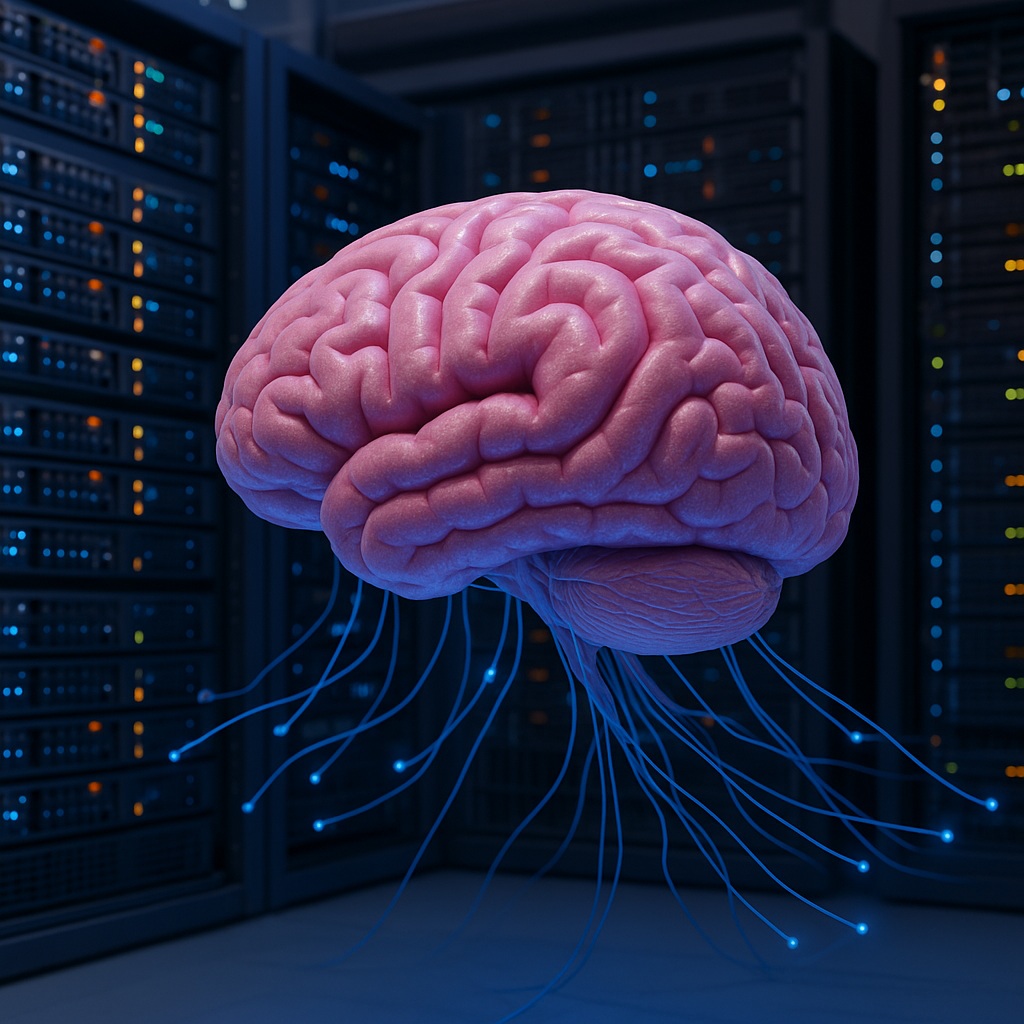
Fugaku-powered simulation marks a milestone in computational neuroscience
Scientists around the world have taken a decisive step toward decoding the machinery of cognition, unveiling one of the most detailed and realistic digital models of a mouse brain ever constructed. The achievement, powered by Japan’s Fugaku supercomputer, is being hailed as an inflection point in the merging of neuroscience and high-performance computing—an effort that could eventually guide the design of advanced therapies, new AI systems, and deeper understandings of mammalian intelligence.
The model is not a mere schematic or simplified representation. It is a densely detailed recreation of major neural circuits, electrical dynamics, and cellular diversity. Researchers say it is the closest computational analogue of a living mouse brain to date, enabling experiments that would be nearly impossible in the laboratory and prohibitively expensive or ethically complex with biological animals.
The global team behind the breakthrough emphasizes that the simulation does not replace biological research. Instead, it acts as a complementary testing ground: a digital space where hypotheses can be pushed, parameters adjusted, and entire brain regions perturbed at speeds that would be unimaginable in physical experiments.
At the heart of the project lies an ambition shared by neuroscientists for decades: to reach a point where the neural activity of a living brain can be reproduced in silico with enough fidelity to generate new scientific insights. Traditional approaches have often stalled due to hardware limitations. But Fugaku—one of the most powerful supercomputers ever built—has provided the computational muscle needed to bring this vision closer to reality.
Teams working in Japan, Europe, and North America coordinated across multiple institutions, assembling an unprecedented dataset that includes cellular morphologies, synapse-level connectivity patterns, and dynamic properties of neural circuits. The resulting model incorporates millions of neurons and tens of millions of synaptic interactions, stitched together with algorithms designed to mimic real-world electrical activity.
The simulation does not run in real time; it remains far too complex for that. Instead, researchers run targeted experiments, accelerating or slowing processes as needed. These controlled environments have already yielded new insights into how learning emerges from synaptic plasticity, how neural noise influences decision-making, and how certain kinds of oscillatory rhythms propagate across the brain.
While the achievement is technically remarkable, its implications extend far beyond the computational sphere. Digital brain models can speed up the discovery of neurological treatments by allowing scientists to examine how specific drugs might influence brain-wide activity patterns. Early trials using the mouse model have already tested compounds associated with memory disorders and sensory perception.
Artificial intelligence researchers are also tracking the project closely. Biological neural networks work very differently from the simplified architectures used in modern machine learning. Detailed simulations have the potential to reveal new principles of efficiency, adaptability, and fault tolerance—insights that could inform the next generation of AI systems.
For neuroscientists, the simulation represents a chance to explore long-standing questions that were once largely theoretical. Why do certain circuits become overactive during anxiety? How do memories stabilize across multiple brain regions? How do patterns of inhibition and excitation organize themselves during sensory processing? A digital brain provides a controlled arena in which variables can be manipulated without harming animals or introducing confounding conditions.
Despite the progress, the researchers acknowledge that their model is far from complete. A full-fidelity simulation of all mouse brain activity would require orders of magnitude more computational power than what is currently available—even with a machine as capable as Fugaku.
The team describes the current simulation as a framework. It is modular, expandable, and designed to incorporate new data as it emerges. Over time, they hope to integrate more detailed representations of glial cells, microcircuits, and molecular signaling cascades. Such refinements could deepen the model’s realism and bring it closer to capturing the intricate dynamics of a living brain.
Still, the accomplishment underscores just how rapidly computational neuroscience is advancing. Only a few years ago, building a digital brain at this scale would have required vast compromises in precision. Now, with improved hardware, optimized algorithms, and global collaboration, the field is edging toward a new era—one in which digital organisms could become a routine part of scientific inquiry.
What made this breakthrough possible, researchers say, was a shift in the culture of scientific computing. Years of siloed development have given way to open-source toolkits, shared data repositories, and cross-continental partnerships. The digital mouse brain is not the product of a single institution but of dozens working in unison, each contributing a layer of expertise—from molecular neuroscience to systems biology to supercomputer engineering.
Looking ahead, the team plans to make portions of the model publicly accessible so that labs worldwide can run experiments, contribute improvements, and help validate predictions. In doing so, they hope to accelerate discovery while fostering a community centered on transparency and reproducibility.
For now, the simulation stands as one of the most comprehensive portraits of a mammalian brain ever constructed by computer. It is a digital organism that thinks in pulses of electricity and simulated chemistry—a virtual creature that may one day illuminate how real minds work.
As science advances, the line between biological and computational exploration is growing thinner. And with projects like this one, the idea of understanding the brain from the inside out is no longer a distant dream but a rapidly unfolding reality.




 The Tower Post