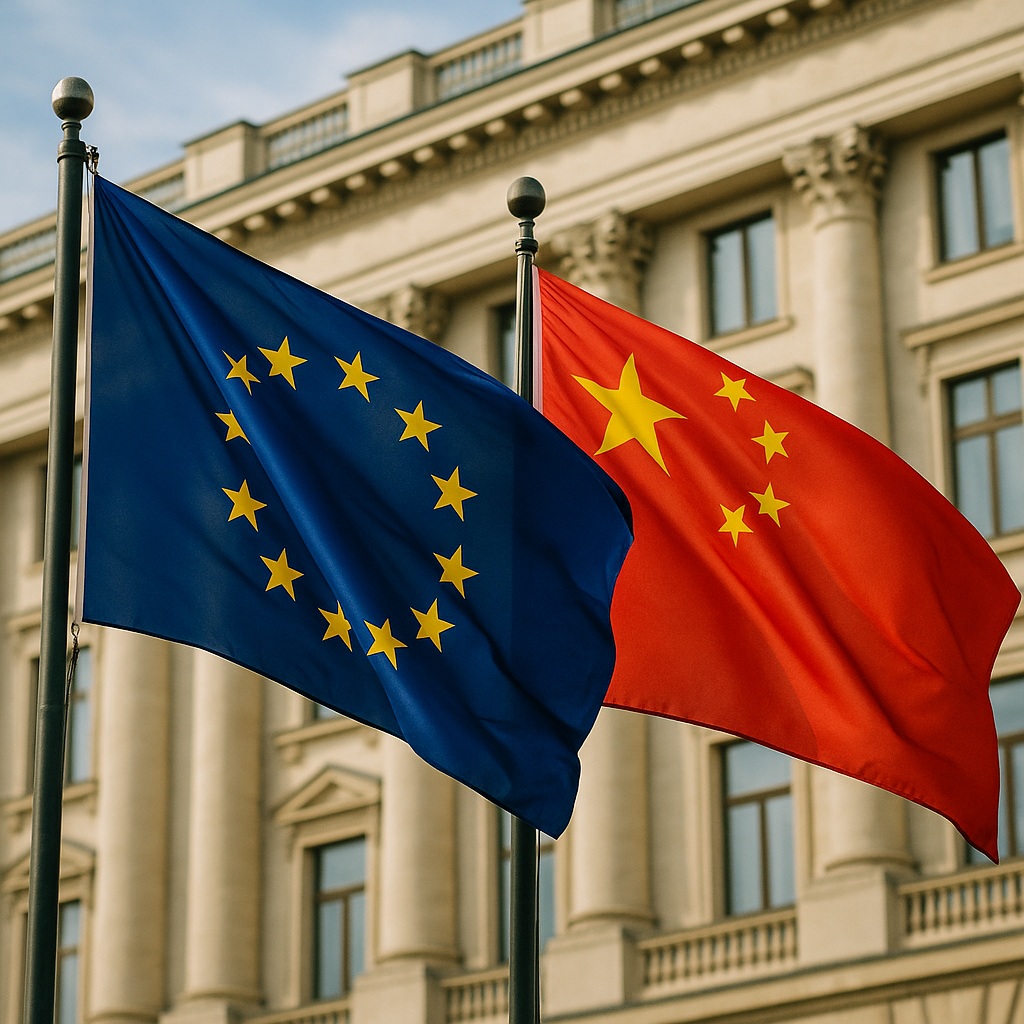
As Brussels and Beijing reassess their relationship, analysts see a future defined by selective partnership rather than rivalry.
After half a century of diplomatic relations, the European Union and China are recalibrating the terms of their engagement. The relationship, often strained by geopolitical tensions, trade imbalances, and diverging political systems, has arrived at a new inflection point. Analysts now increasingly describe the two powers as “partners, not rivals and certainly not enemies,” signalling a shift toward a more pragmatic, managed form of cooperation.
Economic interdependence remains central to the relationship. China continues to rank among the EU’s most important trading partners, while European businesses still depend heavily on Chinese manufacturing and growing consumer demand. Yet policymakers in Brussels are increasingly focused on reducing strategic dependencies—particularly in critical raw materials, renewable energy technologies, and digital infrastructure. This emerging doctrine of “de-risking” seeks not to sever economic bonds, but to ensure they remain balanced and secure.
For Beijing, maintaining stable relations with Europe carries renewed strategic value. As global growth slows and international tensions rise, Europe offers China an essential counterweight and a diversified economic outlet. Chinese officials frequently underscore their commitment to “mutual openness,” even as the country pursues ambitious plans for domestic technological innovation and supply-chain resilience.
While economic cooperation forms the backbone of EU–China engagement, climate and environmental policy offer the most promising areas for deeper collaboration. Despite ongoing disputes over carbon tariffs and market access, both sides acknowledge that global progress on emissions, biodiversity, and green finance depends on coordinated action. Cooperation on battery recycling, offshore wind development, and decarbonised supply chains is expected to accelerate as industries adapt to new regulatory pressures.
However, the political dimension of the relationship remains sensitive. European leaders have grown increasingly vocal about cybersecurity risks, maritime tensions, and the implications of China’s partnerships with actors that challenge global stability. Nevertheless, there is widespread recognition within European diplomatic circles that isolating Beijing would be counterproductive at a time when global challenges require broad participation.
Beyond formal diplomacy, societal and scientific exchange is beginning to regain momentum. Universities, research institutes, and cultural organisations are cautiously reopening channels of collaboration, with particular interest in public health, AI governance, and climate modelling. These grassroots and academic initiatives often advance more swiftly than political negotiations, suggesting that people-to-people ties may serve as a stabilising force in the broader relationship.
Looking forward, the next chapter of EU–China relations will likely follow a model of “managed interdependence.” Under this approach, cooperation continues where interests align—such as trade, climate action, and global governance—while clear boundaries are established around sensitive sectors including data security, defence technology, and critical infrastructure.
This careful recalibration acknowledges that neither decoupling nor unrestrained engagement reflects current geopolitical realities. Instead, both sides appear committed to building a more structured, predictable, and balanced partnership that reduces risk while enabling progress.
As Europe finalises new policy frameworks and China signals its desire to stabilise ties, the coming years may usher in a more transparent and strategically grounded relationship. After fifty years of diplomatic engagement, the question is no longer how to expand cooperation, but how to adapt it to a world undergoing rapid and profound transformation.


 The Tower Post