Warsaw–to–Ukraine rail blast labeled an “unprecedented act of sabotage” by Poland’s security chief
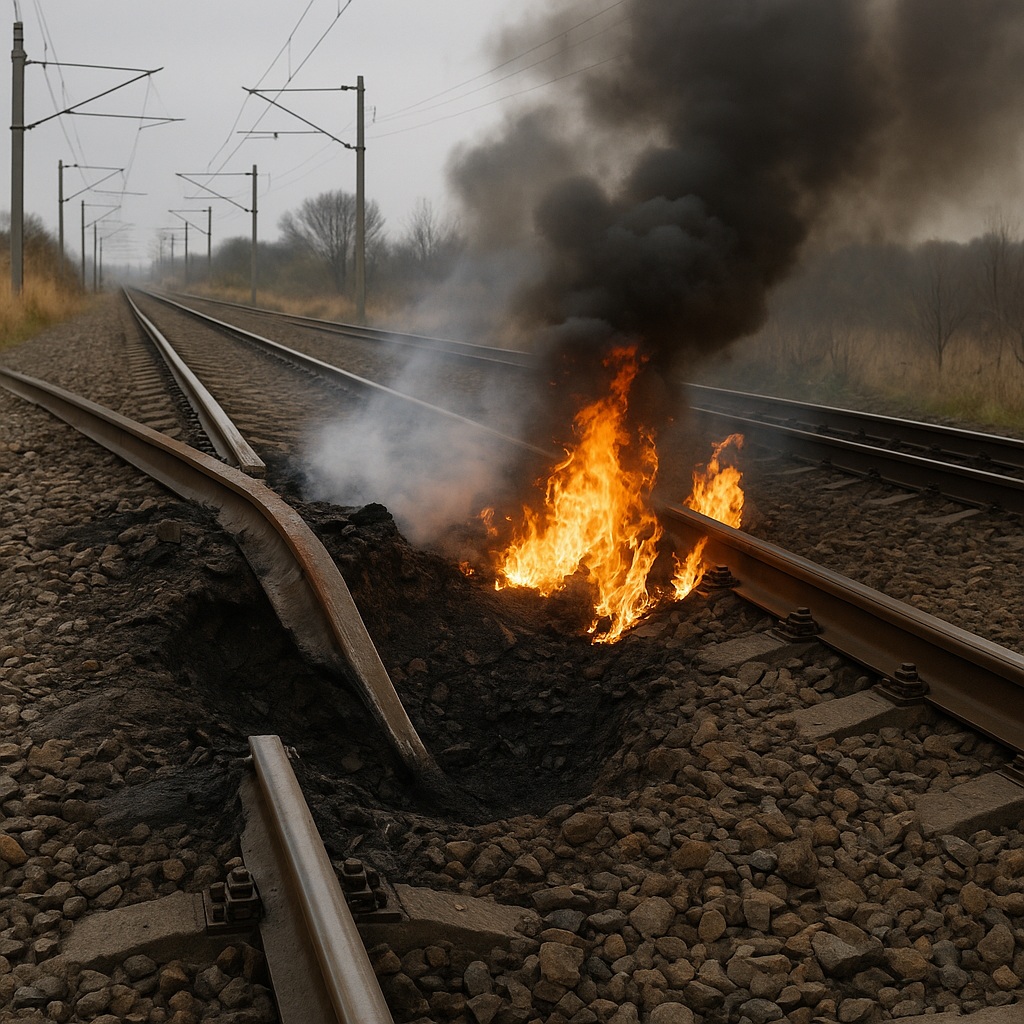
In a statement delivered during a tense national briefing, Poland’s minister overseeing security services announced that a foreign state’s intelligence operatives were behind the explosion that struck a strategic rail line leading toward Ukraine. The blast, which tore through a section of the Warsaw–Lublin route used heavily for humanitarian and defense shipments, was described by the minister as “an unprecedented act of sabotage.”
Authorities reported that the explosion disrupted both the tracks and overhead power lines, halting all traffic through the corridor while investigators combed the site. A train operator first noticed the damage and alerted officials, prompting a rapid deployment of security and technical teams.
The rail line plays a vital role in Poland’s support pathway to Ukraine, carrying everything from food supplies to specialized military equipment. Government officials had warned that such infrastructure — indispensable to regional security — could become a target for hostile foreign activity amid escalating hybrid‑warfare tactics across Europe.
Prime Minister Donald Tusk reaffirmed the strategic importance of the route and pledged that Poland would “bring the perpetrators to justice,” regardless of who supported them. Defense authorities have ordered expanded inspections along connecting tracks to ensure that no additional devices or structural threats were planted.
Although no government spokesperson explicitly named the suspected foreign state, the implication aligns with recent patterns of sabotage, cyber‑intrusion attempts, and destabilization operations attributed to actors hostile to NATO’s eastern flank. Analysts observing the incident note the precision of the blast and the choice of location as factors suggesting a coordinated intelligence operation rather than opportunistic criminal behavior.
The attack has triggered heightened alert levels within Poland’s security agencies, as well as renewed calls for enhanced cooperation within European defense alliances. Railway networks, energy infrastructure, and communication corridors have been undergoing additional assessments as Warsaw prepares for the possibility of further attempts to disrupt support flowing to Ukraine.
Officials are expected to raise the issue in upcoming security consultations with European and transatlantic partners. Meanwhile, investigators continue gathering forensic evidence at the blast site and reviewing intelligence indicators that could help identify the individuals involved and the chain of command behind them.
The sabotage serves as a stark warning that critical infrastructure remains a frontline target in modern geopolitical conflict, and that the indirect battle over supply networks can have sweeping consequences for regional stability.


 The Tower Post