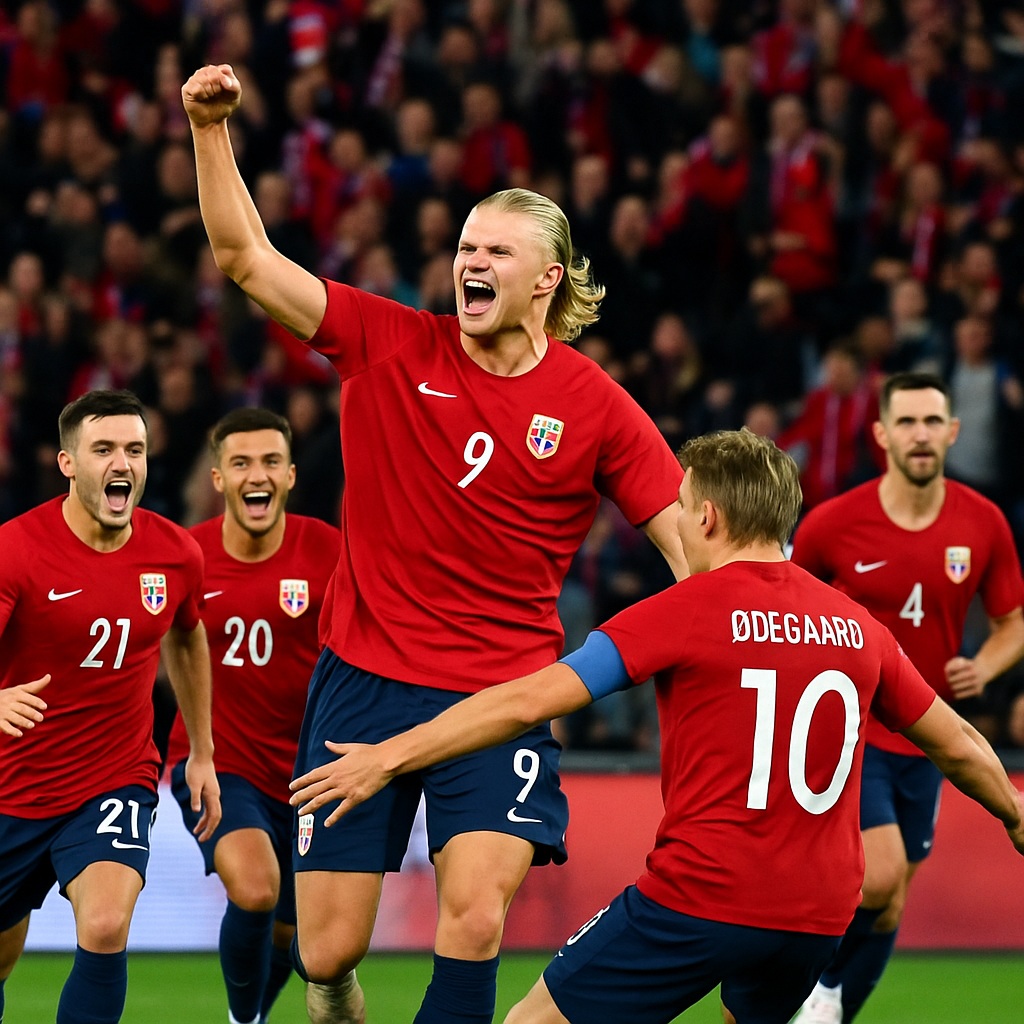
After a 27‑year wait, Norway clinch a spot in the World Cup, backed by a golden generation and staking their claim among Europe’s elite.
It has been nearly three decades since the red‑white‑blue of Norway graced a World Cup finals stage. Now, in November of this year, the Norway national football team have finally broken free from the shadows of the past, sealing automatic qualification with a formidable campaign that sends a message: this is not a fluke, this is a revival.
From the early kick‑off of their qualifying group in Europe, the Norwegians locked into an agenda rooted in belief and identity. No longer content to be the perennial under‑dog, they embraced a new mindset. At the heart of this transformation stand two figureheads: Erling Haaland, the tunnel‑vision goal‑machine, and Martin Ødegaard, the orchestrator pulling the strings in midfield. The narrative is straightforward: one generation, one chance, one goal.
A long drought comes to an end
Norway last played at the World Cup in 1998; since then, despite glimpses of promise, they have failed to get over the line. The qualification process for the finals due in North America now sees them in prime position among the continent’s elite. Their campaign has been nothing short of dominant. A recent home victory consolidated their hold at the top of Group I. With Italy lagging behind in the group, the road ahead for the Norwegians appears unimpeded.
Yes, the job is still technically to be completed, but as of this moment, Norway are not just participating—they’re competing. They’re no longer the side hoping to sneak in; they’re the side others must stop.
The Haaland‑Ødegaard axis
It’s one thing to say you’re ready; it’s another to have the players backing it up. Haaland has carried the lion’s share of the burden, repeatedly delivering in front of goal and demanding respect. Meanwhile, Ødegaard has matured into the kind of midfield conductor that other aspiring nations envy: slick in possession, purposeful in movement, and always scanning for the chance to push forward. Their blend of physical firepower and tactical intelligence has given Norway a style of play that feels both modern and rooted in their national character.
The wider squad, too, has bought into a collective ethic: defend as one, attack with rhythm, and don’t wait for permission to win. The result: a surge in belief, an uptick in results, and the revival of a national football identity.
Europe’s best? Perhaps.
It may be early days in the race to the finals, but Norway’s journey already puts them in a rarefied bracket of European nations. To top their qualifying group—with Italy, Estonia, Moldova and Israel in the mix—is no small feat. Their consistency, goal difference and squad depth mark them out. More than that, their psychology has shifted. They are no longer hoping to qualify; they are expecting to.
That said, the real test begins now. The finals will not be kind to newcomers. Opponents will arrive in full force, armed with deep reserves of experience and driven by their own ambition. For Norway, the challenge is to turn this long‑awaited return into something more than just participation.
Hurdles remain—but the momentum is real
Qualification secured, the next stage will require refinement. Defensive frailties have shown up on occasion, and adaptability against top‑tier opposition will be vital. Moreover, with Haaland and Ødegaard inevitably drawing attention from every opponent, Norway must ensure the supporting cast continues to step up.
Still, the narrative has changed. The team that once struggled to make an impression year after year is now one that provokes attention and demands respect. The culture around the national side is invigorated. The fans, too, sense something different. The wait is over—but what begins now is just as important.
Why this matters
For Norwegian football, this is more than just a step back into the spotlight. It’s a marker of progress. The long absence from the World Cup—the long years of knocking on the door but not quite entering—helped shape a generation hungry for more. Success at this juncture has the power to generate excitement domestically, enhance youth development, and inject optimism into a footballing ecosystem that has often lived under the shadow of its Scandinavian neighbours.
In the context of Europe, Norway’s revival contributes to the increasing depth of competition. Countries once seen as minnows are now stepping up, and Norway’s emergence reminds the continent that the margins are tightening. It also places greater pressure on established nations to maintain their standards.
Looking ahead
With the finals coming into view, Norway’s mission is clear: make a mark. Qualification has been achieved, but the next chapters must transform ambition into impact. A strong showing—perhaps a knockout‑round berth—would solidify the claim that Norway are not just back, but evolving into one of Europe’s best.
On this day in mid‑November, the celebration is justifiable. The Nordic nation has ended a long exile and returned to football’s grand stage. But as players, coaches and fans alike will tell you: it’s not about arriving—it’s about what you do once you’re there. For Norway, the journey back is complete; the journey onward has now begun.


 The Tower Post