
Brussels welcomes resolution backing a pathway to de‑escalation in Gaza, while urging swift implementation amid deep scepticism and a fragile truce.
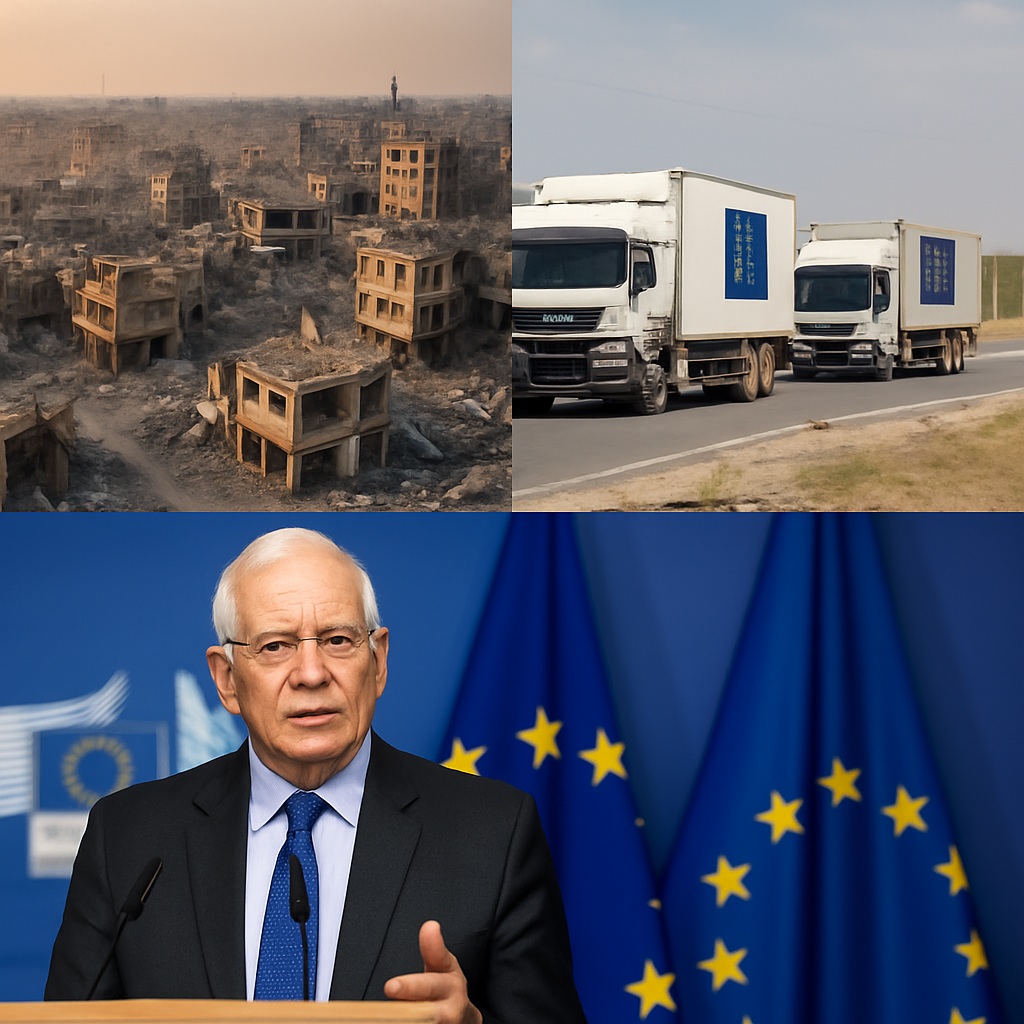
The United Nations Security Council has adopted a landmark resolution endorsing a cease‑fire and a comprehensive 20‑point plan for the Gaza Strip — an outcome that the European Union (EU) described from Brussels as “an important step” toward conflict de‑escalation and humanitarian relief. The resolution passed with the vast majority of members casting in‑favour votes, while two permanent members abstained, reflecting both progress and persistent geopolitical fault‑lines.
In a statement released by the European Council, EU leaders welcomed the resolution’s backing of the multi‑phase plan aimed at stabilising Gaza, restoring essential services and laying the groundwork for a possible governance transition. The Council reaffirmed its support for all phases of the plan and emphasised that full commitment of all parties remains indispensable.
A fragile breakthrough
The recent UN vote marks a pivot point in the prolonged war that has devastated Gaza, leaving much of the enclave in ruins and its civilian population facing acute humanitarian stress. The resolution tasks an international stabilisation force with monitoring the cease‑fire, securing corridors for aid and border control, and ultimately facilitating a transition of administrative responsibilities.
Significantly, the 20‑point plan embedded in the resolution envisions demilitarisation of Hamas‑controlled areas, reconstruction of essential infrastructure, and a pathway toward normalisation of life for civilians. But it does so amid deep scepticism: Hamas has rejected the disarmament mandate, and combat‑ready Israeli forces remain wary of a hand‑over in the absence of security guarantees.
Why the EU sees hope
From Brussels’ perspective, the resolution is meaningful for several reasons:
- It offers a credible diplomatic anchor for the truce and reconstruction agenda, enabling the EU to align its humanitarian and development efforts within a clearer international framework.
- It lets the EU shore up its role as a mediator and donor, reinforcing its earlier statements on Gaza and commitments to aid access.
- It helps the EU signal to member states and global partners that it remains engaged in Middle‑East peace efforts, while navigating internal divisions and external pressure.
An EU spokesperson emphasised that while the vote does not mark the end of conflict, it is “a meaningful step” that could unlock resources, open border crossings for aid and reduce the risk of a return to heavy fighting.
Red flags on the horizon
Despite optimism, several challenges loom:
- No country has yet committed troops or logistical resources to the envisaged international stabilisation force, raising concerns about how its mandate will be executed.
- The humanitarian crisis remains severe: agencies warn that although aid access has improved, it remains far below what civilians in Gaza urgently need.
- Israel maintains that any transition depends on Hamas’ complete demilitarisation and full accounting of remaining hostages — conditions that continue to hamper trust and progress.
- Within the EU, consensus is delicate: some member states push for more assertive political pressure, while others stress the importance of addressing Israel’s security concerns.
Brussels’ next moves
The EU has outlined a three‑part agenda following the resolution:
- Humanitarian surge — Intensify aid deliveries into Gaza through expanded routes and coordination with UN agencies and NGOs, focusing on medical supplies, fuel and essential infrastructure repair.
- Engagement with reconstruction — Tie EU development funding to progress in governance reform, civilian protection mechanisms and demilitarisation benchmarks.
- Diplomatic leverage — Use the momentum of the resolution to reinvigorate dialogue on a durable cease‑fire and revive pathways connected to a two‑state framework.
As one EU official noted: “The vote gives us a moment of opportunity — not to be wasted. Without consistent follow‑through, this risks becoming another diplomatic gesture without real impact.”
The broader significance
Beyond Gaza, the resolution reflects wider geopolitical shifts:
- A renewed UN role in authorising stabilisation mechanisms that blend military oversight with civil administration.
- A recalibration of EU foreign policy as Brussels attempts to balance support for Israel’s security with increasing pressure to reinforce humanitarian and legal norms.
- The limitations of conventional diplomacy when dealing with non‑state armed actors retaining territorial control.
- The persistent challenge of converting diplomatic frameworks into tangible improvements for civilians on the ground.
What comes next?
In the near term, several key questions will shape the plan’s success:
- Will nations step forward to staff and fund the stabilisation force?
- Will aid deliveries scale up enough to transition from emergency relief to sustainable recovery?
- Will Israel begin reducing military operations as outlined, and will Hamas engage with the process?
- Can the EU maintain unity across its 27 member states as it navigates competing domestic and international pressures?
For Brussels, the resolution is both a diplomatic milestone and a test of global resolve. It may be “an important step,” but the hard work — turning commitments into outcomes — lies ahead.

 The Tower Post