
At the “Growing Europe 2025” summit, a bold call from Ankara: rekindle family‑centred policies as birth‑rates shrink and populations age.
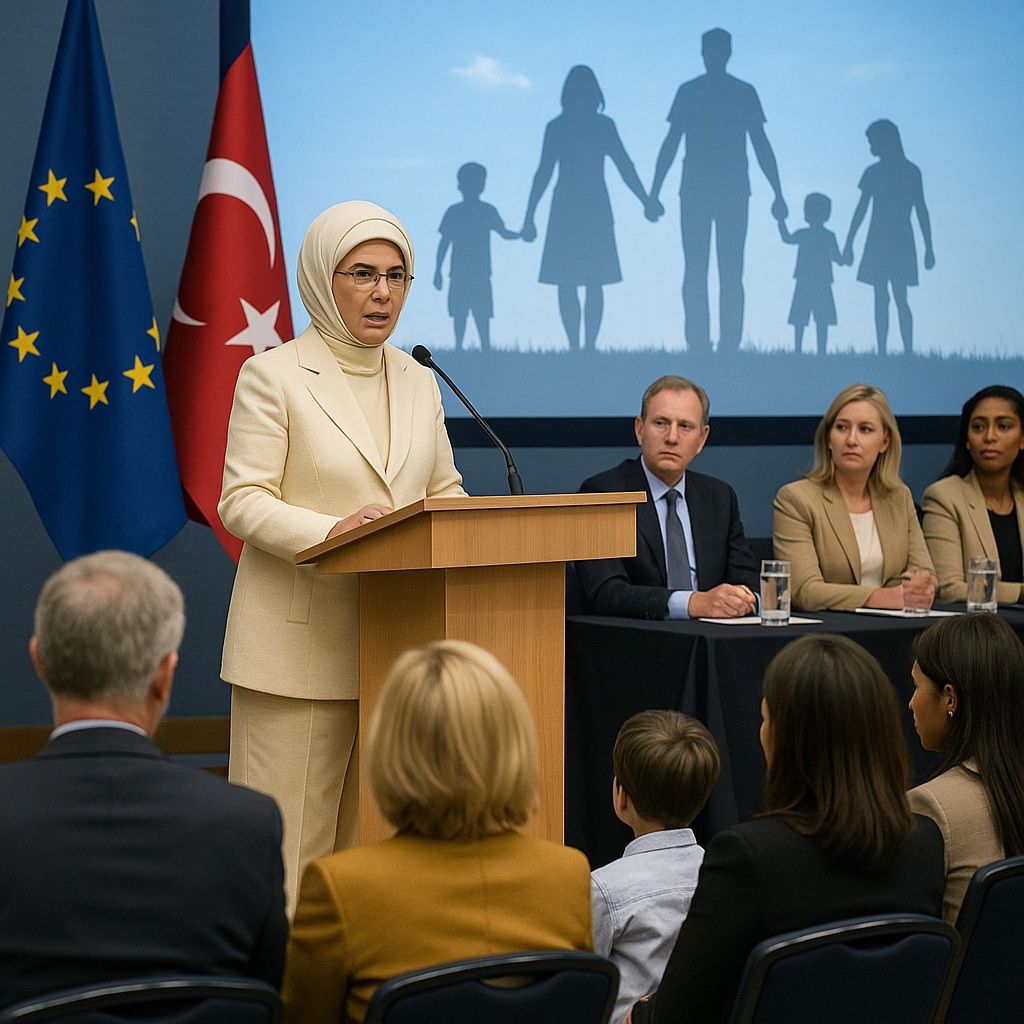
TOKYO – At a high‑profile gathering of European leaders, spouses of heads of state and government convened within the framework of the Growing Europe 2025 Summit, but it was Emine Erdoğan who captured attention by placing family policy squarely at the centre of the debate on Europe’s demographic trajectory. The First Lady of Turkey delivered remarks warning that the continent’s future hinges on restoring the family as a social anchor amid falling fertility rates, aging populations, and mounting socio‑economic pressures.
“Families are the fabric of society,” Ms Erdoğan said from the summit podium. “When that fabric is frayed by demographic decline, the tapestry of social stability and economic vitality is at risk.” Her speech resonated strongly in an arena where governments are struggling to sustain welfare systems, retain workforce numbers, and balance the demands of a rapidly greying population.
A strategic pivot by Ankara
Turkey’s participation and Ms Erdoğan’s intervention signalled a deliberate effort by Ankara to project a values‑based narrative in European discussions around population policy and social cohesion. While European responses often centre on migration and labour policy, the First Lady urged a broader “family vision” that embraces childcare support, intergenerational solidarity, and the cultural significance of family structure.
She referenced Turkey’s own experience, suggesting that its relatively younger population and strong family networks offer lessons, though she emphasised that no single model fits all societies.
Demographic alarm bells
Europe continues to grapple with persistently low fertility levels, longer life expectancies, and a shifting ratio between retirees and the working‑age population. This imbalance fuels pension strain, labour shortages, and rising dependency burdens. Ms Erdoğan stressed that family support policies can serve both as social stabilisers and proactive demographic tools.
“We cannot wish away the ageing curve,” she stated. “We must build environments in which families thrive—where parents can balance work and care, and where intergenerational bonds strengthen the social fabric.”
Policy suggestions with a twist
Without prescribing specific legislation, the First Lady highlighted key policy priorities:
- Investment in early‑years support such as childcare, parental leave, and kindergarten access
- Promotion of multi‑generational housing and community design
- Alignment of labour policy with family needs to prevent parents—especially mothers—from bearing disproportionate burdens
- Renewal of cultural narratives that support family life
Reactions and reception
Her remarks drew applause from several participants, especially officials from countries facing steep demographic decline. Some analysts welcomed the intervention as a timely reminder that demographic policy is not only numerical but social. Others cautioned that cultural and economic complexities demand multifaceted responses.
A senior European adviser noted that incorporating the lived experience of families into demographic strategy is a long‑overdue shift, while also warning that meaningful transformation will require political will and significant investment.
Broader implications for Europe‑Turkey relations
Beyond social policy, the speech reflects Turkey’s broader diplomatic message: that shared values such as family and social cohesion can anchor partnerships in uncertain demographic times. Still, observers emphasise that rhetoric must convert into long‑term policy collaboration should Europe seek substantive demographic renewal.
Looking ahead
As Europe debates its demographic future, Ms Erdoğan’s contribution at the Growing Europe 2025 summit may stand as a reference point. Whether her family‑centred framing gains traction depends on political appetite, economic conditions, and public sentiment across the continent.



 The Tower Post