
Elon Musk and Jensen Huang to explore the next wave of artificial‑intelligence investment, architecture and models at the U.S.–Saudi forum, as Washington‑Riyadh ties deepen.
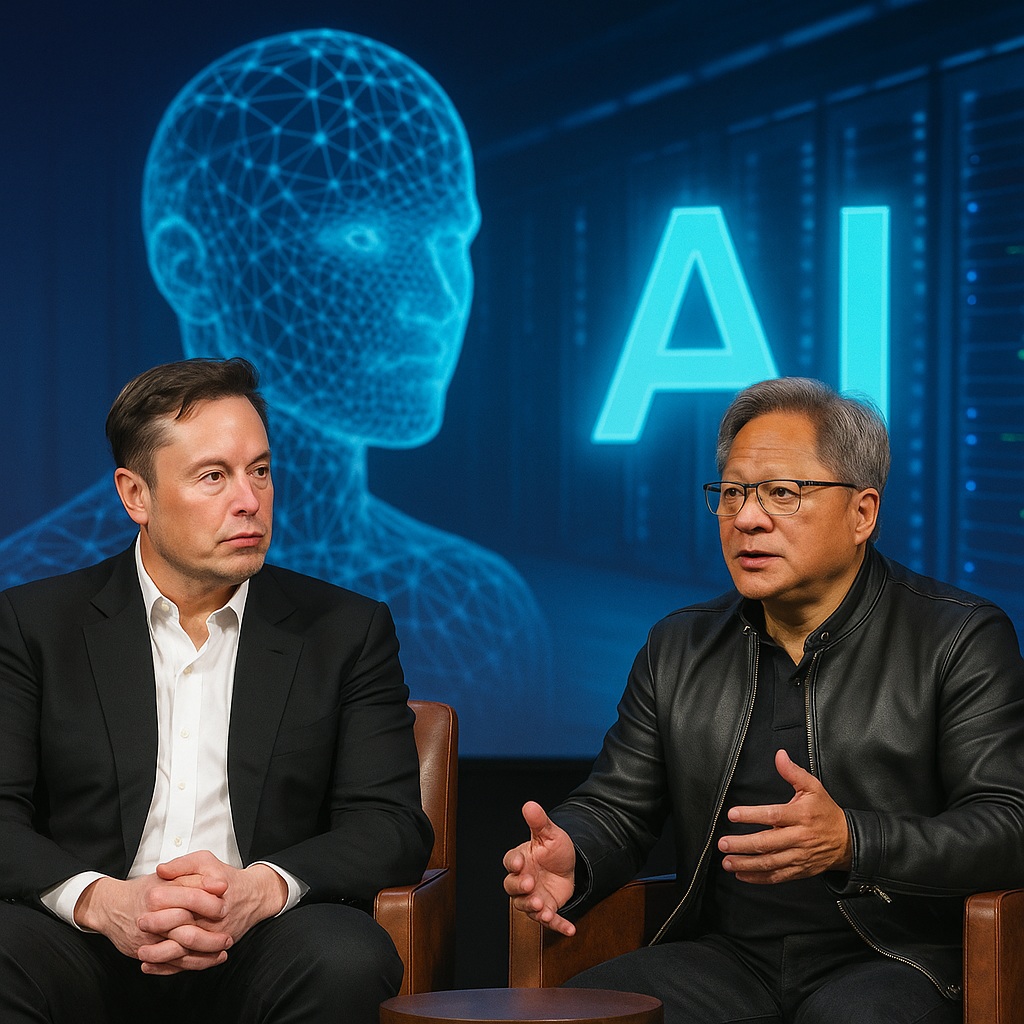
In a forthcoming high‑profile gathering, two of the technology sector’s most influential figures—Elon Musk (CEO of Tesla and SpaceX) and Jensen Huang (CEO of Nvidia)—are set to take the stage together at the U.S.–Saudi Investment Forum in Washington D.C. The discussion will spotlight artificial‑intelligence (AI) architectures, models and investment strategies, as the United States and Saudi Arabia deepen their technology partnership.
Setting the Stage
The forum, hosted at a major cultural venue in Washington, arrives amid renewed momentum in U.S.–Saudi economic collaboration. The agenda stretches beyond energy and finance to include advanced technology, healthcare and AI, underscoring the shared ambition of both nations to participate in the next wave of digital innovation.
Moderated by Saudi Arabia’s Minister of Communications and Information Technology, Abdullah Alswaha, the session invites not only Musk and Huang but a broad array of global executives from sectors spanning aerospace, defence, chip manufacturing, cloud computing and beyond.
Why Two Tech Heavyweights?
Elon Musk and Jensen Huang represent complementary dimensions of the AI and computing ecosystem. Musk’s ventures increasingly emphasize autonomy, robotics and large‑scale compute infrastructure, while Huang’s Nvidia remains central to the hardware, models and computational fabric that underpin modern AI systems. Their joint appearance signals a recognition that the future of AI is not just about software breakthroughs, but about architectural scale, foundational models and cross‑border investment flows.
For the U.S.–Saudi axis, this pairing is both symbolic and strategic. It elevates the forum’s technology credentials while signaling that the Kingdom is targeting AI investment and infrastructure with urgency. Recent collaborations involving advanced AI chips and data‑center development have further fueled expectations.
Key Themes Expected
Several core themes are anticipated:
- Architecture & next‑gen compute: How hardware platforms—GPUs, AI accelerators and large‑scale data centers—will evolve to support increasingly capable AI models.
- Model scale, deployment and governance: What kinds of next‑generation language, vision and multimodal models are emerging, and how they will be deployed responsibly.
- Investment flows & partnerships: With both nations looking to expand their tech footprint, capital investment in AI infrastructure and startups is expected to be a central talking point.
- Regional strategy & global implications: AI is becoming a pillar of the Kingdom’s long‑term economic diversification. U.S. companies see a corresponding opportunity in regional partnerships.
- Risk, regulation and ethics: Musk has been vocal on AI risks, though in a forum focused on investment, the emphasis is likely to lean toward opportunity.
Why This Matters
The dialogue underscores a shifting global dynamic: Middle Eastern states are increasingly positioning themselves not only as energy powerhouses but as emerging technology hubs. AI is becoming a defining layer of this transition.
At the same time, the presence of both Musk and Huang demonstrates how seriously major technology leaders regard the U.S.–Saudi partnership. Their participation signals that the region is becoming part of the core decision‑making landscape in global tech.
Potential Outcomes & Speculation
While no specific deal has been previewed publicly, observers anticipate several possibilities:
- A memorandum of understanding involving Musk‑affiliated ventures in robotics, autonomy or space‑related AI applications.
- Nvidia expanding or accelerating AI infrastructure development in Saudi Arabia.
- Joint investment vehicles combining American and Saudi capital to back AI startups and data‑infrastructure ventures.
- Initiatives to localize AI research and talent development within the Kingdom.
Challenges and Watch‑Points
Despite optimism, several considerations remain:
- Geopolitical and regulatory complexity surrounding semiconductor exports and tech partnerships.
- Alignment challenges between Musk’s expansive global ambitions and Saudi Arabia’s nationally focused innovation strategy.
- Execution risks: ambitious AI infrastructure projects frequently face bottlenecks in deployment, talent acquisition and model integration.
- Ethical scrutiny: partnerships must navigate public concerns around privacy, labor shifts and responsible AI deployment.
Looking Ahead
For observers of the global AI landscape, the upcoming discussion marks a significant moment. As Musk and Huang take the stage, the conversation will not only shape expectations about the future of computing and AI architecture, but also reveal how geopolitical alliances are reshaping the trajectory of technological innovation.
Their appearance serves as a reminder that artificial intelligence is no longer simply a technological issue—it has become a strategic one, tied to national ambition, industrial capability and the next phase of global economic transformation.


 The Tower Post