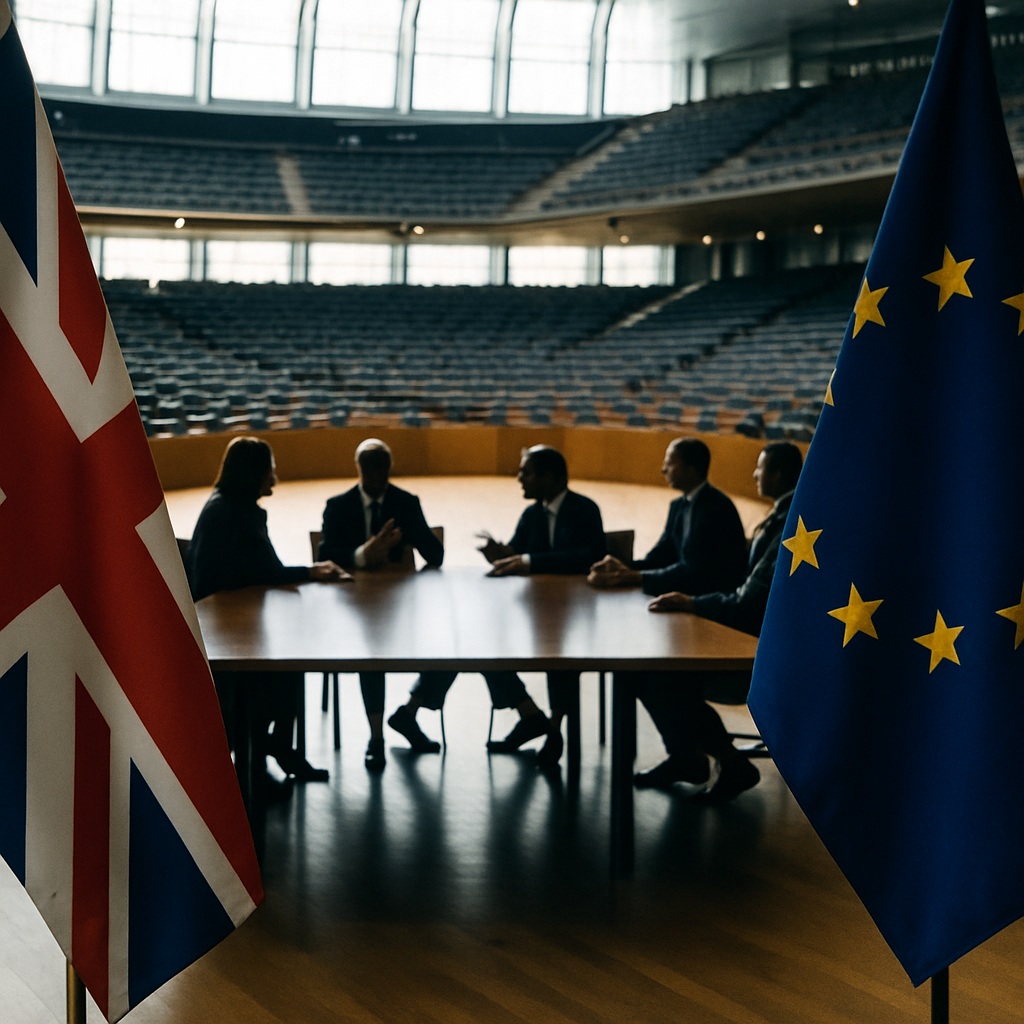
Northern Ireland MEPs push for observer status as identity debates sharpen
In Brussels, a quiet but symbolically powerful campaign is gaining momentum: a cross-party group of Irish Members of the European Parliament has formally requested that Northern Ireland be granted observer status in the European Parliament. The proposal taps directly into ongoing debates about identity, sovereignty, democratic legitimacy, and representation that have intensified since the United Kingdom’s withdrawal from the EU. While the request remains informal, its political and cultural weight has sparked renewed discussions about what it means to belong in a post-Brexit Europe.
The initiative stems from a political reality unique on the continent. Northern Ireland occupies a hybrid constitutional space: part of a non‑EU country, yet home to citizens who retain full EU rights through Irish citizenship. Moreover, the region remains economically tied to elements of the EU single market through the post‑Brexit trade arrangements. These overlapping identities and obligations, supporters argue, create a democratic gap that observer status could help bridge. They describe the proposal as a practical recognition of Northern Ireland’s continued relationship with the EU, even in an era shaped by regulatory divergence and political recalibration.
Irish MEPs backing the proposal emphasize that the request is not about reopening Brexit or redefining sovereignty, but ensuring that the voices of Northern Irish citizens—many of whom still feel connected to Europe—are represented in discussions that directly affect them. They point to legislation on trade, agriculture, regulation, consumer protections, environmental standards, and cross‑border cooperation as areas where the region remains closely intertwined with European frameworks. Without formal representation, they argue, Northern Ireland risks being shaped by decisions in which it has no say.
The debate has also been shaped by shifting political attitudes within Northern Ireland itself. While Brexit exposed deep divisions along community and political lines, recent discussions around observer status have shown surprising convergence in some quarters. A number of civic groups, business organisations, and academics from across the political spectrum have suggested that limited participation in EU discussions could provide stability and predictability during a period of constitutional uncertainty. For businesses operating across the island, the capacity to engage more directly with EU lawmakers is seen as critical in navigating the evolving post‑Brexit environment.
Opposition to the idea persists, however, and it arrives from multiple directions. Some critics in the UK caution that any formal role for Northern Ireland within an EU institution risks muddying constitutional waters or fuelling debates about the region’s long‑term status. Others argue that granting observer status to a region of a non‑member state would set a precedent that could inspire similar calls from areas within EU member countries that hold distinct political identities. They warn that the Parliament must avoid policies that could inadvertently encourage regional fragmentation or politicise internal territorial dynamics.
EU officials observing the debate have acknowledged the sensitivity of the issue. Several have noted that while the European Parliament does have mechanisms for observer participation—typically used during pre-accession periods—Northern Ireland’s situation is without precedent. It is neither a candidate for membership nor a region moving toward formal integration. Yet its citizens can claim EU citizenship through Ireland, and its economy remains partly aligned with EU rules. This tension has pushed European lawmakers to confront broader questions about how the EU engages with territories that remain functionally connected despite political separation.
Behind the legal and political arguments lies a deeper cultural conversation about belonging. Many residents in Northern Ireland, particularly younger generations, continue to identify strongly with Europe despite the UK’s departure. Student mobility, research partnerships, and cross‑border cultural initiatives remain active symbols of that relationship. Observer status, supporters say, would simply formalise an existing civic and cultural reality: Northern Ireland is still, in many ways, part of the European conversation, even if it is no longer part of the EU.
For nationalists in Northern Ireland, the request represents a pragmatic step that aligns with their broader vision of maintaining strong ties with Europe. For some unionists, however, the conversation is more complex. While there is resistance to anything that might appear to weaken constitutional links to the UK, others have recognised that observer status could offer practical benefits—particularly around trade stability and regulatory clarity—without altering Northern Ireland’s position within the United Kingdom. This nuanced shift reflects a broader trend: Brexit reshaped political priorities in ways that continue to evolve, sometimes unpredictably.
The proposal also intersects with ongoing efforts to restore trust in Northern Ireland’s political institutions. After years of electoral uncertainty and periodic suspensions of devolved government, many citizens have grown weary of political conflict. Some commentators argue that engagement with the European Parliament—even at an observer level—could help Northern Ireland re‑anchor itself in collaborative politics at a moment when cooperation is urgently needed. They see it as an opportunity to move beyond debates defined solely by constitutional identity and toward discussions focused on shared economic and social interests.
Still, the path toward any formal arrangement remains uncertain. The European Parliament would need to weigh not only the political and legal implications but also the symbolic message such a move would send. Some EU diplomats have privately noted that accommodating the request could demonstrate the EU’s continued openness and adaptability, showcasing a modern, flexible approach to geopolitical complexity. Others believe the institution must avoid actions that might be interpreted as undermining the sovereignty of a neighbouring non‑member state.
As the conversation evolves, the request for observer status has achieved something unusual: it has prompted reflection across multiple political landscapes at once. In the UK, it raises questions about how territories with hybrid identities can be represented. In Ireland, it touches on the island’s shared future and its intricate relationship with Europe. And in Brussels, it forces policymakers to confront the growing reality that borders—political, cultural, and economic—no longer align neatly with lived experience.
Whether the European Parliament ultimately embraces or rejects the idea, the conversation has already shifted the terms of debate. It highlights a truth that resonates far beyond Northern Ireland: European identity, once assumed to align with membership, has become more fluid, more personal, and more deeply rooted in history and culture than treaties alone can capture. As Europe continues to adapt to new realities, the request from Northern Ireland may be a sign of the evolving relationship between the EU and the communities that remain connected to it—even from beyond its formal borders.



 The Tower Post