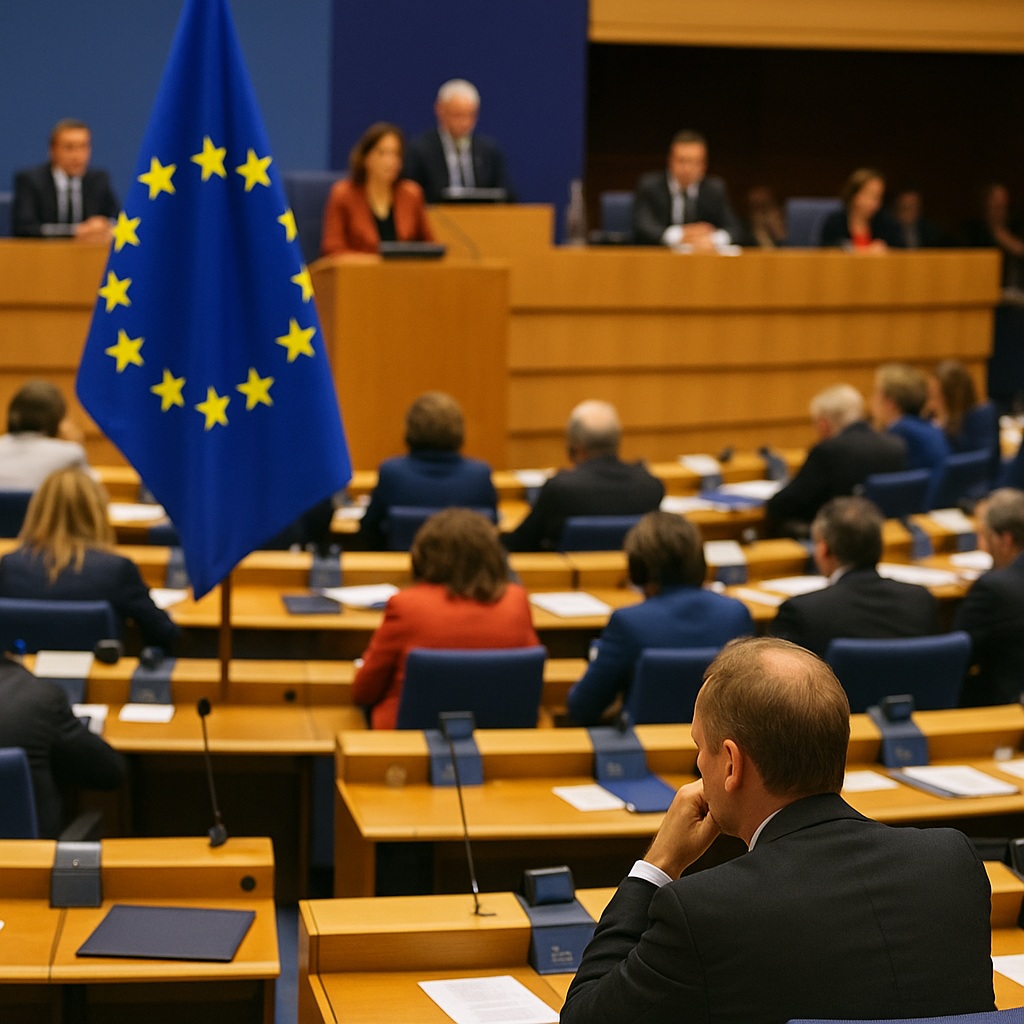
The sustainability vote is changing the game

Brussels — A quiet but telling shift unfolded recently in the European Parliament, where a tightly contested vote on amendments linked to the Corporate Sustainability Reporting Directive (CSRD) revealed a new political arithmetic in Brussels—one that could jeopardise a decade of EU environmental ambition.
The CSRD, long considered a cornerstone of the EU’s sustainable-finance architecture, has been central to efforts to push companies toward greater transparency on climate impact, supply-chain risks, and social responsibility. But the latest parliamentary vote showed a fracturing consensus. Lawmakers who once reliably supported the bloc’s green agenda split across new lines, forming unusual alliances that signal a broader political realignment.
At the heart of the vote was a push by several groups to delay or dilute reporting obligations for medium-sized companies, citing administrative burdens, competitiveness concerns, and geopolitical stresses. While the proposal did not fully overturn existing rules, the razor-thin margin and the coalition that backed the amendments prompted alarm among environmental advocates and some industry leaders who had adapted early to stricter compliance rules.
From predictable blocs to fluid alliances
For nearly ten years, green legislation in Brussels benefited from a stable coalition: progressive parties, centrist groups, and several moderate conservatives often formed a predictable pro-sustainability majority. That stability now appears to be fading.
Parliament insiders describe the vote as a “stress test” of the shifting political landscape. A growing segment of center-right lawmakers has recalibrated its stance, favouring industrial competitiveness over regulation. Meanwhile, centrists—traditionally the hinge of EU climate policymaking—are splintering under pressure from domestic politics, inflation-sensitive constituencies, and rising Eurosceptic narratives.
On the other side, environmentalist groups accuse opponents of “weaponising bureaucracy” to stall green laws already on the books. Yet even some sustainability-friendly lawmakers privately admit that compliance fatigue among small and mid-sized firms is real—and rising.
Ripple effects beyond the CSRD
What makes the recent vote especially significant is not the technical scope of the amendments, but what the political behaviour suggests for future legislation.
Over the coming year, the Parliament is expected to examine multiple files tied to the Green Deal’s implementation: nature restoration, renewable-energy permitting, the circular-economy package, and sustainable-product standards. If the CSRD vote is a bellwether, these initiatives may face an unpredictable path.
Policy analysts warn that fragmented coalitions could usher in piecemeal policymaking, where individual proposals face delays, carve-outs, or diluted targets. “The machinery slows, and the ambition softens,” one Brussels-based sustainability consultant observed. “It’s not a rollback—but it can feel like one.”
Business voices diverge
The business community is far from unanimous.
Large multinational corporations—many already reporting according to international sustainability standards—express concern that regulatory instability could disadvantage companies that have invested heavily in compliance systems.
By contrast, small and medium-sized enterprises continue to argue that European lawmakers must recognise the reality of rising operational costs and global competition. Several industry groups say the Parliament should preserve the intent of the CSRD while adjusting timelines and thresholds.
This diversity of views reflects an underlying tension: how to maintain Europe’s role as a global leader in sustainable business practices without undermining economic resilience amid geopolitical shocks.
A test of the EU’s identity
Beyond the technicalities, the vote forces a deeper question about the EU’s political identity. Green policy has long been framed as part of Europe’s soft-power projection and its model of value-driven governance. A weakening of the sustainability consensus could mark the first significant ideological recalibration since the launch of the Green Deal.
Some observers argue that the shift may simply reflect political maturation: an attempt to balance climate ambition with social and economic realities. Others fear a regression driven by polarisation and crisis fatigue.
What seems certain is that the sustainability vote has changed the rules of engagement. Future debates, once predictable, are now wide open.
The coming months will show whether the Parliament’s evolving alliances represent a temporary adjustment—or the beginning of a more profound transformation in European climate governance.



 The Tower Post