A multi‑year collaboration seeks to push quantum computing from isolated prototypes to distributed, resilient systems

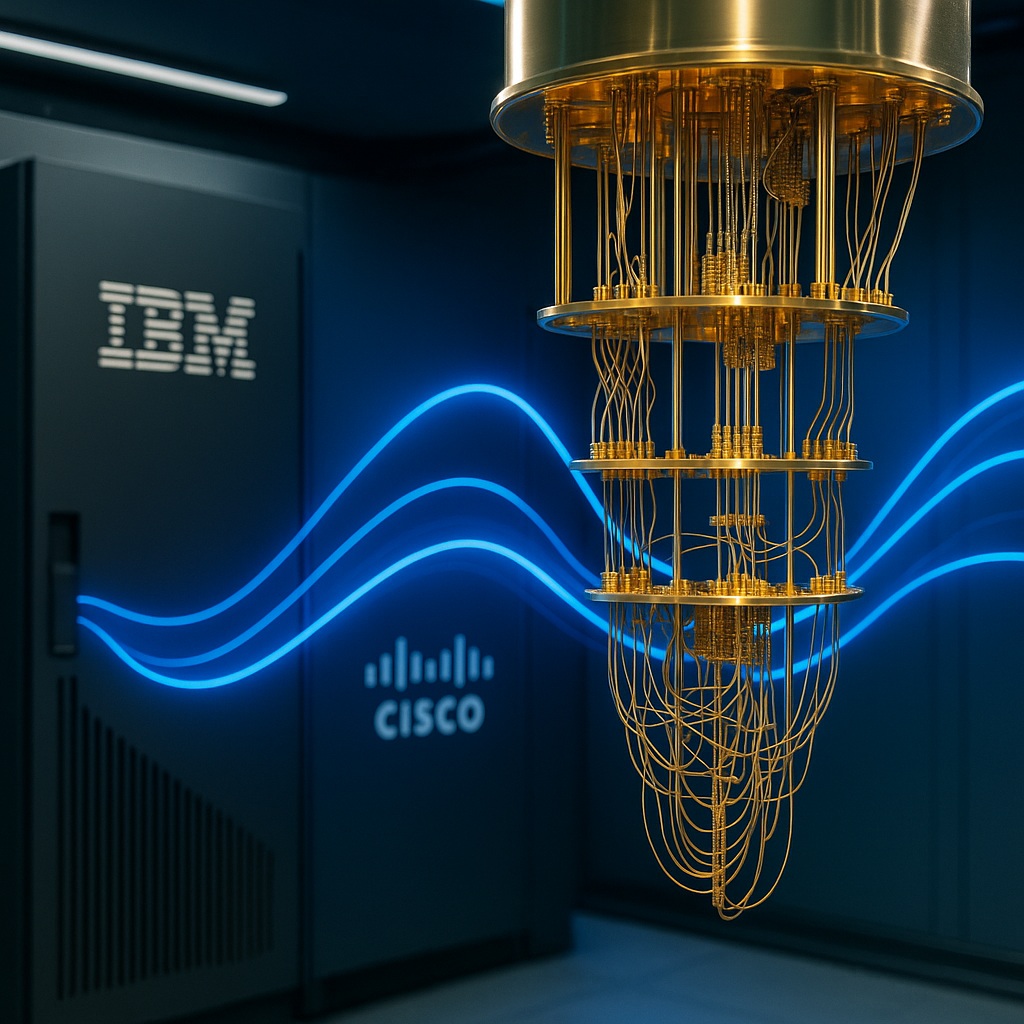
In a move that signals a profound shift in the global quantum computing landscape, IBM and Cisco Systems have announced a long‑term collaboration to design and build a network of large‑scale, fault‑tolerant quantum computers. The companies say their shared ambition is to demonstrate a proof‑of‑concept system within the next several years, an achievement that—if successful—could mark a turning point in the race toward scalable quantum advantage.
The announcement arrives at a time when the quantum field is transitioning from experimental demonstrations to engineering‑driven roadmaps. For years, major players have focused on improving qubit quality and extending coherence times. But as both companies explained, progress now requires bringing quantum hardware and classical networking closer together. Cisco will contribute its expertise in secure, high‑throughput networking, while IBM brings decades of quantum hardware and software development to the partnership.
At the heart of the initiative is the effort to make quantum machines genuinely fault‑tolerant, capable of withstanding qubit errors through advanced error‑correction protocols. Building such systems at scale demands unprecedented coordination between devices. The collaboration aims to create architectures that allow multiple quantum processors to operate as a unified computational fabric, exchanging quantum information reliably across distances using emerging photonic and hybrid interconnect technologies.
Industry analysts note that this shift toward distributed quantum architectures mirrors earlier transitions in classical supercomputing, where clusters replaced single monolithic machines. The stakes are high: distributed fault‑tolerant systems could accelerate quantum workloads in chemistry, materials science, logistics optimization, and cryptography—fields where even marginal improvements in coherence and connectivity can produce exponential performance gains.
Executives from both companies highlighted the role of open ecosystems in enabling broad adoption. Their plan includes contributions to open‑source quantum software, new networking standards for quantum‑classical co‑design, and the development of secure protocols to protect quantum data in transit. Observers expect this effort to influence government initiatives and research consortia worldwide, particularly as organizations look for robust, vendor‑neutral ways to integrate quantum capabilities into existing infrastructure.
Despite the ambition, significant challenges remain. Synchronizing quantum states between remote machines is notoriously difficult, and maintaining error‑corrected qubits across a network adds layers of complexity not present in standalone systems. Engineers working on the project emphasize that the aim is not to eliminate these challenges overnight but to set a credible path toward systems that can operate continuously and reliably.
Still, the announcement has sparked optimism across laboratories and innovation centers. As the field prepares for the next stage of quantum development, the IBM‑Cisco alliance represents a major bet on the power of interdisciplinary engineering. While much work lies ahead, the collaboration marks one of the most concerted efforts yet to turn quantum networking from theory into engineered reality—signaling that the age of distributed quantum computing may be closer than expected.




 The Tower Post