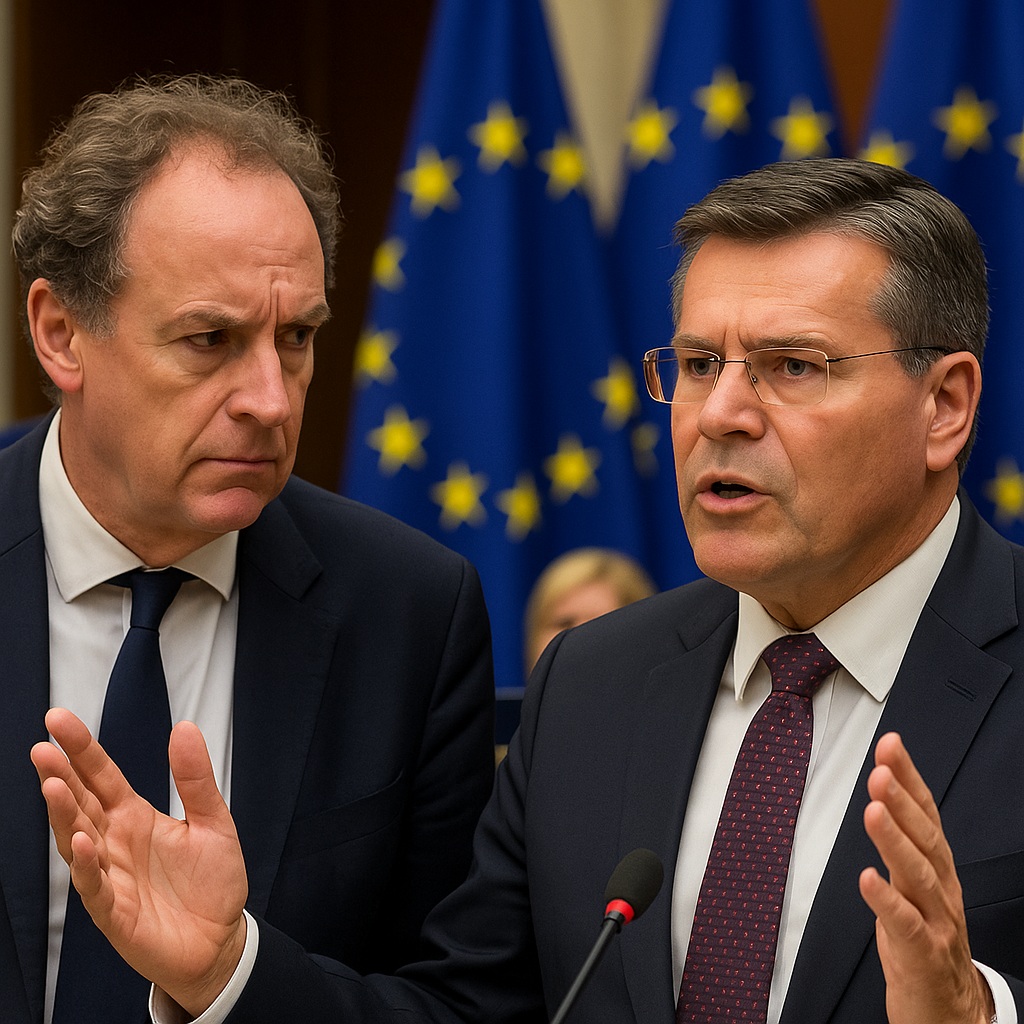
Senior MEP warns proposed framework could invite intrusive state intervention as Brussels sharpens its strategic autonomy agenda.
In Strasbourg, a simmering debate inside the European Parliament spilled into public view as a senior Member of the European Parliament sharply criticised what is increasingly being referred to in EU circles as the “Šefčovič doctrine.” The doctrine, associated with European Commission Vice-President Maroš Šefčovič, outlines a more assertive, interventionist approach to strengthening the EU’s economic security amid mounting geopolitical pressures and supply-chain vulnerabilities.
Although still unofficial, the framework is being circulated informally among key committees. It emphasises tighter screening of foreign investments, expanded state support for strategic industries, and a bloc-wide mechanism for crisis-time government coordination. For supporters, the emerging doctrine represents a long-overdue effort to shield Europe’s economic core from external coercion and technological dependencies.
But not everyone is convinced.
A veteran MEP familiar with the file told reporters that the approach risks pulling the EU into “permanent emergency economics” and granting national governments “a carte blanche for intervention under the banner of security.” The lawmaker argued that while the EU must adapt to new geopolitical realities, it should avoid replicating what they described as “state muscularity for its own sake,” cautioning that such an approach could undermine competition, fragment the single market, and alienate smaller member states.
The critique lands at a sensitive moment for Brussels. Institutions have been under pressure to demonstrate resilience in critical technologies, energy supply, and strategic raw materials. The Commission has been signalling that long-term vulnerabilities must be addressed with tools that go beyond conventional market instruments. Šefčovič, who has become a central figure in coordinating the EU’s response to industrial and supply-chain strains, has championed tighter collective oversight and stronger policy alignment among capitals.
The senior MEP, however, questioned whether the proposed measures would remain proportionate once translated from principle to practice. “Once you call something a matter of security, you shift the entire logic of policymaking,” they warned. “Scrutiny falls, exceptions multiply, and we wake up with a system where emergency powers become normalised.”
Other parliamentarians echoed concerns that a broad definition of economic security could be weaponised by governments seeking to shield national champions or delay market-opening commitments. Experts following the discussion noted that, while the EU has made strides in coordinating tools like investment screening, member states remain wary of ceding further strategic authority to Brussels.
Despite the criticism, Commission representatives maintain that any doctrine ultimately endorsed will respect established EU law and uphold market principles. They also stress that the framework is not about centralising power but about ensuring the Union can act decisively when essential interests are threatened.
As internal consultations continue, the debate underscores the delicate balance EU policymakers must strike: strengthening the bloc’s resilience without slipping into protectionism; enhancing security without compromising openness; and projecting unity without overriding national concerns.
For now, the “Šefčovič doctrine” remains an evolving idea rather than a concrete legislative package. But the sharp reaction from within the Parliament suggests that turning it into a coherent policy will require careful navigation of political, economic, and institutional sensitivities. The coming weeks are likely to see intensified negotiations as lawmakers seek clarity on how far the EU should go in redefining its approach to economic security.

 The Tower Post