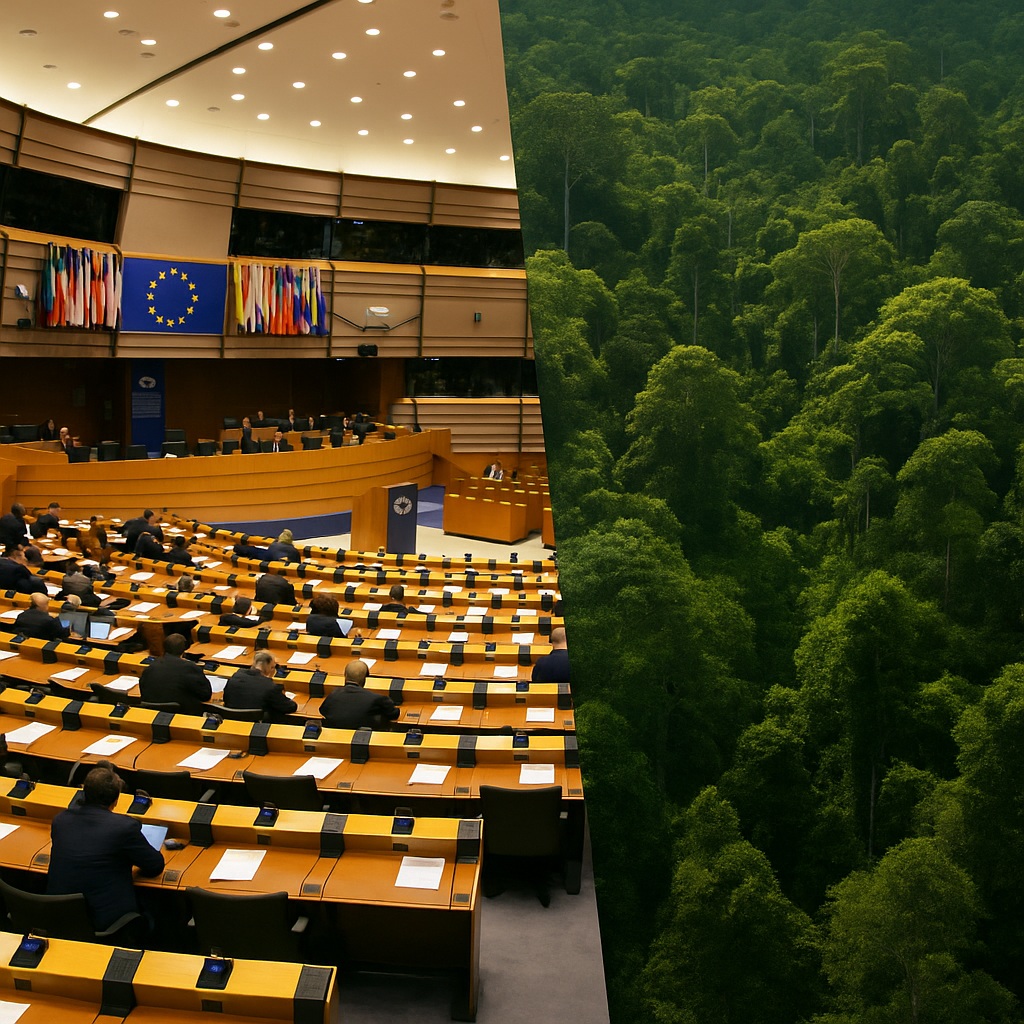
Political rift deepens as moderates clash over delaying EU deforestation‑linked import ban
Brussels — The centrist majority in the European Parliament is facing one of its most visible internal fractures as members struggle to agree on whether to delay a sweeping regulation banning products linked to deforestation from entering the EU market. The regulation, seen by many as a cornerstone of the EU’s global climate leadership, has become a flashpoint in the Parliament’s traditionally pragmatic middle bloc.
At issue is a law requiring companies to verify that goods such as soy, cattle, cocoa, coffee, palm oil, timber and natural rubber do not originate from recently deforested land. The rule, designed to reshape global supply chains, demands full traceability and geolocation data from producers and traders — requirements some lawmakers say businesses are unprepared to meet.
While the centrist coalition had previously held firm on its environmental commitments, the pressure from industry groups and export‑dependent members has widened an internal divide. One faction argues that an immediate rollout risks overwhelming small and medium‑sized enterprises and straining trade relations with supplier countries. Another insists that any delay would signal weakening resolve and jeopardize the EU’s credibility on climate and biodiversity.
Committee meetings this week highlighted the tension. Several MEPs signaled they may break from the group line during the upcoming plenary vote, prompting party coordinators to float a compromise amendment that would postpone implementation. The proposal, however, has only intensified disagreement, with some warning it could undermine the overall strength of the regulation, while others fear a failure to delay could provoke economic backlash.
Industry associations have lobbied vigorously for more time, citing concerns over data‑collection capacity and the risk of severing ties with EU markets. Meanwhile, environmental groups warn that postponing enforcement would embolden deforestation‑linked sectors and weaken global momentum toward sustainable land‑use practices.
Supplier nations in Latin America, Africa and Southeast Asia — already adjusting land‑use policies and export documentation — have expressed frustration at the uncertainty coming from Brussels. Officials argue that shifting deadlines would complicate their own transition plans and discourage investment in sustainable production.
The coming vote will test whether the centrist bloc can maintain cohesion under mounting political and economic pressure. Observers say the outcome will also shape the EU’s broader reputation as it seeks to use its market power to drive global environmental standards. For many inside the Parliament, this moment represents a pivotal measure of whether the EU’s deforestation‑free ambitions will remain intact or be slowed by internal disagreement.




 The Tower Post