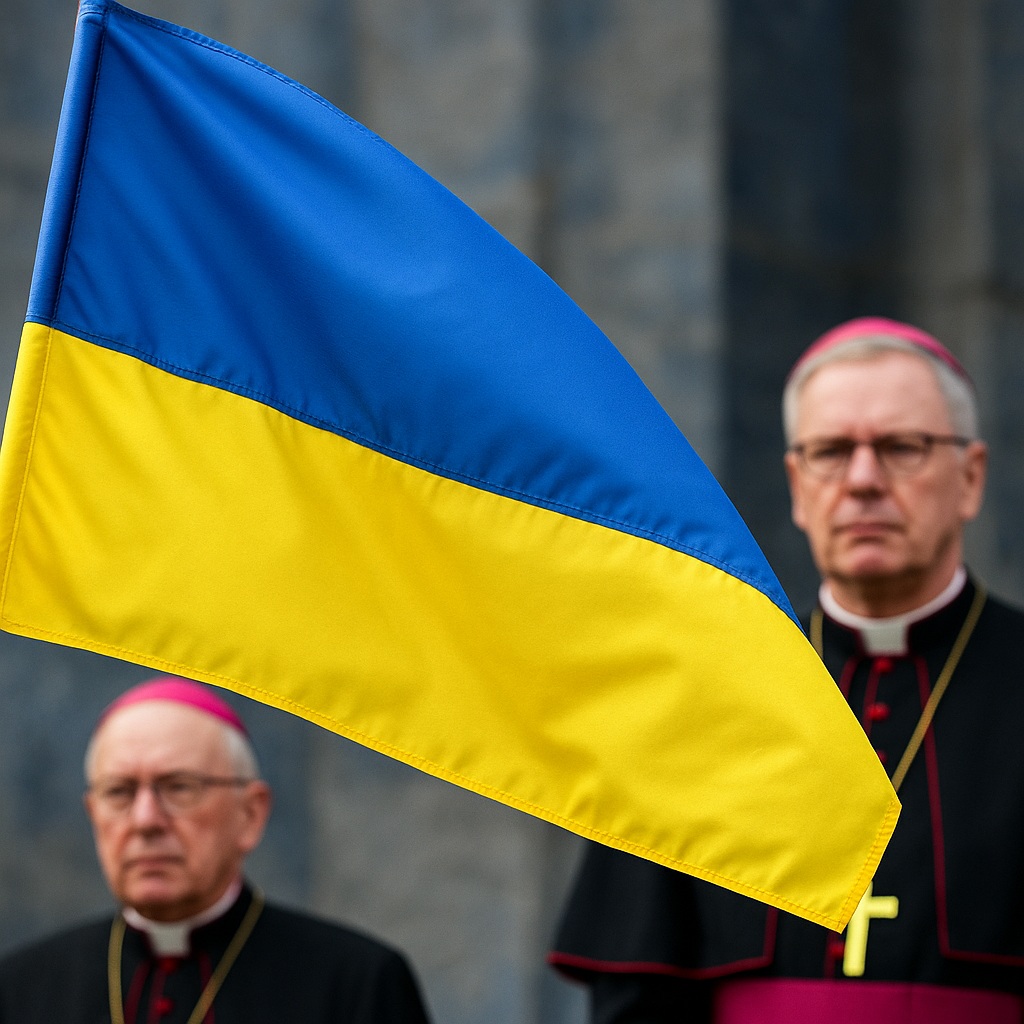
Polish and German Bishops Renew Call for Europe to Stand Firm Against Russia’s War in Ukraine
As Europe grapples with shifting political winds, rising economic pressures, and a palpable sense of war fatigue, Catholic bishops from Poland and Germany have issued a renewed and urgent appeal for unity. Their joint message—released in the days leading up to a key moment of reflection across churches and civic institutions—calls on Europeans to resist complacency and remain steadfast in confronting Russia’s ongoing war against Ukraine.
The bishops’ appeal arrives at a delicate time. Although the war has persisted long enough to blur into the background of daily life for many Europeans, its consequences continue to ripple across the continent. From disrupted trade routes to heightened security concerns and the ongoing strain of supporting displaced families, the conflict remains a defining test of Europe’s collective resolve.
In their message, the Polish and German bishops warn that drifting attention and political divisions risk undermining that resolve. They point to a worrisome rise in voices urging a retreat from European commitments, whether through reduced aid, diminished diplomatic engagement, or internal polarization. Such tendencies, they argue, threaten not only Ukraine’s sovereignty but also the principles that have shaped modern Europe.
The bishops emphasize that unity—in purpose, values, and action—remains Europe’s strongest instrument against authoritarian aggression. They underscore that the war is not a remote geopolitical struggle but a direct challenge to the vision of cooperation, dignity, and peace forged in the aftermath of the continent’s darkest chapters.
The message draws on the shared histories linking Poland, Germany, and Ukraine, reminding readers of the moral responsibility rooted in decades of reconciliation efforts. These ties, the bishops say, should inspire nations to resist fatigue and maintain focus on the human cost of the war. They highlight personal testimonies from Ukrainian families now living in parishes across Central and Western Europe, many of whom face long-term uncertainty while remaining deeply connected to homes endangered by ongoing violence.
Church leaders also acknowledge the heavy burden borne by European communities. Local governments, volunteer networks, and faith-based organizations have supported unprecedented numbers of displaced people, often stretching limited resources. Households continue to confront inflation and logistical disruptions tied to the conflict. Yet the bishops argue that such pressures, while real, should not overshadow the scale of destruction endured by Ukrainians nor the broader consequences of allowing aggression to succeed unchecked.
The appeal extends beyond moral exhortation to a call for political clarity. European leaders, they say, must continue to pursue diplomatic initiatives that uphold justice rather than capitulation. They urge governments to maintain humanitarian programs, strengthen support for reconstruction efforts, and reinforce security measures designed to deter further destabilization.
The bishops have long engaged in cross-border dialogue, and their renewed joint statement reflects an ongoing commitment to bridge national perspectives. Their cooperation aims to serve as a model for broader European solidarity, demonstrating how institutions can collaborate despite differing histories, languages, and political climates.
Across many regions, parish communities have mobilized in tangible ways—from hosting Ukrainian families to organizing cultural and educational programs that foster integration. Church leaders argue that these acts of compassion help reinforce the social fabric at a time when misinformation, economic anxiety, and political extremism threaten to erode trust.
The bishops also note that Ukrainians themselves continue to show remarkable resilience. Despite profound losses, communities across Ukraine remain determined to rebuild, educate their children, and sustain cultural identity under extreme conditions. The bishops describe this resolve as a source of inspiration for Europe, urging citizens not to view the war solely through the lens of geopolitical fatigue.
Their message closes with a plea for ongoing empathy. They remind Europeans that unity is not merely a strategic necessity but an expression of shared humanity. As the war’s uncertainty persists, they encourage individuals and institutions alike to remain attentive, informed, and engaged.
For many observers, the joint statement stands as both a warning and an invitation—a warning that complacency could carry grave consequences for European stability, and an invitation to reaffirm the values that have guided the continent through decades of peace. In the bishops’ view, the future of Europe may well depend on whether its citizens choose perseverance over fatigue.
As communities across Europe prepare for seasonal reflections and gatherings, the bishops’ call resonates as a reminder of the responsibilities that transcend national borders. Their appeal underscores a conviction that unity, though tested, remains essential to securing a peaceful and stable European future—a future that, they argue, begins with standing firmly beside Ukraine.

 The Tower Post