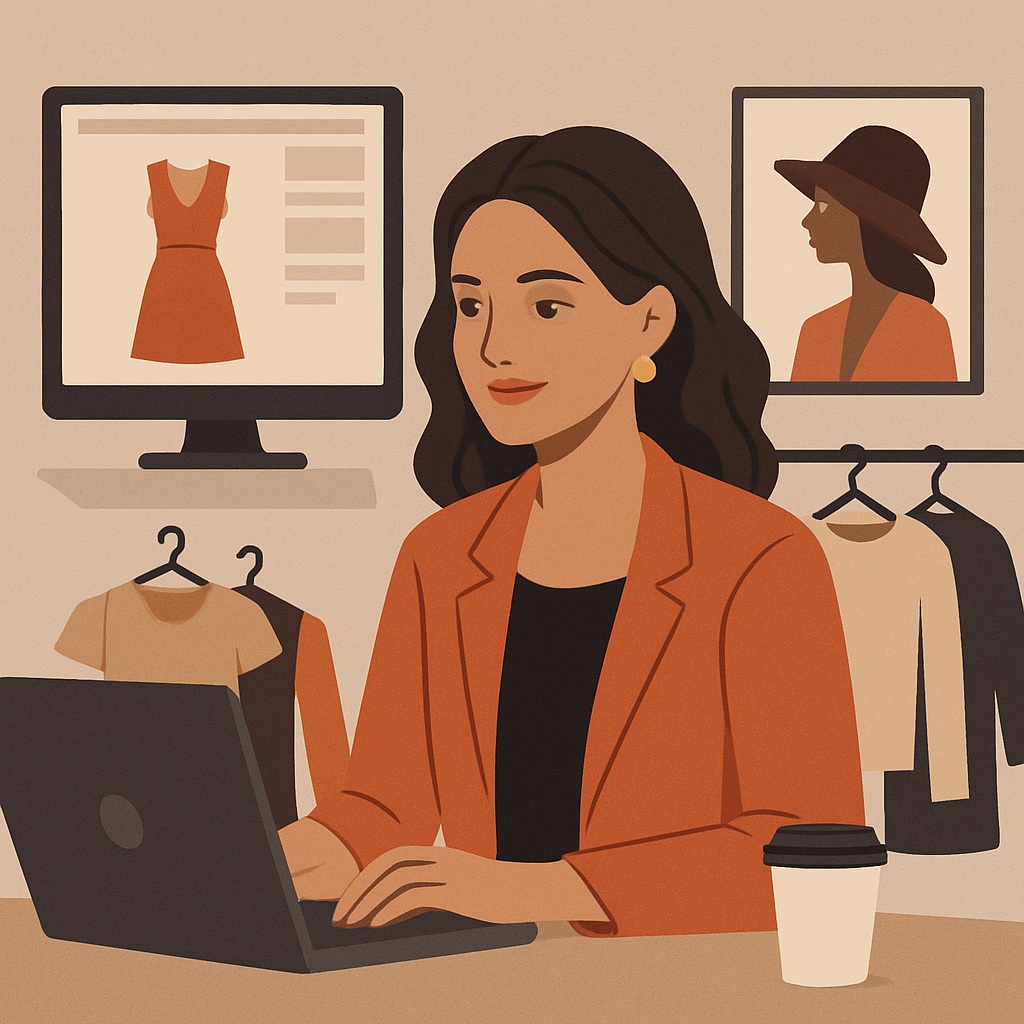
A new platform reshapes how people discover fashion—by putting women at the center of product, design, and decision‑making.
In the fast-evolving space where artificial intelligence meets consumer culture, a new fashion technology platform called Daydream is quietly—but decisively—reshaping how people discover, curate, and interact with style. Launched by a team dominated by women across product, design, engineering, and leadership roles, Daydream has quickly become an emblem of what the industry could look like when women are not just present, but leading at every level.
Rather than positioning itself as another algorithmic shopping assistant, Daydream approaches fashion as a deeply emotional and expressive domain—one that requires empathy, context, and a rich understanding of personal identity. Its founders argue that these qualities emerge more naturally when women are empowered to drive the creative and technical direction. The result is an AI agent that feels less like a recommendation engine and more like a collaborator with taste, intuition, and cultural awareness.
Daydream’s core experience revolves around what it calls “fashion conversations”—dialogues between users and the AI that mirror the experience of speaking with a trusted stylist. Whether a person is preparing for a new job, building a capsule wardrobe, or simply seeking inspiration, the agent navigates style references, body‑geometry preferences, mood cues, and contextual signals to offer curated options. Its interface also weaves editorial content through the discovery flow, blurring the lines between magazine-like storytelling and personalized shopping.
Behind this user-facing simplicity is a leadership model that challenges the current norms of both AI and fashion. With women spearheading engineering decisions, data‑ethics frameworks, style direction, and product strategy, Daydream has created a culture where nuance and representation shape the technology from the inside out. Many team members say this has influenced everything from how datasets are constructed to how the agent interprets style language that has historically been shaped by narrow aesthetics.
Within the platform’s design studio, creative leads draw on their backgrounds in runway styling, visual merchandising, and editorial journalism. These women work alongside machine-learning engineers to develop AI systems that recognize subtleties often overlooked in mainstream recommendation engines—like the difference between playful maximalism and chaotic layering, or the emotional variance between confidence dressing and comfort dressing. The AI is trained not only to parse these distinctions, but to explain them to users in a way that feels empowering rather than prescriptive.
As the broader tech world debates the future of AI agents, Daydream has attracted attention for rethinking what it means to build “human-centric” intelligence. Instead of a generic assistant designed to serve everyone identically, Daydream’s experience reflects the belief that personal style requires a form of digital co‑creation. Women on the team often describe the product as an extension of conversations they’ve had throughout their lives—helping friends get ready, interpreting trends, or reclaiming fashion as a space of self‑expression rather than judgment.
Industry analysts have noted that Daydream’s rise arrives at a moment when consumers are demanding more inclusion and authenticity in fashion systems. Algorithmic consumption had begun to flatten taste, push overly homogenized aesthetics, and replicate the biases embedded in training data. Daydream positions itself as an antidote, not by rejecting AI, but by insisting that the people building it should mirror the diversity of the people using it.
The internal culture also mirrors this philosophy. Mentorship programs, cross‑functional learning groups, and open‑design reviews ensure that junior contributors—many of whom are young women entering either tech or fashion for the first time—have direct influence over key product decisions. Leadership insists that the company’s structure is not performative but foundational: diversity is baked into the platform’s architecture because it is baked into the team itself.
Although the technology powering Daydream is sophisticated, the company prefers to spotlight the people behind it. Profiles of team members appear regularly in the platform’s editorial feed, showcasing the inspirations, subcultures, and personal histories that inform their work. This transparency has resonated with users who want to understand not only what an AI recommends, but who shaped its worldview.
As Daydream continues to evolve, its impact extends far beyond fashion. It stands as a proof point for what AI companies can become when they rethink leadership norms and redefine whose voices matter in shaping the next generation of tools. In a landscape often dominated by male-led labs and engineering teams, Daydream offers a counter-narrative—a reminder that innovation thrives where representation is not an initiative, but a default.
For the individuals building the platform, the mission goes beyond commerce. Daydream is, at its core, a statement about ownership: women taking control of the technologies that interpret culture, creativity, and identity. And for millions of users who now rely on the platform for inspiration, guidance, and self-expression, that shift is more than symbolic—it is transformative.




 The Tower Post