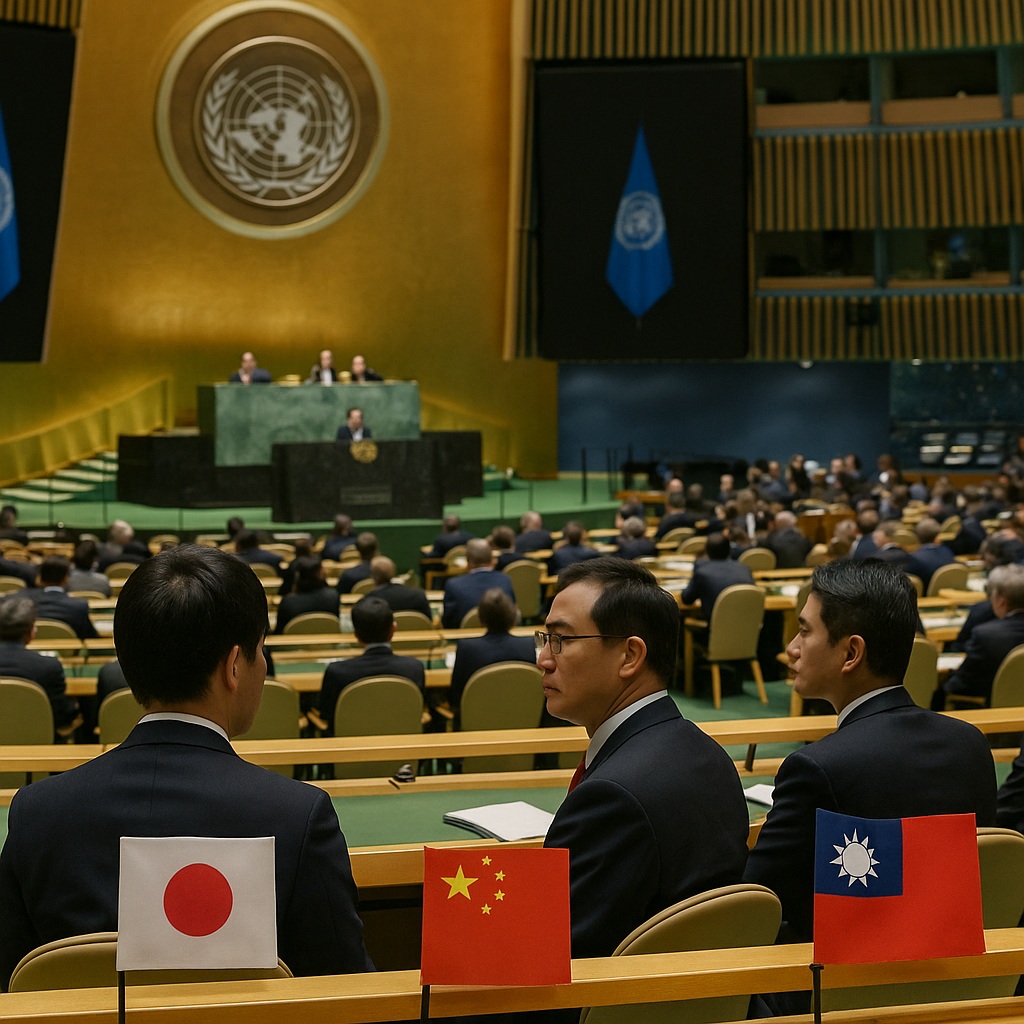
Japan–China tensions over Taiwan spill into the United Nations amid growing military posturing
In a week marked by rising unease across the Indo‑Pacific, China has formally brought its dispute with Japan over Taiwan before the United Nations, accusing Tokyo of issuing veiled threats of armed intervention and pledging that Beijing will take “all measures necessary” to defend what it calls its sovereign territory.
The move, delivered during a tense Security Council session, reflects Beijing’s accelerated diplomatic campaign to frame Japan as an aggressor. It also highlights the expanding strategic stakes in the region, where even small shifts in rhetoric can send ripples through defence establishments and financial markets from Seoul to Washington.
Japanese officials, while avoiding any direct escalation in their public statements, reiterated their long‑standing position: that stability around Taiwan is essential to Japan’s security and economic lifelines. Tokyo denies issuing threats, framing its posture as deterrence in the face of widening Chinese military activity around the island. Analysts note that Japanese ships and aircraft have increased their presence near key straits, signalling readiness without openly breaching diplomatic norms.
China’s ambassador to the UN argued that Japan’s recent defence reforms — including closer coordination with allied forces and more flexible rules for collective self‑defence — amount to preparation for intervention. He accused Tokyo of “irresponsible militarization” and warned that any involvement in the Taiwan issue would trigger countermeasures. These remarks were met with firm pushback from Japan’s envoy, who called China’s claims “inflammatory and unfounded,” emphasizing that Tokyo seeks only to maintain peace.
Behind the diplomatic theatre lies a broader power struggle. China has been steadily expanding naval and air operations around Taiwan, prompting renewed attention from neighbouring governments already wary of the People’s Liberation Army’s assertiveness. Japan, meanwhile, has deepened trilateral coordination with the United States and South Korea, quietly accelerating joint exercises and information‑sharing mechanisms that Beijing views as containment.
Inside the Security Council chamber, reactions were divided. Western members expressed concern that China’s framing could set a precedent for leveraging the UN to pressure regional rivals. Several nations in Southeast Asia, balancing major‑power ties, called for restraint but offered no clear alignment. Diplomats familiar with closed‑door discussions said that although no resolution is expected, the symbolic weight of the confrontation marks a turning point.
Experts warn that the rhetoric now on display signals a narrowing margin for error. As Beijing and Tokyo project firmness to domestic audiences, opportunities for miscalculation multiply. UN officials noted growing anxiety over maritime incidents in contested waterways, where encounters between patrol vessels have become more frequent and unpredictable.
For Taiwan, the unfolding drama at the UN is yet another reminder of its precarious position. Officials on the island have avoided taking sides in the diplomatic spat, instead urging the international community to focus on maintaining open channels of communication. Still, the heightened exchange between Asia’s two largest economies underscores how the island’s future remains tied to dynamics far beyond its shores.
As geopolitical pressures mount, the UN has become a stage for two competing visions of regional order. Whether it can also serve as a venue for easing tensions remains uncertain. For now, the dispute between China and Japan over Taiwan stands as one of the most consequential flashpoints shaping the strategic landscape across the Pacific.
 The Tower Post