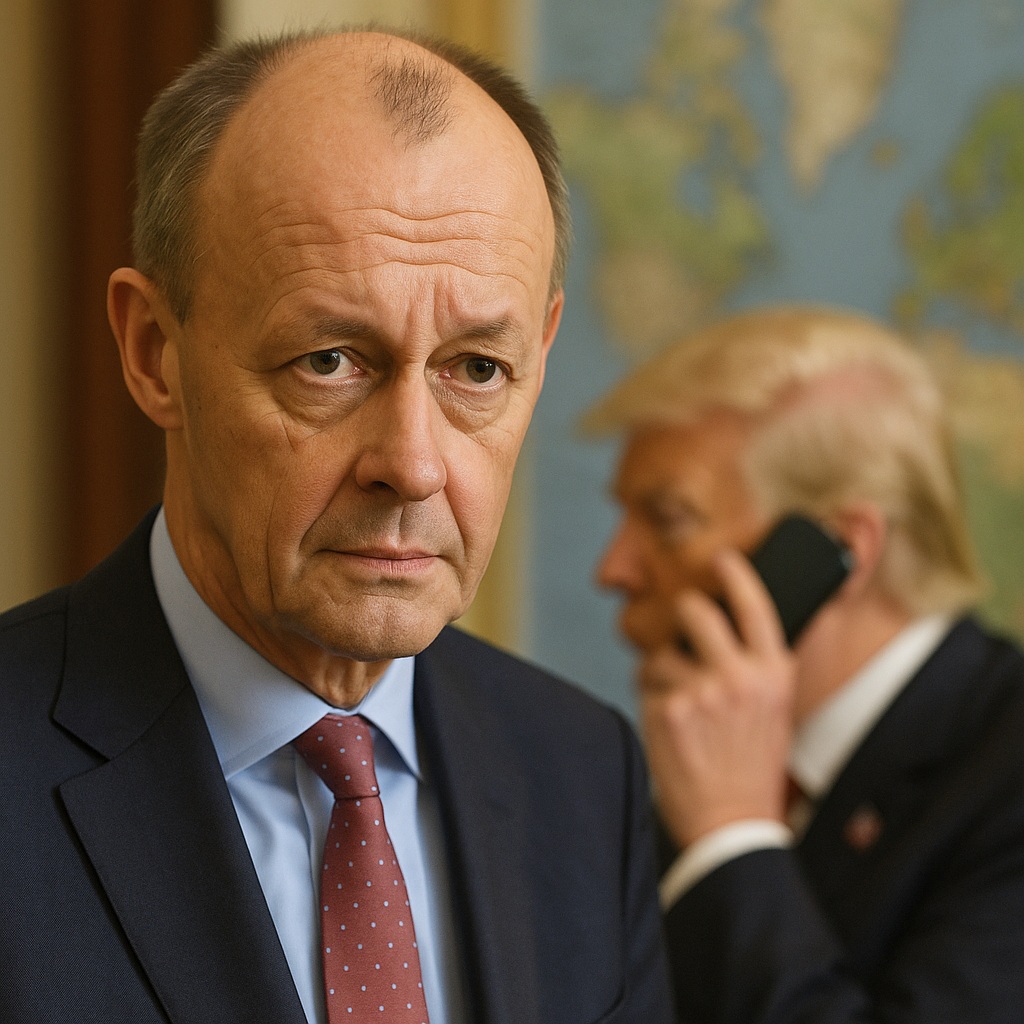
In a strategic phone call, Germany’s chancellor voices Europe’s unyielding backing for Ukraine – and underscores the continent’s stake in the outcome of any U.S.-sponsored peace plan.
Germany’s chancellor, Friedrich Merz, used a recent phone call with U.S. President Donald Trump to deliver a clear message: Europe must be at the table if a lasting settlement is to be reached in Ukraine. The conversation marks a pivotal moment in trans-Atlantic diplomacy, as the war in Ukraine enters a new and uncertain phase, and European capitals look to assert their role beyond Washington’s lead.
Merz reiterated that wars cannot be ended by great powers over the heads of the countries involved, and stressed that any deal must secure Ukraine’s consent—as well as Europe’s.
According to Merz’s office, the chancellor told Trump during their conversation that Europe’s involvement in Ukraine’s future is indispensable. He warned that if Ukraine were to lose and its statehood collapse, the consequences would ripple across the continent — not just for Kyiv but for Berlin, Brussels and beyond.
At the same time, Merz acknowledged that although an opportunity exists to end the war, the path is still long and difficult. He referenced the failed 1994 Budapest Memorandum—in which Ukraine relinquished its nuclear arsenal in exchange for security assurances that ultimately proved ineffective—as a cautionary tale.
The call comes in the wake of a U.S.-led peace-plan initiative for Ukraine, which has stirred concern among European allies that they may be sidelined. Merz told Trump that Europe must be involved, noting that if Ukraine loses the war and collapses, the impact on European politics would be profound.
He also reaffirmed Germany’s readiness to continue working with the United States, but with the condition that European institutions and capitals are not relegated to the sidelines. Both sides agreed to continue talks at the level of national-security advisers, indicating that the conversation will now shift into technical channels.
For Germany, Merz’s intervention underscores two priorities: protecting the sovereignty of a neighbour under attack and preserving the European security order. Berlin has embraced stronger defence spending, and Merz has framed the Russia-Ukraine war as both a violation of Ukraine’s independence and a threat to Europe’s stability.
For Europe overall, the war poses one of the greatest tests of collective will since the Cold War. With U.S. focus shifting, European leaders feel increasing urgency to assert themselves—not only through military and financial assistance to Ukraine but also by ensuring their participation in crafting any settlement. Merz’s call with Trump reflects this evolution.
Why this call matters: Merz’s timing signals Germany’s determination to be proactive rather than reactive; his insistence on European agency challenges any settlement structure that sidelines the continent; and his framing of shared risk reinforces that Ukraine’s fate affects every European capital. With advisers from both countries now coordinating, the German-U.S. diplomatic channel will be central to shaping future steps.
Many questions remain: Will Ukraine accept terms from a U.S.-driven plan if it feels militarily disadvantaged? Will Europe support an agreement it perceives as weakening its own security architecture? And will Washington recognise Europe’s indispensable stake in the conflict?
Merz appears determined that Germany will assume broader responsibility while refusing to be bypassed. For him, the war is as much about Europe’s future as Ukraine’s. Though Germany’s diplomatic posture has become more assertive, the coming phase of negotiations will test Europe’s unity once again.


 The Tower Post