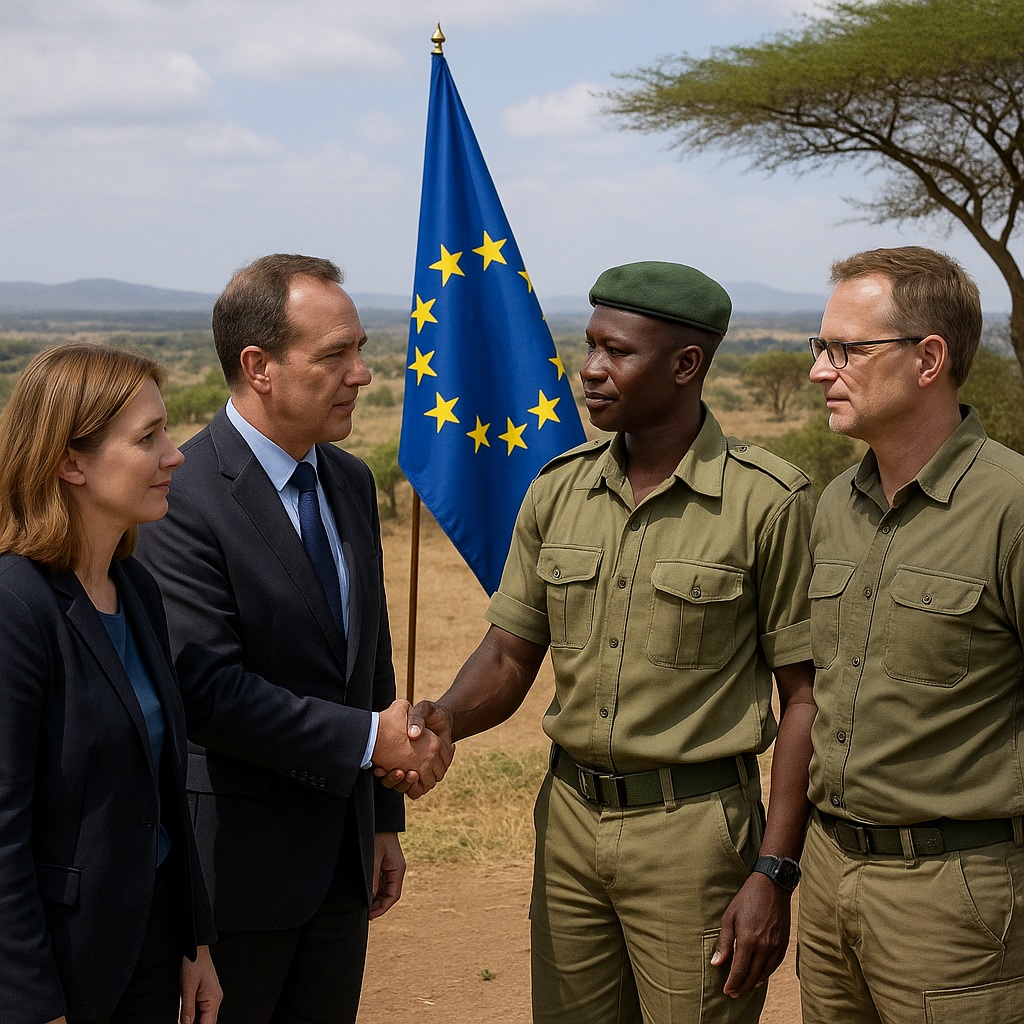
As global competition deepens, lesser-known EU member states quietly ramp up diplomatic and security engagement across the African continent
Smaller European Union member states are rapidly increasing their diplomatic and security presence across Africa, signaling a shift in Europe’s strategic posture on the continent as global competition intensifies. Once overshadowed by the influence of larger EU powers, countries such as Lithuania, Slovenia, Portugal, Ireland, Estonia, and Luxembourg are emerging as active players, opening embassies, training forces, and forging new partnerships with African governments.
This renewed engagement comes at a moment when Africa has become a focal point for geopolitical rivalry. Multiple external actors—China, Russia, Türkiye, Gulf countries, and India—have expanded their influence through infrastructure investment, security cooperation, disinformation networks, and resource partnerships. With traditional European heavyweights recalibrating their roles, the smaller EU countries see an opportunity to demonstrate relevance and deepen ties in regions previously beyond their foreign policy horizons.
Diplomats from these nations emphasize that their involvement is both strategic and pragmatic. For several governments, building relationships in Africa diversifies their foreign policy and strengthens their global presence. Without the colonial legacies associated with larger EU members, these smaller states are often perceived as neutral and flexible partners, which African officials increasingly value in an era of shifting alliances.
On the security front, Slovenia and Lithuania have become especially visible. Both countries have contributed specialized units to EU advisory and training missions in the Sahel and the Horn of Africa. Their focus on border management, cyber defense, and counter-disinformation reflects the evolving security requests from African governments, many of which face hybrid threats from non-state actors and foreign influence operations.
Ireland, already known for its longstanding role in UN peacekeeping, has expanded its advisory contributions within EU missions. Its expertise in mediation, policing reform, and civilian protection has been highlighted in recent collaborations with East and West African partners.
Meanwhile, Estonia and Portugal have turned their attention to strengthening digital governance and maritime security—two areas where African states have sought deeper cooperation. Estonia’s support for digital public infrastructure and cybersecurity training has been welcomed in countries modernizing their administrative systems. Portugal, leveraging historic ties in Lusophone Africa, has increased naval cooperation and capacity-building in the Atlantic and Indian Ocean regions.
Diplomatic expansion is also accelerating. A number of smaller EU members have announced plans to open new embassies or upgrade existing liaison offices. These moves are driven not only by security concerns but by recognition of Africa’s economic dynamism. With young populations, growing urban markets, and critical minerals essential for Europe’s green transition, African states offer a range of opportunities that smaller EU economies are eager to explore.
However, the expanded European interest is not without challenges. African leaders continue to insist that partnerships must align with national priorities and avoid the perception of becoming arenas for great-power competition. Many governments are wary of external actors framing their engagement solely in terms of rivalry with China or Russia.
Maintaining credibility as constructive and non-intrusive partners will be crucial for smaller EU states hoping to build lasting relationships. Analysts note that these countries must avoid replicating the patterns of larger powers and instead focus on mutual benefit, transparency, and long-term commitments.
Despite the complexities, momentum is building. As geopolitical currents shift rapidly and Africa’s global importance continues to rise, the EU’s smaller members appear increasingly determined to play a more visible and meaningful role. Their growing presence may reshape Europe’s collective engagement on the continent and offer African governments a more diverse set of partnerships within the European bloc.
For now, officials across Europe acknowledge that the continent has become indispensable to their foreign policy thinking. With global competition tightening and strategic interests converging, the actions of Europe’s lesser-known states could become one of the most notable diplomatic trends of the year.
 The Tower Post