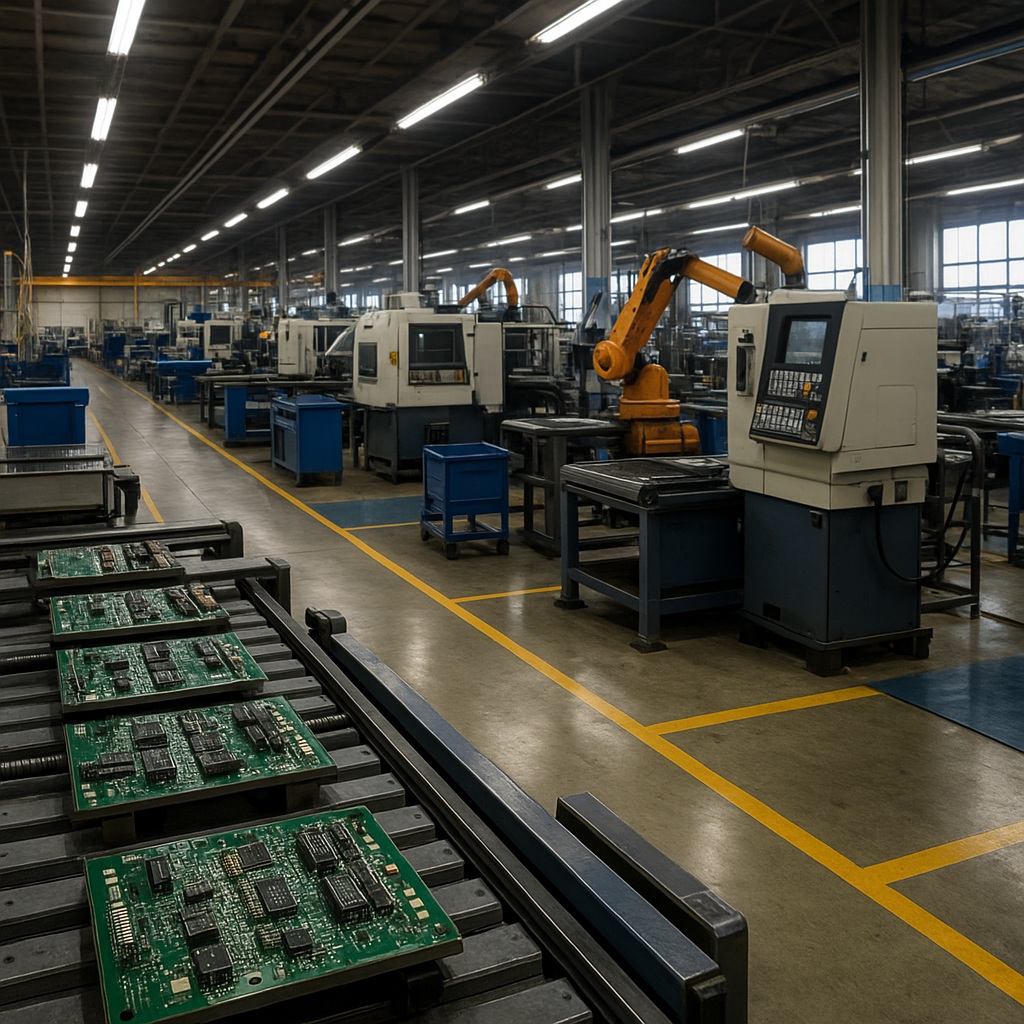
With input prices elevated and demand cooling, the slowdown in manufacturing sends ripples across hardware supply chains and sectoral investment
As the U.S. economy advances toward year-end, a new report indicates that the country’s manufacturing sector is losing pace. In November, factory activity dropped to the slowest rate in months, underscoring mounting headwinds for sectors reliant on hardware production and investment — a development that could ripple into the broader tech ecosystem.
Manufacturers cite high input costs — especially those linked to tariffs and import duties — as a major barrier to replenishing new orders. The survey reports that new orders plunged more steeply than output, while inventories of finished goods swelled to a record high. One analyst at S&P Global noted: “Manufacturers reported a worrying combination of slower new-orders growth and a record rise in finished-goods stock.”
The pressure is especially acute for the hardware end of manufacturing: computers, electronics, and components producers are contending with rising commodity and import costs, weaker downstream demand, and longer lead times — all of which make investment decisions riskier. The slowdown isn’t purely about lower output; it’s about tightening margins and the postponement of new capex in a sector where supply-chain agility has become a competitive differentiator.
Though the manufacturing slowdown is not confined to pure tech firms, the implications for tech hardware supply chains are significant. Lower order volumes and rising inventories mean suppliers — from chip-packagers to assembly-line integrators — could face softer demand. Firms may defer equipment upgrades, reduce capacity expansion, or push for cost renegotiations.
Furthermore, the accumulation of unsold goods suggests downstream buyers are postponing consumption or investment — possibly because elevated prices and weaker consumer finances are putting the brakes on hardware purchases. This dynamic could chill innovation cycles and delay refreshes in platforms relying on regular hardware turnover.
Investment across hardware-intensive sectors — including servers, networking equipment, consumer electronics and embedded systems — is vulnerable in this environment. When manufacturers see slower new orders and mounting inventories, their calculus for committing to large-scale capital spending shifts. Shorter pay-back horizons and higher input uncertainties make companies more cautious.
While the manufacturing sector is showing strain, the services economy appears more resilient, but that resilience may mask underlying weaknesses, as the slowdown in goods manufacturing suggests that parts of the economy most sensitive to global trade, cost inflation, and investment cycles are feeling the chill more acutely.
Consumer sentiment remains subdued as households report frustration with persistently high prices, particularly in durable goods, and incomes for many households are under pressure.
For the tech hardware sector, the next few months are set to test resilience. If consumer and business demand remain stagnant — coupled with elevated input costs — manufacturers may find themselves operating below capacity longer than expected. On the flip side, any policy relief, tariff adjustments or cost moderation could prompt a rebound.
Still, firms are signaling caution, with hiring in manufacturing continuing at a slower pace and many companies reporting they are holding off on major capital commitments until clearer demand signals emerge.
In short, the slowdown in U.S. manufacturing may not yet signal recession, but for hardware supply chains and investment-driven sectors, it is a warning sign. If demand doesn’t firm, the production stalls observed could spill over into broader tech value chains and dampen investment for quarters ahead.




 The Tower Post