
ECB President Christine Lagarde warns that the bloc’s deep reliance on global trade is leaving it exposed as the global landscape shifts.
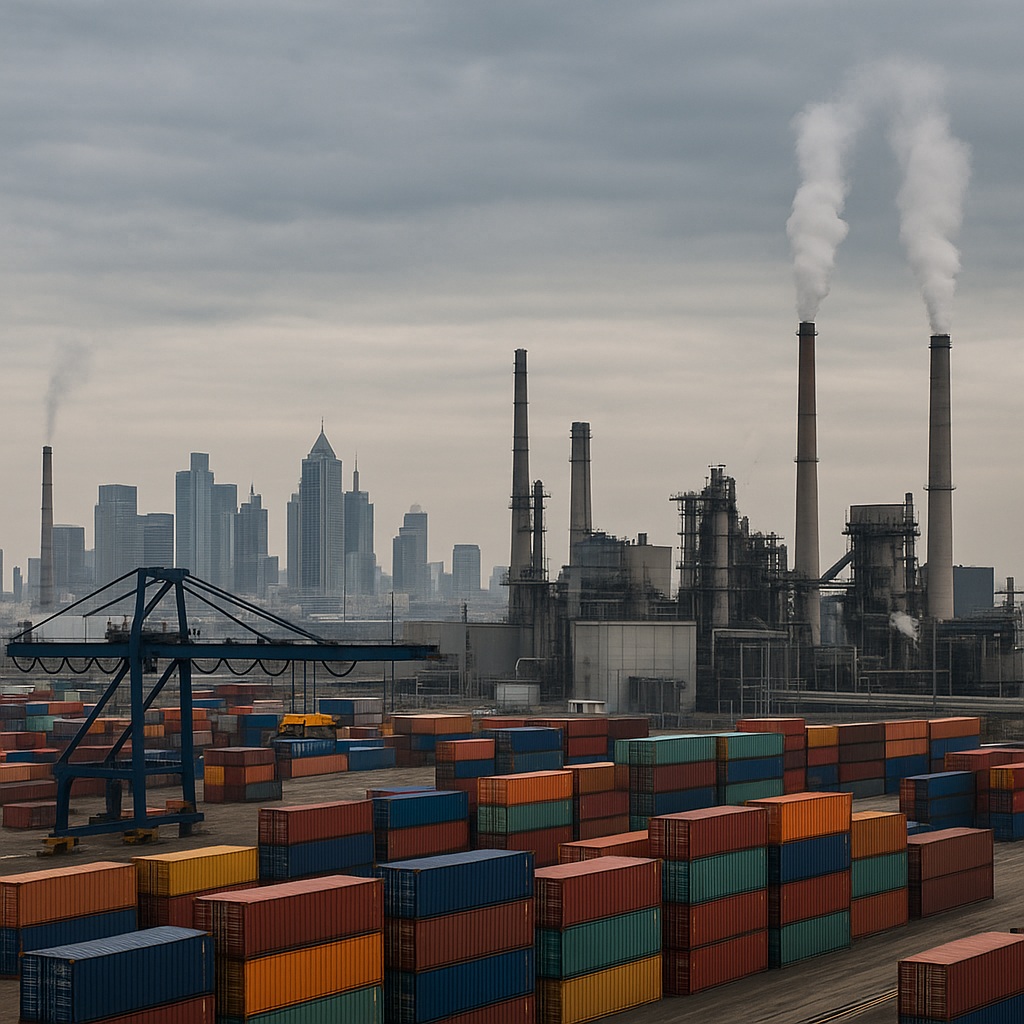
Europe’s economic model, long anchored in the assumption of open global markets and predictable flows of goods, is facing a profound strategic test as ECB President Christine Lagarde warns that the continent remains geared toward a world that is rapidly disappearing, shaped by fragmentation, geopolitical tension, and supply-chain volatility.
Lagarde’s warning comes at a time when Europe continues to grapple with persistent industrial slowdown, uneven growth across its member states, and mounting concern among manufacturers who once thrived on cost-efficient inputs and stable export demand but now find themselves navigating a more unpredictable global environment.
According to economic analysts, the shift confronting Europe is structural rather than cyclical, reflecting the global transition away from the hyper-globalisation of previous decades toward a system defined by regional blocs, strategic competition, and protected industrial ecosystems.
At the core of Lagarde’s remarks is the continent’s longstanding dependence on imported energy, critical minerals, intermediate goods, and demand for its high-value exports, dependencies that have become more precarious as global supply routes and markets are reshaped by political and economic ruptures.
Executives across European industries confirm that resilience has become a strategic priority as firms accustomed to efficiency-driven supply chains now increasingly weigh redundancy, reshoring, and diversification in their investment and sourcing decisions.
Within European institutions, Lagarde’s comments reinforce an urgent debate over the continent’s ability to adapt to rapidly evolving global dynamics, with policymakers warning that Europe risks falling behind rivals that have already embraced more self-sufficient and agile industrial strategies.
Despite these vulnerabilities, Europe retains significant strengths including a skilled labour force, deep capital markets, and robust regulatory institutions, advantages Lagarde argues could be leveraged through accelerated green investment, enhanced digital infrastructure, and targeted innovation policies.
However, the timeline for decisive action is narrowing as Europe’s challenges—from energy exposure to industrial fragmentation and slow political coordination—intensify against a backdrop of swift industrial policy shifts among global competitors seeking strategic dominance.
For European citizens, the economic transformation carries direct consequences for job security, living costs, and the quality of public services, with businesses warning that without timely adaptation some production may increasingly migrate beyond the bloc’s borders.
Lagarde’s overarching message is that Europe must rebuild its economic foundations to withstand a more volatile and contested global era, leaving political leaders and industries to determine whether they can match the urgency of the moment with the scale of reform required.

 The Tower Post