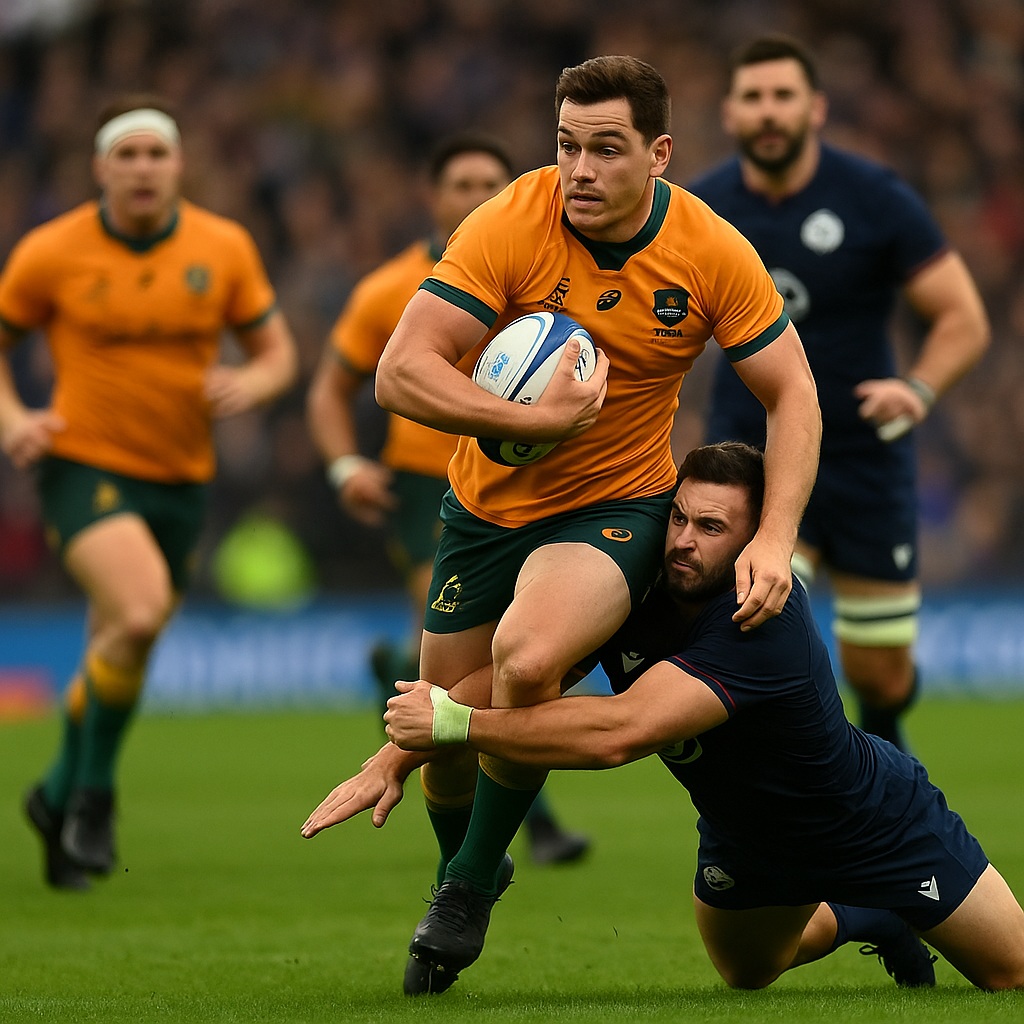
A bruising northern tour exposes Australia’s stalled rebuild amid Europe’s shifting rugby landscape
The Wallabies returned home this week burdened not only by a winless northern tour but by the uncomfortable realization that the long-promised revival remains elusive. What was meant to be a proving ground for a young and recalibrated squad instead became a cautionary tale: green shoots can wilt quickly under the pressure of emerging European power structures and increasingly unforgiving competition.
Across their matches on European soil, Australia struggled to stitch together meaningful phases, often outpaced by teams whose systems have matured on the back of financial stability, deep player pools, and increasingly aligned domestic competitions. While the Wallabies’ issues were not exclusive to clashes with European sides, the contrast was most glaring there. The skill execution gaps that can be momentarily disguised against other opposition were pried open with clinical precision by northern teams.
Europe’s rugby landscape has shifted significantly in recent years. Federations and clubs have poured resources into talent development and tactical innovation, resulting in styles that are both abrasive and adaptive. For visiting nations still searching for cohesion, this evolution creates an unforgiving environment. The Wallabies experienced this firsthand as their attack repeatedly stalled against well-drilled defensive lines and breakdown contests that rarely offered clean ball.
What was most concerning for Australian supporters was the fading of earlier-season optimism. The new coaching setup had promised boldness—expansive shapes, faster tempo, and trust in emerging players. But on tour, those ideas met the reality of limited continuity. Injuries forced constant reshuffles, leaders struggled under pressure, and the young cohort—though brave—appeared overburdened by the need to manufacture momentum from static starts.
In broader sporting terms, Europe continues to assert itself as a gravitational center. Whether in rugby, football, or Olympic sports, the continent has increasingly harmonized development pathways that compound advantages. The Wallabies, like many southern hemisphere sides, face the dual challenge of competing on the field while managing structural constraints off it: limited commercial scale, long travel arcs, and domestic competitions that lack the depth of their European counterparts.
Yet the tour was not devoid of lessons. Coaches spoke cautiously of “clarity gained,” suggesting that the harshness of the results may accelerate selection and strategy decisions that previously lingered in ambiguity. A handful of younger players showed glimpses of resilience under duress, even if not enough to tilt results. The question now is whether those glimpses can be nurtured into genuine progress before they fade like so many recent cycles’ promises.
As the Wallabies regroup, they do so in an environment where scarcity meets expectation. Fans remain fiercely loyal, but patience has frayed. The team’s next steps must demonstrate more than potential—they require continuity, smarter game management, and the ability to withstand the strategic sophistication that Europe now wields with increasing confidence.
In the aftermath of this bruising tour, one truth stands firm: rebuilding is no longer enough. The Wallabies must evolve at a pace that matches the global game, or risk being preserved only by nostalgia. The wilted green shoots can regenerate, but only if the foundations are strengthened and the broader rugby ecosystem in Australia realigns with the demands of the modern sport.




 The Tower Post