
Landmark ruling marks a decisive shift in Europe’s legal landscape and places new pressure on dissenting governments
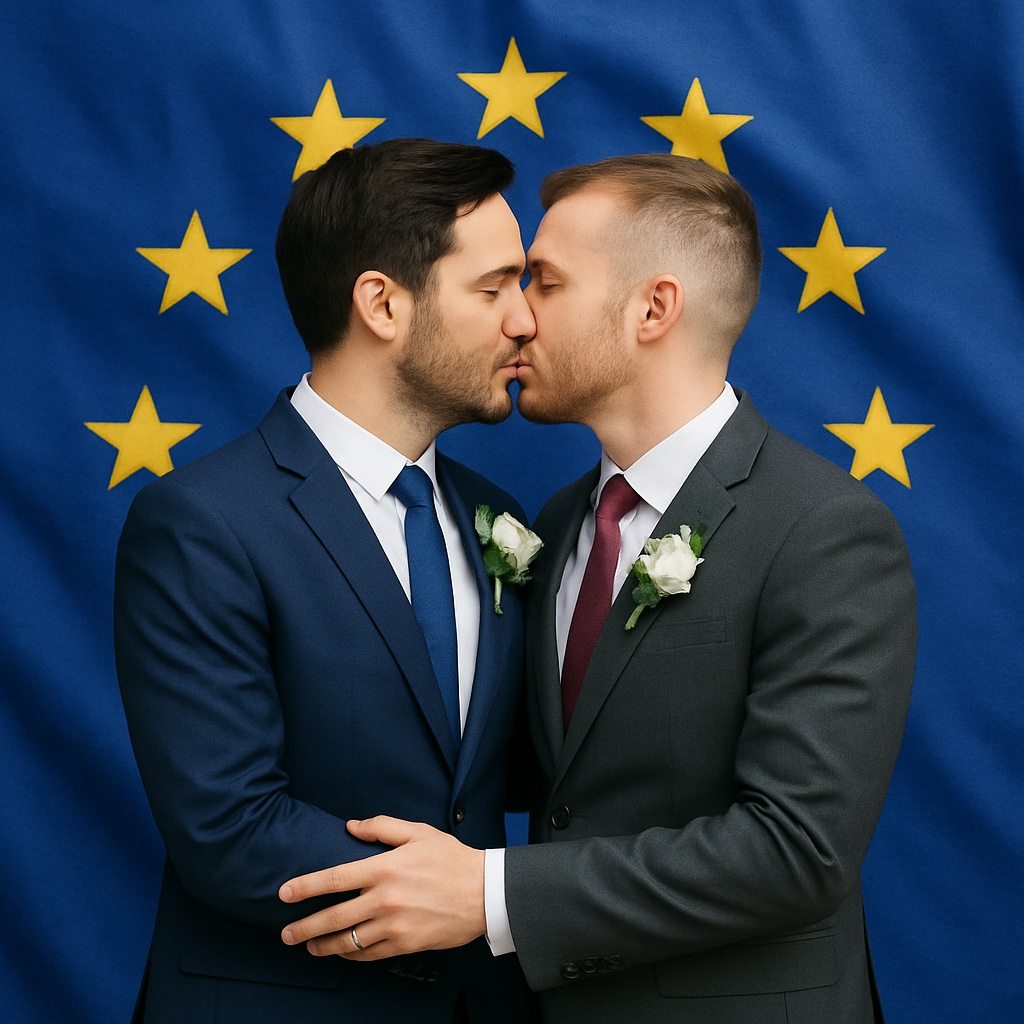
In a watershed moment for LGBTQ+ rights across Europe, the European Court of Justice has ruled that all EU member states must legally recognise same-sex marriages performed anywhere within the bloc. The ruling, delivered in Luxembourg and widely welcomed by human-rights advocates, carries sweeping implications for freedom of movement, family rights, and the limits of national sovereignty within the EU’s constitutional order.
The judgement arrives at a moment of heightened political tension, particularly following Poland’s continued refusal to recognise same-sex spouses from other EU countries. The court’s decision amounted to a firm rebuke: member states, it said, may define marriage domestically as they choose, but they cannot obstruct the rights EU citizens acquire in another member state, nor undermine the guarantees of free movement embedded in EU law.
Legal scholars have already described the ruling as one of the most significant expansions of rights protections in the EU in recent years. It affirms that the concept of “spouse” under EU law is inherently gender-neutral and that states cannot deny residency, social benefits, or family protections to married same-sex couples relocating within the bloc.
Reactions have been swift and fractured. Civil-rights groups celebrated outside courthouses and government buildings, calling the ruling a long-overdue acknowledgement of equality. Several Western European governments issued statements of support, characterising the judgement as both logical and necessary to preserve the integrity of the EU’s legal framework.
In contrast, government officials in Warsaw expressed “deep concern” and indicated that Poland would review the ruling’s implications. While the country is bound by the court’s authority, some Polish lawmakers framed the decision as judicial overreach into national cultural norms. The political fallout may intensify in the coming weeks as domestic debates sharpen over compliance, potential legislative amendments, and broader questions about Poland’s relationship with the European project.
Beyond the political theatre, the ruling’s practical impact will be felt most immediately by thousands of same-sex couples living in legal limbo. Many have spent years navigating a patchwork of recognition rules that have made family life—ordinary tasks like enrolling children in school or accessing healthcare—unpredictable and, at times, precarious.
The judgement signals the EU’s resolve to ensure uniform protection of rights across borders, especially in areas that shape the daily lives of its citizens. Analysts say it may also serve as a precedent for future cases involving cross-border rights, reinforcing the primacy of EU law where conflicts arise between national policy and treaty-based guarantees.
As Europe continues to wrestle with divergent social values, the decision underscores the evolving nature of the Union itself: a political community still balancing national autonomy with shared commitments to dignity, equality, and mobility. For many same-sex couples, however, the ruling delivers something far simpler—recognition, stability, and the assurance that their marriages do not dissolve when they cross a border.
The debate will continue, and implementation will not be without resistance. But as the dust settles, one fact is evident: the EU has taken another decisive step toward making equality not just an aspiration but a lived reality for all its citizens.



 The Tower Post