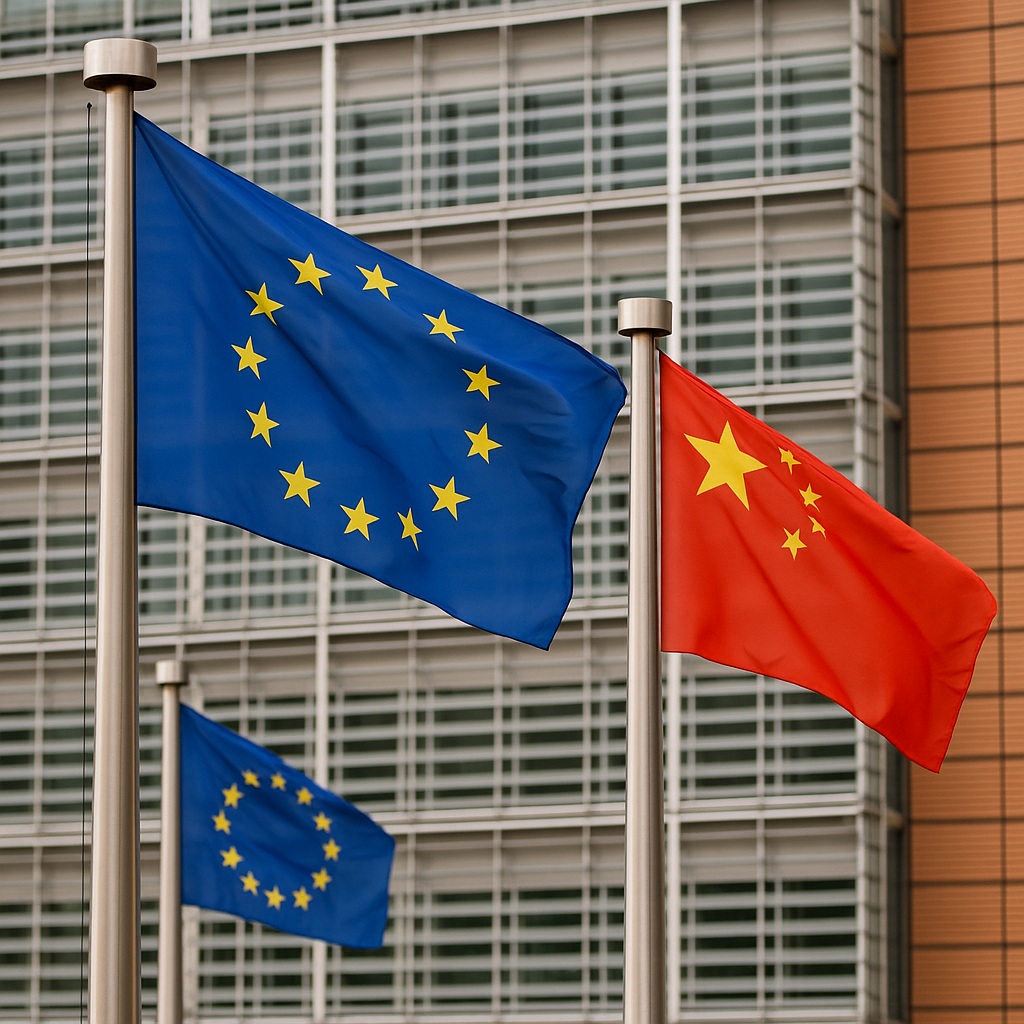
EU Industry Commissioner urges strategic shift as supply-chain vulnerabilities deepen
Europe is entering a decisive period of industrial recalibration as policymakers intensify warnings about the continent’s dependence on China for essential goods, technologies, and raw materials, with EU Industry Commissioner Stéphane Séjourné stating that the bloc must “step up its game” to safeguard its long-term economic and strategic resilience.
The concern has grown steadily as geopolitical tensions, shifting global trade patterns, and renewed pressure on governments expose the risks embedded in Europe’s current supply architecture, particularly in areas such as rare earth elements, battery components, pharmaceuticals, and renewable energy technologies where China maintains dominant market positions.
For many within the European Commission, the vulnerabilities revealed during recent global disruptions are no longer viewed as isolated incidents but symptoms of a deeper structural imbalance that could undermine the continent’s competitiveness and autonomy unless significant action is taken.
Séjourné emphasized that Europe does not seek to sever ties with China, noting that cooperation remains vital for economic stability, but stressed that the bloc must ensure it can withstand external shocks without compromising strategic sectors or allowing critical dependencies to dictate policy choices.
Efforts in Brussels have already begun to shift toward diversification, with new partnerships forming across Africa, Latin America, and parts of the Indo-Pacific aimed at securing alternative sources of critical minerals and encouraging the development of industrial capacity closer to home.
Yet analysts caution that the scale of Europe’s reliance on China remains substantial, particularly in advanced manufacturing and green technologies, meaning that any transition toward greater autonomy will require not only policy ambition but also substantial investment, private-sector engagement, and long-term coordination among member states.
Business leaders across key industries have responded with cautious support, acknowledging the need for more resilient supply structures while also warning that reconfiguring global production networks is a complex and costly undertaking that will require regulatory predictability and sustained public backing.
Despite differing national priorities, a broad consensus is emerging that Europe must reinforce its industrial foundations to remain competitive in a global economy increasingly defined by strategic competition and technological self-sufficiency.
Séjourné’s remarks signal that the EU’s path forward lies not in isolation but in strategic balance, reducing exposure to single points of failure while maintaining constructive economic ties and developing a more robust network of trusted international partners.
As the bloc navigates this turning point, Europe’s pursuit of industrial resilience and strategic autonomy is poised to become one of the defining economic narratives shaping its future direction.
 The Tower Post