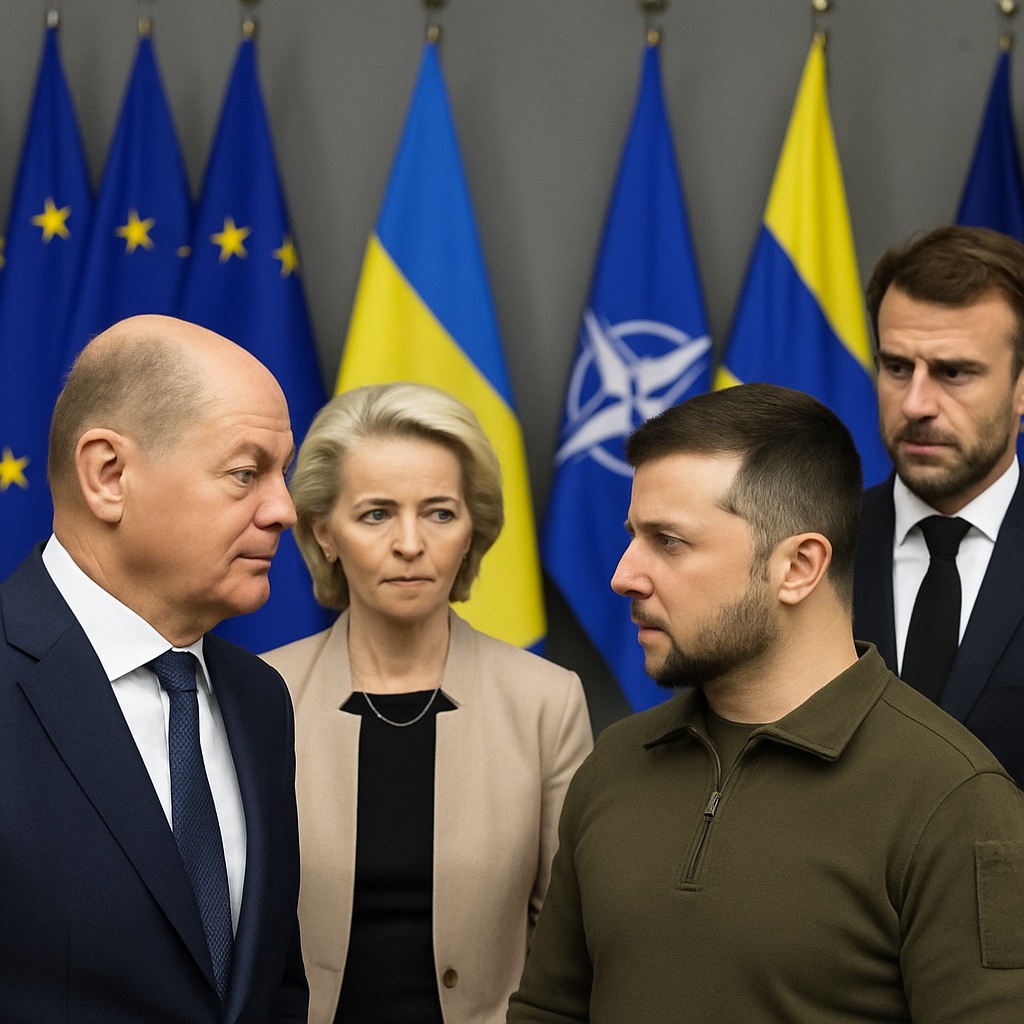
European leaders caution that a flawed peace deal could create long-term instability even as negotiations proceed.
In recent weeks, European officials have stepped up their messaging around ongoing negotiations between Kyiv and Moscow, arguing that while the push for diplomacy is welcome, the wrong kind of peace could sow the seeds for future conflict. Speaking with unusual unanimity, leaders from Western and Central Europe have warned that any agreement reached too quickly—or under excessive external pressure—risks entrenching divisions, rewarding aggression, and undermining the security architecture that has shaped the continent for generations.
Diplomats say the talks, which have entered a more structured phase, remain delicate. While there are signals of cautious optimism from negotiators on both sides, European governments are wary that the desire to end active hostilities could eclipse the need for a settlement rooted in justice, accountability, and lasting stability. Behind closed doors, officials acknowledge a growing fear: that a superficially calm post-conflict environment could mask unresolved territorial disputes and political grievances, setting the stage for renewed violence.
Several European foreign ministers have reiterated that peace must be more than the absence of immediate fighting. They point to previous conflicts where rushed agreements collapsed under the weight of unresolved tensions. European policymakers insist that Ukraine’s sovereignty, security guarantees, and the accountability of wartime actions remain essential pillars—none of which, they argue, can be compromised for the sake of diplomatic convenience.
Economic considerations are also shaping the debate. With energy markets still recalibrating and reconstruction estimates rising, European governments face pressure from industries, unions, and voters who are eager for stability. Yet leaders caution that a fragile peace could ultimately prove costlier than continued support for Ukraine’s defense. As one senior adviser put it, restoring economic calm without addressing political fractures “would be an illusion with an expiration date.”
Public opinion across Europe remains complex. In some countries, fatigue over prolonged conflict is palpable, fueling calls for negotiation. In others, memories of past European wars—and the price of appeasement—act as a stark warning. Analysts say this divergence places additional pressure on European institutions to present a coherent strategy that supports diplomacy without undermining principles that the European project was built upon.
Meanwhile, Ukrainian representatives continue to emphasize that any settlement must reflect the experiences and aspirations of their citizens, many of whom remain displaced or rebuilding shattered communities. European leaders, echoing those concerns, argue that a truly sustainable peace must address humanitarian, legal, and regional-security dimensions in equal measure.
As Ukraine’s talks with Russia continue to evolve, Europe finds itself balancing hope with caution. The desire for an end to conflict is universal. Yet the message from European capitals is equally clear: a flawed peace agreement may quiet the battlefield temporarily, but could leave behind a geopolitical fault line capable of cracking open again. For a continent shaped by the consequences of past conflicts, the stakes could not be higher.



 The Tower Post