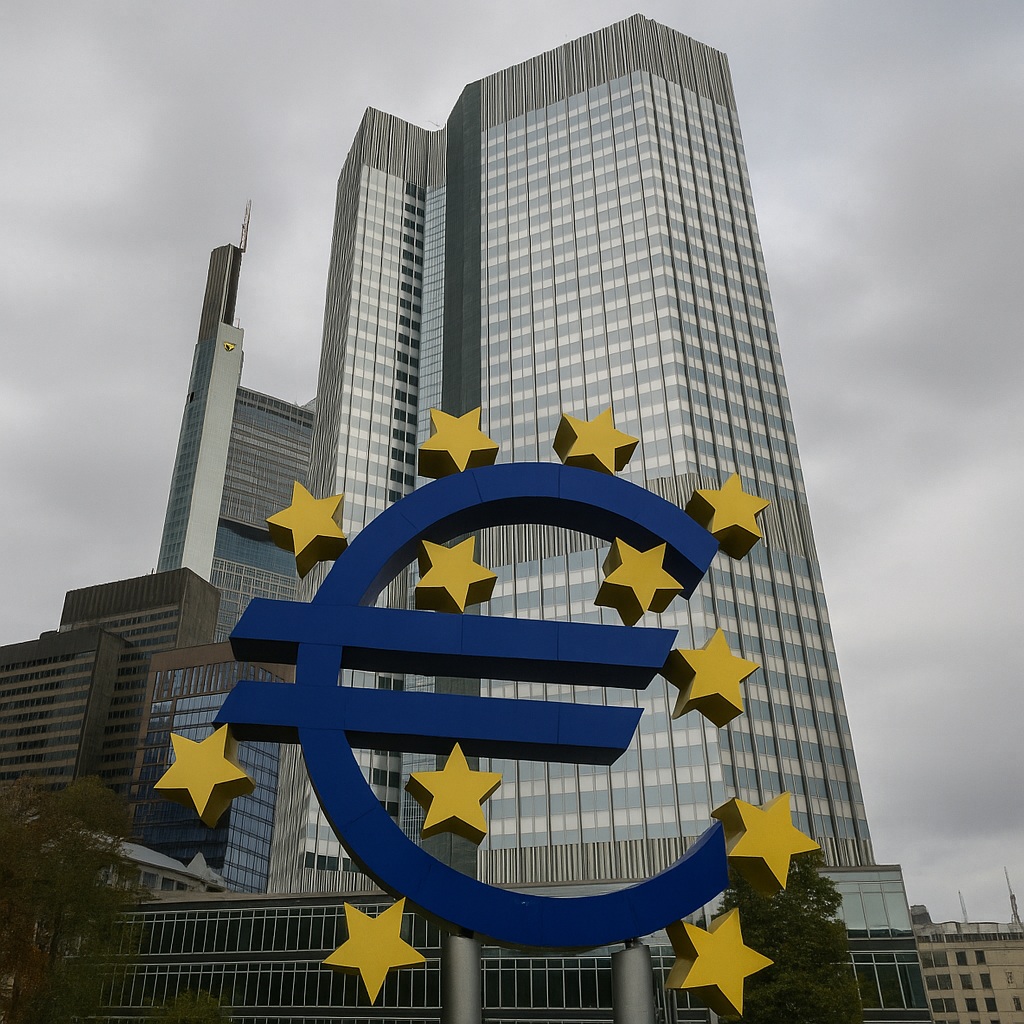
Geopolitics, shifting trade, climate pressures and rapid technological disruption raise the risk of sudden shocks across Europe’s financial system
On a tense late-November stage in Frankfurt, the European Central Bank delivered one of its starkest assessments in recent years: global risks to financial stability are now “unprecedentedly high.” The warning, which landed with unusual urgency, reflects a confluence of forces reshaping the economic landscape at a speed that regulators say markets are struggling to absorb.
Senior officials at the institution describe an environment where multiple fault lines—geopolitical confrontation, reconfigured trade partnerships, climate-related stress, demographic imbalances, and technology-driven upheaval—are converging at once. Each of these challenges carries its own weight, but together they form a web of vulnerabilities with the potential to trigger sudden market dislocations or liquidity strains in Europe’s tightly interconnected banking sector.
For months, policymakers have privately voiced concern that Europe’s financial buffers, though strong on paper, may be tested in ways that past stress models have not adequately captured. The shift became public as the ECB outlined how geopolitical fragmentation is forcing companies to restructure supply chains, increasing uncertainty for lenders and investors. Strategists note that energy markets remain especially exposed, with volatility feeding into broader pricing pressures that complicate monetary planning.
Trade policy realignments have added another layer of unpredictability. As major economies revise tariffs, industrial strategies and export controls, European firms—long dependent on stable global integration—face abrupt changes in market access. This, the ECB notes, increases credit risks for banks financing industries caught in the crosscurrents.
Climate pressures, though familiar, are accelerating. Extreme weather events have already strained insurance balance sheets and disrupted production networks across the continent. Financial supervisors now warn that the transition to cleaner economies, while necessary, could unsettle asset valuations and lending patterns if not managed carefully. The concern is no longer theoretical: investors are beginning to reprice long-term climate-exposed assets more aggressively.
Demographic shifts are also reshaping the outlook. Europe’s aging population is altering savings behavior, labor supply and long-term growth potential. Economists caution that slower expansion may amplify the impact of shocks, reducing the resilience of households and smaller businesses. Banks, in turn, may be forced to rethink portfolio strategies as demand for credit evolves.
Perhaps the most unpredictable variable, according to the ECB, is technological disruption. The rapid adoption of artificial intelligence, new payment infrastructures, and digital assets is transforming the financial system faster than regulatory frameworks can adapt. While innovation promises efficiency, officials worry about operational risks, cyber incidents, and the potential for instability in emerging digital markets that remain lightly supervised.
Taken together, these dynamics have created what one senior euro-area regulator described as “a landscape of heightened fragility.” Market analysts say the message is not that a crisis is imminent, but that preparedness must improve. The ECB is urging banks to strengthen risk assessments, enhance cyber defenses, and build capital where needed. It is also pressing governments to fortify fiscal positions so they can respond quickly should global tensions or economic shocks intensify.
For now, European markets remain relatively calm. Bond spreads have stabilized, banks are well-capitalized by historical standards, and investors appear cautiously optimistic about the region’s economic trajectory. But beneath the surface, the ECB’s message is clear: the world is entering a phase where shocks may be sharper, more complex and less predictable.
As winter approaches, policymakers insist that vigilance—not panic—is the appropriate response. With geopolitical alliances shifting, climate-related losses rising, and digital transformation accelerating, Europe’s financial stability will depend on the continent’s ability to adapt more quickly than the risks that surround it.


 The Tower Post