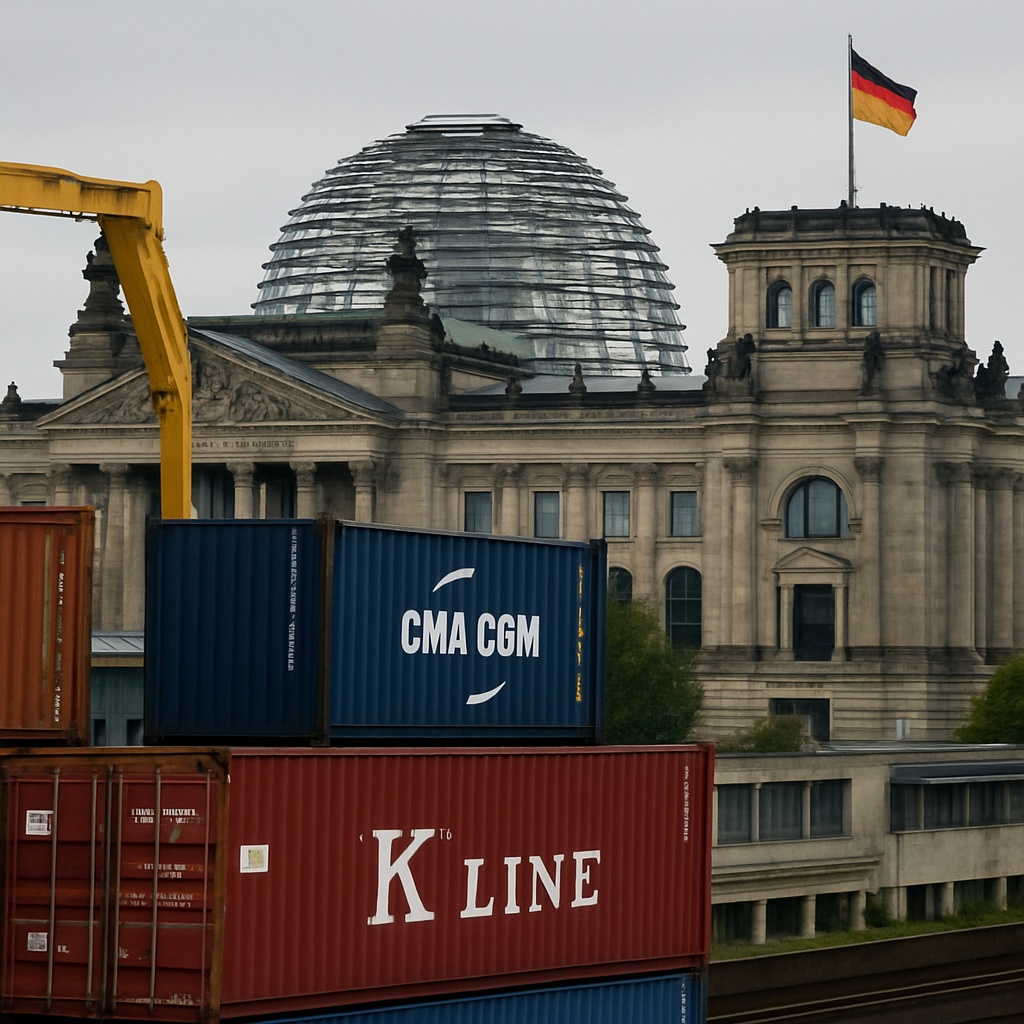
With GDP flat and global demand subdued, Europe’s largest economy enters the winter with caution and muted optimism.
Germany’s economy ended the third quarter in a state of uneasy stillness, with official figures confirming no growth in gross domestic product. The stagnation, widely anticipated by analysts, underscores the challenges facing Europe’s industrial heavyweight as it navigates weakened global trade, domestic caution, and geopolitical uncertainties.
Economists describe the third-quarter performance as emblematic of a broader trend: an economy that has avoided contraction but remains far from robust expansion. The manufacturing sector—long the symbol of German economic strength—continues to grapple with slowing international orders, particularly from Asian markets where demand has softened more abruptly than expected. Meanwhile, the services sector, which had earlier offered some lift, has lost momentum as higher financing costs and fragile consumer confidence weigh on spending.
Despite the lack of movement in headline GDP, policy‑makers and analysts maintain that Germany is still positioned for modest improvement heading into the final stretch of the year. This expected uptick, however, is defined more by tempered hope than by strong underlying fundamentals. Government officials point to recovering supply chains, easing inflationary pressures, and targeted public‑investment programs as reasons for cautious optimism. Yet most forecasts remain conservative, reflecting a global environment in which trade tensions and competitive pressures continue to cast long shadows over export-driven economies.
Beyond trade, structural transitions add further layers of complexity. The push toward greener production and digital upgrades—while strategic for long‑term competitiveness—has required industries to adapt during a period of already heightened uncertainty. In some regions, companies have delayed new investments, citing concerns about energy prices, labour shortages, and regulatory clarity. Business associations warn that without greater incentives and streamlined permitting, industrial activity could struggle to regain its earlier dynamism.
Still, not all signs point downward. Some multinational firms report improving order books for specialized machinery and automotive components, hinting at slow but steady normalization in sectors hit by supply bottlenecks over the past two years. Consumer sentiment surveys show early indications of stabilizing expectations, supported by resilient employment levels and gradual real‑income improvements as inflation eases.
Financial markets have so far taken the stagnation in stride, interpreting the flat growth as part of a broader European trajectory rather than a uniquely German setback. Investors remain attentive to central‑bank signals, knowing that monetary‑policy shifts in the coming months could either support or constrain the recovery path.
For now, Germany enters late November with a balance of sober assessment and restrained optimism. The economy has avoided downturn, yet it lacks the momentum that once characterized its performance. As global conditions evolve and domestic reforms unfold, the coming quarters will test whether Europe’s largest economy can translate tentative stability into genuine, sustained growth.



 The Tower Post