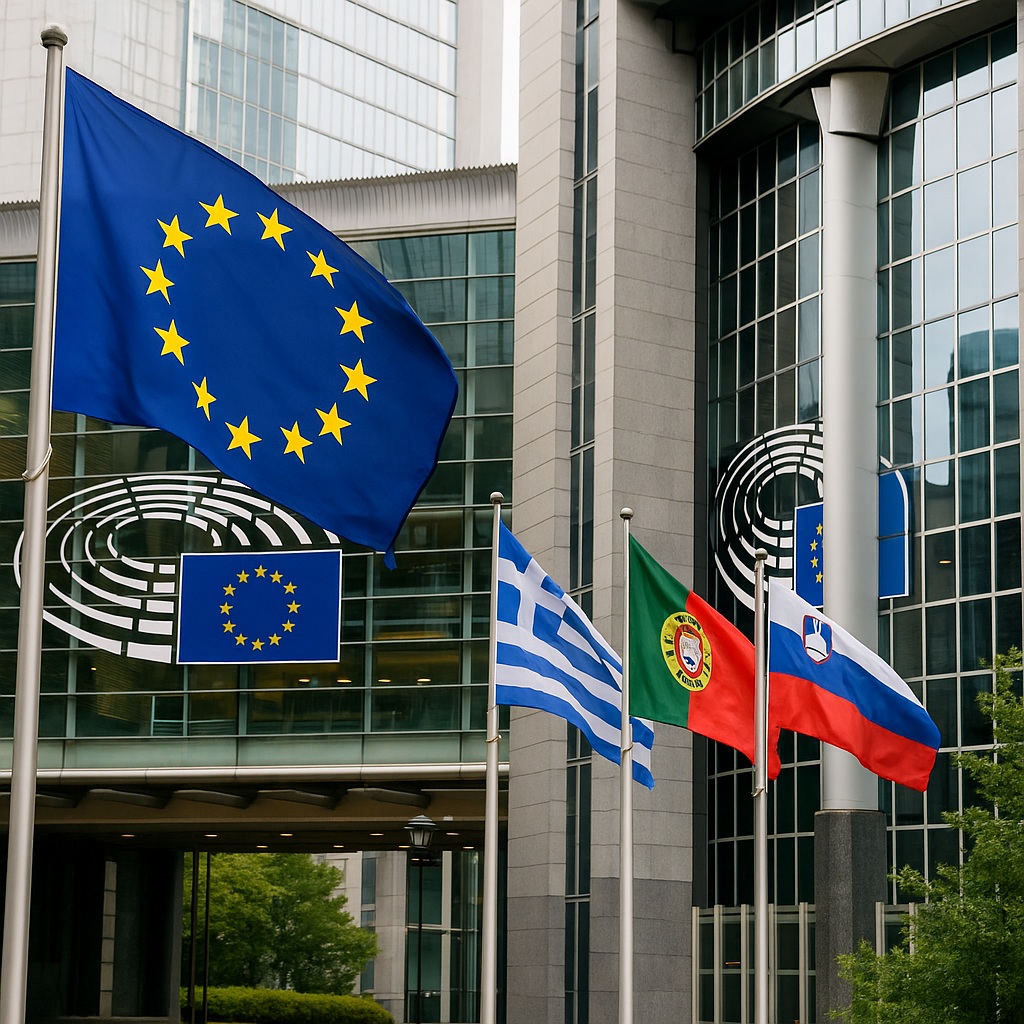
Fresh funding targets digital infrastructure, green energy and stronger public services as Europe reinforces long-term competitiveness

In a move seen as a timely boost to Europe’s economic momentum, the European Commission has approved a €4.1 billion disbursement under the NextGenerationEU recovery instrument to support growth-oriented reforms and investments in four member states: Greece, Portugal, Slovenia and Austria. The decision comes at a moment when EU economies are navigating uneven growth patterns, inflationary pressures and the accelerating demands of the digital and green transitions.
According to Commission officials, the funds are intended to sharpen long-term competitiveness while reinforcing the bloc’s economic resilience. Each of the four countries will channel the financing through their national Recovery and Resilience Plans, with targeted allocations for digital connectivity, clean energy systems and improvements in public services — areas viewed as fundamental for Europe’s structural transformation.
Greece will direct much of its share toward upgrading digital infrastructure across public administration and rural regions. Policymakers in Athens have argued that modern connectivity is a prerequisite for narrowing development gaps and attracting private investment. The reforms are expected to enable smoother interactions between citizens and the state, expand cloud-based services and support investment in emerging sectors such as AI-enabled industry and smart logistics.
Portugal is prioritizing renewable energy and grid modernization. Lisbon’s strategy focuses on boosting capacity for offshore wind, solar energy storage and interconnections that can help stabilize electricity supply. The government has also linked the new funding to efforts to reduce bureaucratic bottlenecks in permitting procedures — a longstanding hurdle in Portugal’s energy transition. Officials say the goal is to position the country as a clean-energy hub capable of exporting technology, skills and surplus capacity to the wider region.
Slovenia’s plan centers on strengthening its healthcare and education systems through digital upgrades, infrastructure renovation and workforce training. The funding will support hospitals in adopting advanced digital records, expand remote-care capabilities and continue the rollout of high-speed broadband to underserved communities. Education initiatives will modernize school facilities and introduce updated digital curricula, part of a broader national effort to equip younger generations for Europe’s evolving labor market.
Austria will apply the funds to accelerate the transition to low-carbon mobility and energy-efficient public buildings. Vienna has highlighted plans to expand charging infrastructure, upgrade public transport fleets and retrofit key government facilities to meet higher efficiency standards. The Commission expects these measures to contribute to Europe’s climate-neutrality objectives while yielding long-term cost savings for public administrations.
Across all four countries, Brussels underscored that the disbursement follows verified progress on previously agreed milestones and targets. Officials stressed that NextGenerationEU remains performance-based: payments are released only after reforms are completed or key investment steps are met. The Commission described the current tranche as evidence that member states continue to make “solid and measurable progress” in implementing their recovery strategies.
Economists note that the timing of the package is significant. While short-term growth remains mixed across the euro area, investment indicators are strengthening, particularly in sectors benefiting from EU-level funding. Analysts say the latest disbursement could help maintain this momentum, especially by supporting sectors where private capital alone may be insufficient to meet the scale of transformation required.
The overarching aim is to ensure that Europe remains competitive in a global environment marked by rapid technological change and strategic investment by major economic powers. By prioritizing digital infrastructure, green energy and the modernization of public services, the EU hopes to anchor a growth model that is both innovative and sustainable.
As the four member states begin rolling out the newly approved funds, Commission officials emphasized that continued transparency and accountability will remain central to the program. The coming months will see additional evaluations of national progress under NextGenerationEU, with more disbursements expected as member states fulfill their remaining commitments.




 The Tower Post