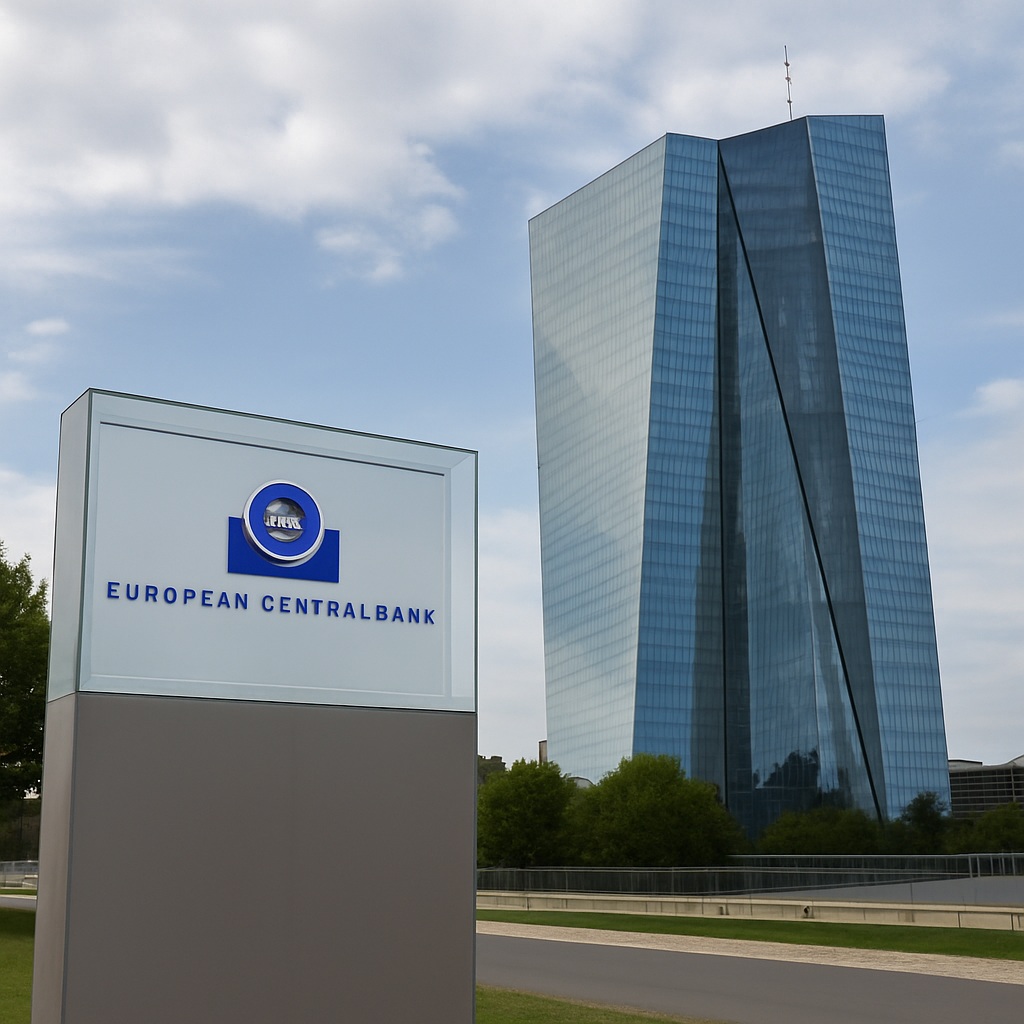
Despite inflation nearing target, the central bank stresses caution amid persistent uncertainty

In a climate of broad economic stability but persistent global uncertainty, the European Central Bank has indicated that it sees no immediate need to reduce interest rates. According to its latest account released this week, policymakers believe the current deposit rate of 2% remains “sufficiently robust” to help the eurozone withstand potential shocks, even as inflation drifts close to the ECB’s target.
The tone reflects a central bank seeking balance: acknowledging cooling inflation and resilient labor markets, while remaining wary of risks that could quickly reshape the economic landscape. Officials noted that although price pressures have eased noticeably across the bloc, they are not yet convinced inflation is firmly anchored. As a result, the Governing Council is reluctant to commit to discussions about rate easing, preferring a stance that emphasizes flexibility and vigilance.
Several members highlighted lingering global uncertainties — from geopolitical tensions to uneven demand in key trading partners — that could place fresh strain on Europe’s economic recovery. Even though recent data suggests steady consumer activity and modest growth, the ECB’s message points to a pragmatic wait-and-see approach. The central bank continues to weigh incoming indicators carefully, looking for sustained evidence that inflation will remain near its objective without further intervention.
Market observers had been watching closely for any hint of a pivot, as borrowing costs remain a crucial factor for households and businesses. But the account makes clear that the ECB is not prepared to shift course merely because headline figures show improvement. Instead, it reaffirms that consistent, durable patterns in both inflation and economic momentum will be required before policymakers consider relief for interest rates.
Investors reacted with measured calm, interpreting the ECB’s posture as one of controlled patience rather than outright hawkishness. Many analysts argue that the central bank’s strategy reflects the lessons of recent years — prioritizing long-term stability over rapid adjustments that could unsettle fragile sectors of the economy.
As the eurozone moves through the final stretch of the year, the ECB’s position suggests that any future rate changes will be deliberate and data-driven. Policymakers appear united in their commitment to maintaining stability, even as they acknowledge that the economic outlook can shift quickly. For now, the 2% deposit rate stands as a signal of resilience, with the central bank keeping its focus firmly on ensuring a steady path forward for the region.



 The Tower Post