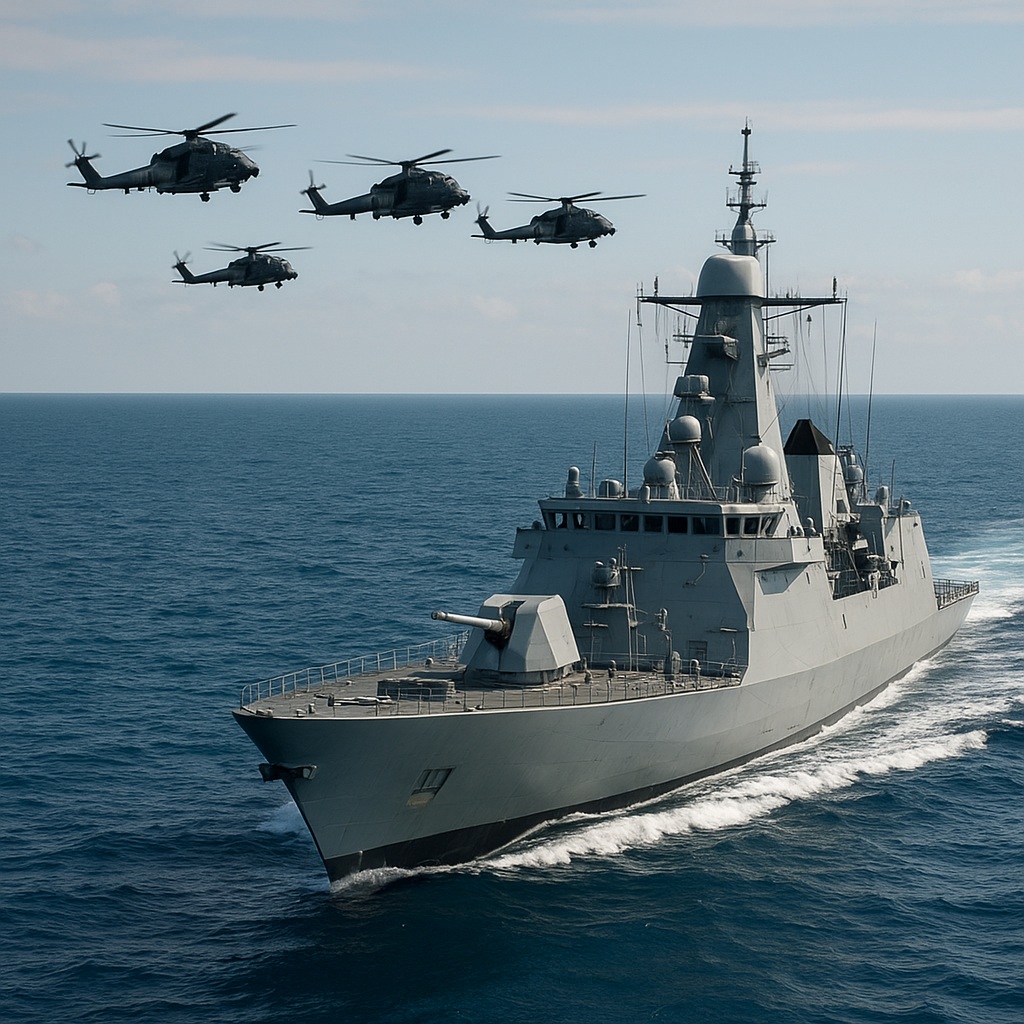
Naval investments accelerate as European governments rethink security in the wake of Russia’s war on Ukraine
Europe’s defence planners are quietly reshaping the continent’s strategic posture at sea, accelerating naval investments that were once considered politically distant or financially extravagant. The war in Ukraine has confronted governments with a stark reality: Europe’s maritime domain—long assumed safe—is now central to its deterrence strategy, trade resilience, and energy security.
In ports from the Baltic to the Mediterranean, shipyards report a surge in orders for frigates, patrol vessels, unmanned surface craft, and early-warning systems. Defence officials say the shift reflects not just immediate fears about Russian naval activity, but deeper anxieties about sabotage, hybrid threats, and the vulnerability of Europe’s undersea infrastructure.
Although the Black Sea remains the central theatre of Moscow’s naval pressure, its ripple effects have reshaped thinking across the continent. European officials acknowledge that Russia’s use of drones, electronic warfare, and long-range strike systems has erased the once-clear line dividing land battles from maritime stability. Submarine movements and untracked surface drones in northern waters have further fuelled concern, prompting NATO-aligned countries to accelerate plans that had been dormant for years.
A growing number of governments are now framing naval expansion not as an arms race, but as a resilience project. This includes securing sea lanes through which Europe’s energy supplies, digital cables, and commercial goods flow—resources increasingly targeted by covert threats. Some EU leaders have also promoted coordinated procurement to avoid duplication and reduce reliance on non-European manufacturers.
Shipbuilders say this rearmament wave differs from past efforts: it emphasises adaptability over size. Multi-role vessels capable of surveillance, anti-submarine warfare, and rapid modular upgrades are becoming the norm. Meanwhile, smaller nations are experimenting with autonomous platforms that can operate at lower cost and higher risk thresholds.
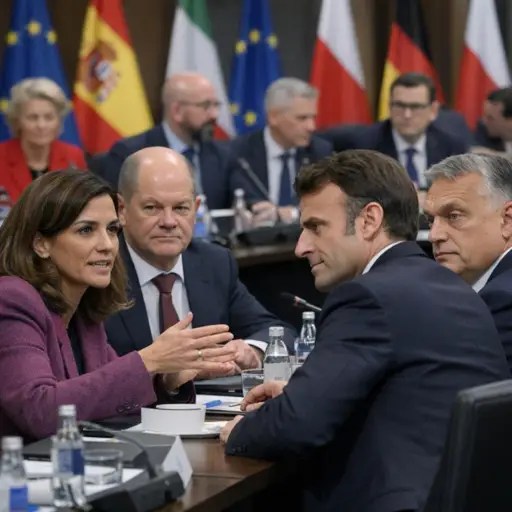
The sense of urgency has also reached Brussels, where the debate over joint naval projects has gained momentum. The European Defence Agency has been quietly evaluating shared procurement models for years, but member states are now more willing to consider frameworks that pool resources. Though political hurdles remain, diplomats say the mood increasingly favours collective solutions.
Military analysts note that Europe’s turn to maritime investment marks a recognition that future conflicts will not be defined by land borders alone. With Russia demonstrating its ability to project pressure far beyond the trenches of Ukraine, European planners are attempting to rebuild naval capabilities that eroded after decades of underinvestment.
For many governments, the present shift is not only about preparing for worst-case scenarios, but about avoiding them. By reinforcing their presence at sea, European leaders hope to signal that the continent is no longer willing to leave its maritime vulnerabilities exposed.
As the strategic landscape continues to evolve, Europe’s rearmament at sea may prove to be one of the most consequential—and least publicly debated—transformations in its defence posture. It is a recalibration born from conflict but driven by a long-term need to protect the arteries that keep the continent connected, prosperous, and secure.



 The Tower Post