
Unity in public, division in private: Inside the EU’s widening rifts over Ukraine’s support, armaments, and frozen Russian assets
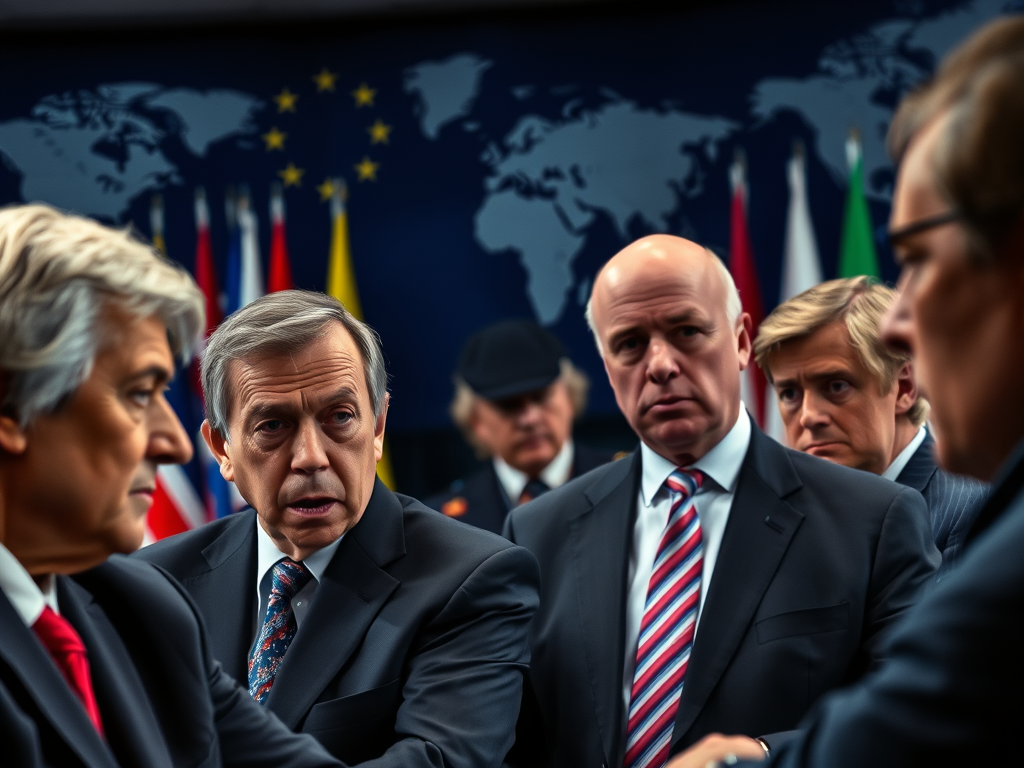
As winter edges closer, Europe once again finds itself wrestling with an uncomfortable reality: despite repeated declarations of unity, the continent remains deeply divided over how to support Ukraine at a moment when Washington and Moscow appear to be setting the boundaries of Kyiv’s future.
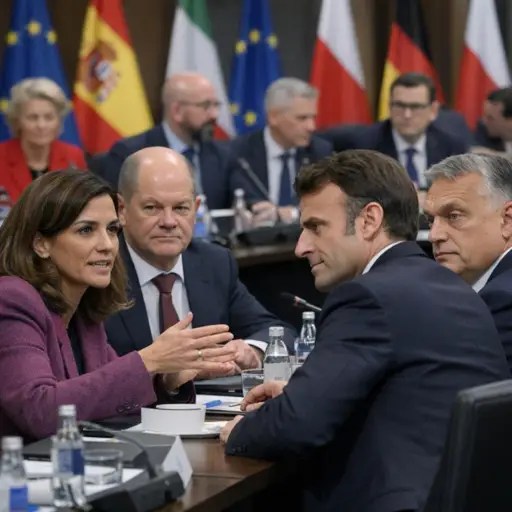
European leaders continue to insist that their stance on Ukraine is solid and unwavering. But across diplomatic corridors in Brussels, Berlin, Paris, Warsaw, and Rome, the mood is more fractious than officials publicly admit. The fractures have become increasingly visible as debates intensify over supplying advanced weaponry, negotiating security guarantees, and unlocking billions in frozen Russian state assets to finance reconstruction.
Privately, several senior diplomats acknowledge that Europe is struggling to keep pace with a rapidly changing geopolitical environment. With the United States and Russia engaging in consequential back-channel conversations about the contours of a possible endgame, many European officials fear the continent’s voice is being diluted—or worse, sidelined.
At the core of Europe’s dilemma is the unresolved question of what constitutes victory for Ukraine. While northern and eastern EU states continue to push for an unequivocal military defeat of Russia, others—primarily in western and southern Europe—are increasingly anxious about the long-term economic burden and the risk of escalation.
These disagreements have spilled into debates over military support. A coalition of eastern states has pressed for a faster delivery of advanced systems, arguing that delays only embolden Moscow. By contrast, governments in France, Italy, and some smaller member states have raised concerns about depleting their own arsenals and risking domestic pushback.
The divides run even deeper when discussions turn to frozen Russian assets, now worth hundreds of billions. While some capitals argue these funds represent a moral and practical avenue for rebuilding Ukraine, others fear the legal and financial precedents such a move could set. Central bankers warn that forcibly reallocating sovereign assets could trigger long-term instability in global finance, prompting retaliation or withdrawal of reserves from European institutions.
Tensions have been further aggravated by uncertainty in Washington. As U.S. political winds shift, European leaders privately concede that the continent must prepare for scenarios in which American support becomes more conditional—or recedes altogether. For states like Poland and the Baltics, the prospect of a weakened transatlantic commitment is alarming; for others, it reinforces calls for Europe to “take back control” of its own diplomatic trajectory.
Yet despite the internal discord, European public messaging remains carefully curated. Officials continue to emphasize solidarity and shared purpose, hoping to project stability to both Ukraine and the Kremlin. Behind closed doors, however, anxieties are mounting that Europe may soon face a critical moment when it must choose between aligning with U.S. strategic priorities or defining an independent path.
As the geopolitical landscape evolves, the question is no longer whether Europe can speak with one voice—but whether it can speak loudly enough to shape Ukraine’s future before others do.



 The Tower Post