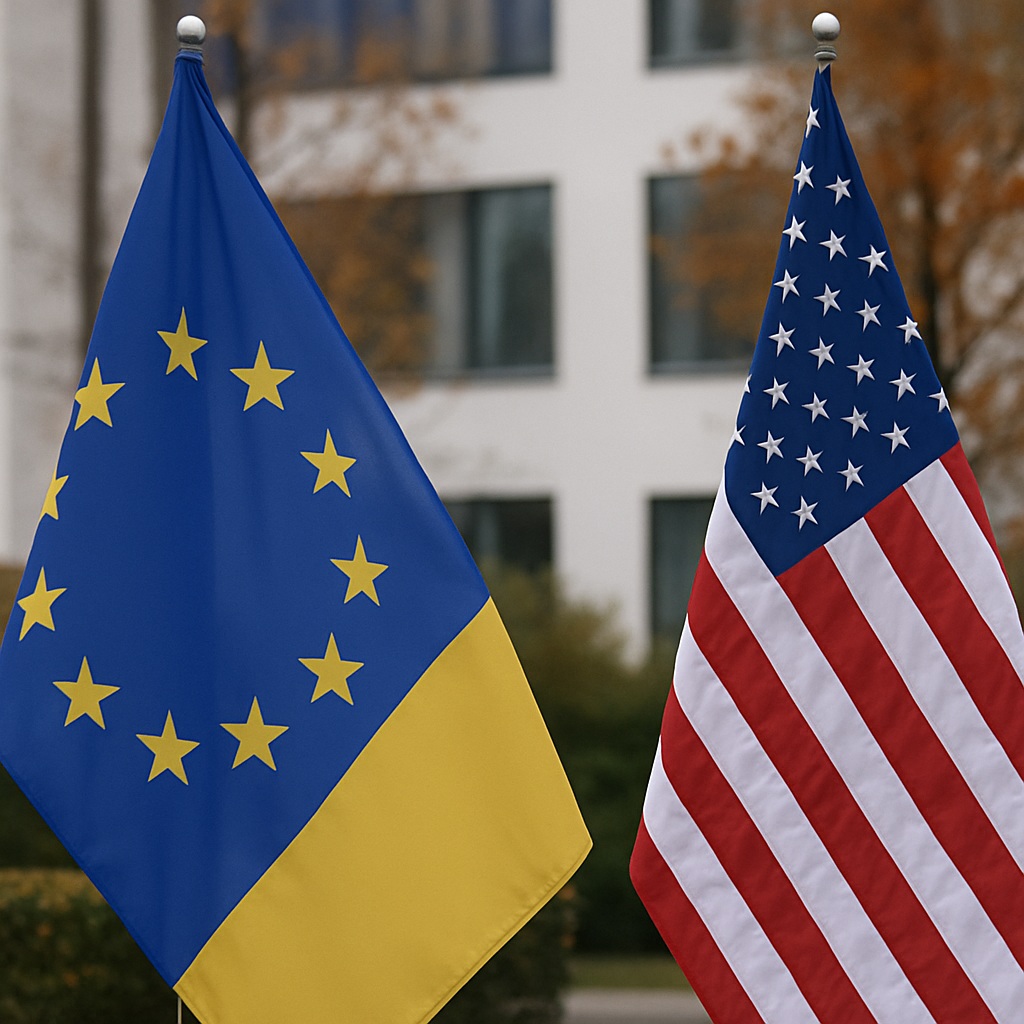
Across the EU, leaders warn that the U.S. proposal risks sidelining European security concerns and weakening the continent’s long-term strategic stance.
As winter approaches and diplomatic channels hum with new urgency, transatlantic partners find themselves increasingly out of sync. Washington’s recently floated peace framework for Ukraine—framed as a pragmatic path toward de-escalation—has been met with a noticeably cool reception across Europe. While U.S. officials argue that the proposal reflects battlefield realities and the need to prevent a protracted stalemate, several European governments see the plan as shortsighted, under-consulted, and potentially perilous for the continent’s long-term stability.
European diplomats from both the east and west wings of the Union describe the American approach as overly transactional, focused on freezing lines of control rather than resolving the underlying security conditions that sparked the conflict. For countries bordering Russia or historically shaped by Moscow’s influence, the idea of locking in territorial concessions without robust security guarantees evokes deep strategic anxiety. Senior EU officials say that Washington’s consultations have felt more like briefings than genuine joint decision-making, rekindling long-standing tensions about burden-sharing and political voice within the alliance.
Meanwhile, leaders in Western Europe—while more cautious in tone—share concerns that the U.S. plan prioritizes speed and optics over durability. Many point out that Europe will bear the brunt of any renewed instability on its borders, from energy shocks to potential waves of displacement. They fear that an agreement perceived as forced or premature could embolden authoritarian actors elsewhere, undermining the credibility of European defense initiatives and weakening the post-Cold War security architecture the EU has spent decades fortifying.
Behind closed doors, several European capitals have begun drafting alternative proposals emphasizing phased security guarantees, deeper EU-NATO coordination, and a stronger role for Kyiv in shaping any outcome. Diplomats say that these efforts reflect not only skepticism of the U.S. plan but also Europe’s desire to solidify its own strategic autonomy—a theme that has gained momentum since the early days of the war.
Publicly, Washington maintains that its peace blueprint is flexible and intended to complement—not replace—European efforts. But the diplomatic mood suggests a widening gap between American urgency and European cautiousness. As the conflict continues to reshape political priorities across the continent, the transatlantic alliance’s ability to present a unified vision for Ukraine’s future may prove just as consequential as events unfolding on the ground.
With winter diplomacy intensifying, EU leaders insist that lasting peace cannot be built through hurried compromises or unilateral designs. Europe, they say, must have an equal seat at the table—both for Ukraine’s sake and for the continent’s own security.



 The Tower Post