
Zelenskyy–Macron meeting signals a diplomatic reset as leaders seek a ‘just and durable’ path forward in the Ukraine war
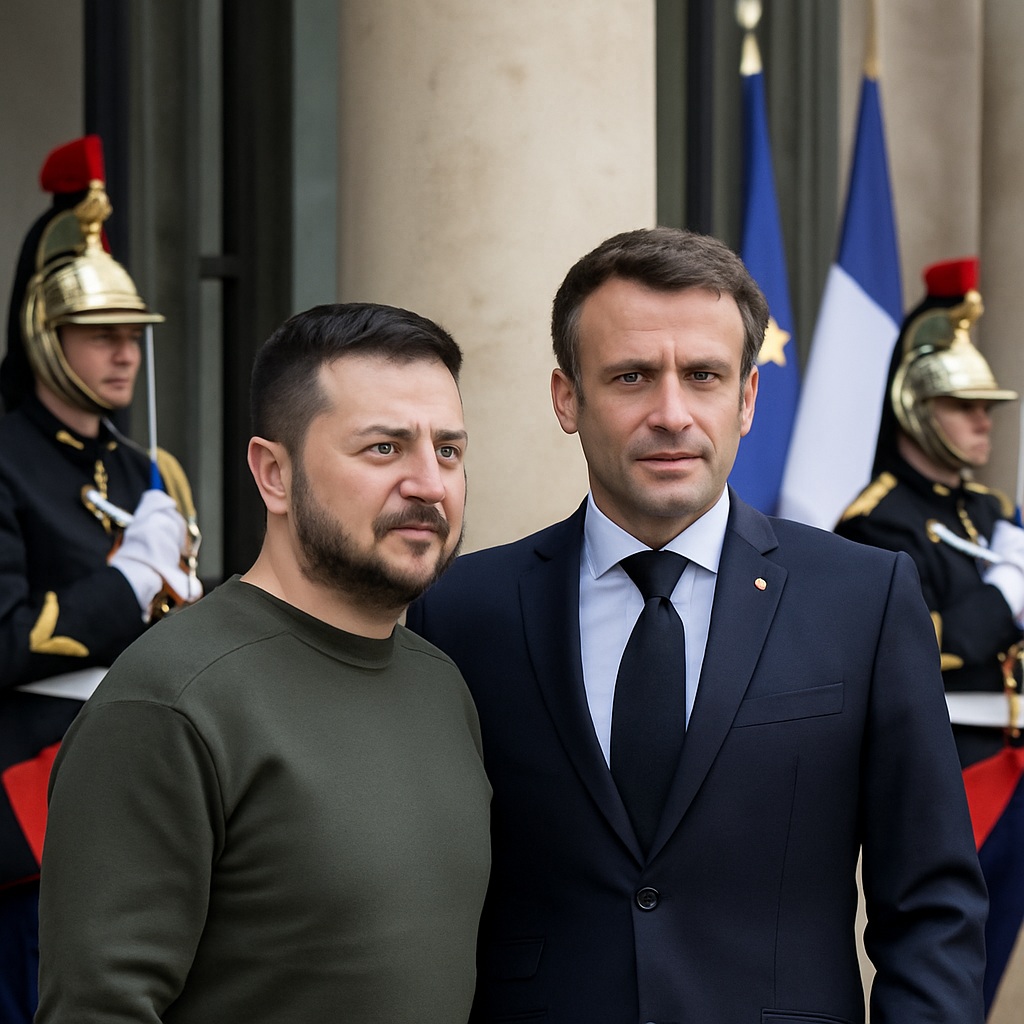
As Paris prepares to host one of the most closely watched diplomatic encounters of the year, Ukrainian President Volodymyr Zelenskiy arrives in the French capital with a clear message: the search for a “just and durable peace” cannot wait. His meeting with French President Emmanuel Macron, set against a backdrop of ongoing conflict and shifting international dynamics, signals a renewed push by Kyiv to broaden its coalition of support while exploring openings for diplomatic movement.
The visit comes at a moment when European governments are reassessing their military and political strategies in the Ukraine war. French officials describe the encounter as an essential opportunity to deepen coordination with Ukraine on security guarantees, energy resilience, and long-term reconstruction planning, while renewed debate over diplomacy—long a politically sensitive subject—adds an additional layer of significance.
For months, Ukrainian officials have insisted that any peace process must be grounded in sovereignty, territorial integrity, and accountability for wartime atrocities. Zelenskiy’s government has emphasized that these principles remain non-negotiable, even as battlefield conditions evolve and global attention shows signs of strain. Paris, meanwhile, seeks to position itself as a bridge builder, advocating for stronger European unity while maintaining dialogue with partners across the global south who have pushed for more visible diplomatic engagement.
French presidential advisers suggest that the discussions will center on identifying the “conditions” under which broader dialogue could eventually become viable—not a premature roadmap to negotiations, but a framework for future political engagement. Ukrainian diplomats welcome France’s efforts to reinvigorate international momentum around Kyiv’s peace formula, though they stress that only Ukraine can determine the terms of any negotiation.
Analysts note that the timing of the meeting reflects heightened concern among European leaders about the long-term trajectory of the conflict. With winter looming and pressure on Ukraine’s critical infrastructure intensifying, Macron is expected to reaffirm France’s commitment to military support, including air defense systems and enhanced defense industrial cooperation. Yet the political signaling may prove equally crucial, underscoring Europe’s intention to maintain unity in an increasingly unpredictable geopolitical environment.
For Zelenskiy, the Paris discussions also serve as an opportunity to reinforce Ukraine’s diplomatic message at a delicate juncture. Officials in Kyiv believe that public fatigue in parts of Europe and beyond makes it essential to keep Ukraine’s objectives clear, credible, and forward-looking. Presenting peace as a strategy rooted in justice—and not as a concession—has become a central component of that communication effort.
Whether the meeting will bring immediate change remains uncertain. Its significance lies less in concrete breakthroughs and more in setting the tone for renewed diplomatic engagement. After months of military stalemate and diplomatic stagnation, both leaders appear intent on signaling that diplomacy is not a retreat, but an integral component of long-term security planning.
As the visit unfolds, it offers a reminder that even during periods of intense conflict, the space for diplomacy must be deliberately constructed. For both Kyiv and Paris, the challenge now is to ensure that this renewed opening—however limited—helps strengthen the foundations for a just and lasting peace rather than serving as another fleeting moment in a long and arduous war.


 The Tower Post