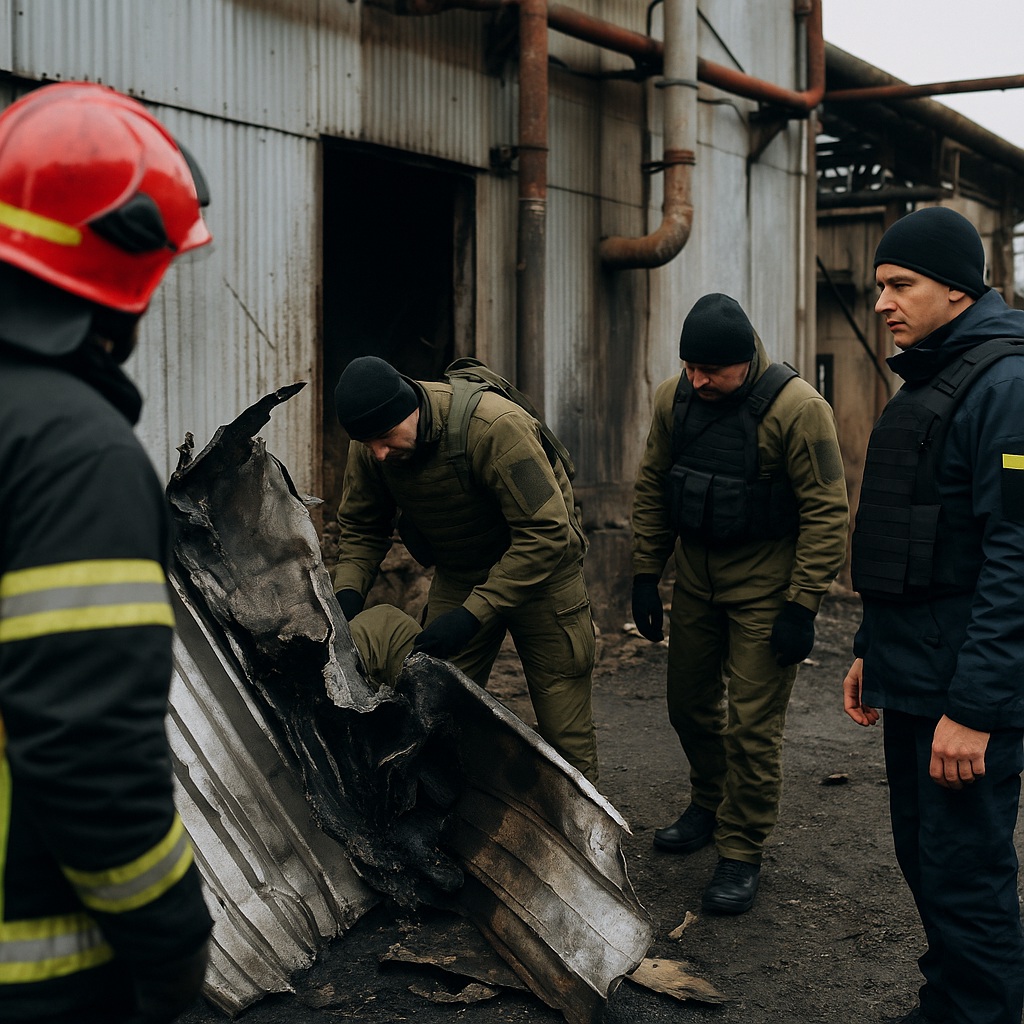
Europe Confronts a New Era of Hybrid-War Tactics Amid Rising Covert Attacks
Across Europe, officials and intelligence agencies are voicing mounting concern that the continent is drifting deeper into a gray zone of conflict—one defined not by open warfare but by a growing mosaic of covert operations, sabotage attempts, and digital intrusions. These tactics, long associated with Russian interests, are increasingly testing Europe’s resilience far from any physical frontline.
In recent months, a patchwork of incidents has sharpened anxieties: unexplained rail disruptions, fires at strategic warehouses, cyberattacks targeting ministries and telecommunications networks, and suspected infiltration attempts at critical infrastructure sites. While each event on its own could be dismissed as coincidence, European security officials argue that together they reveal a deliberate pattern—one designed to unsettle, confuse, and overwhelm democracies already strained by geopolitical uncertainty.
Experts describe the phenomenon as a hybrid-war campaign, a modern blend of espionage, information warfare, and sabotage crafted to create instability without triggering the formal thresholds of war. The strategy exploits Europe’s open borders, decentralized infrastructure, and reliance on digital systems. It thrives on ambiguity. And it intentionally blurs the line between domestic criminality and geopolitical confrontation.
Security analysts across the continent point to a rise in intrusions on energy grids and transportation hubs—targets selected not for symbolic value but for the cascading disruption they can cause. “The goal is pressure without footprints,” one intelligence advisor explains. “To make societies feel vulnerable while staying just below the level where governments can respond with certainty.”
NATO members have warned that such hybrid threats pose collective risks, stressing that unity will be essential in the months ahead. The challenge, according to several European diplomats, is that hybrid attacks often fall into legal and diplomatic gray zones, making attribution difficult and coherent responses even harder to coordinate.
For many Europeans, the sense of distance from traditional conflict is fading. Across capitals, leaders are reassessing how to defend against a threat designed to exploit the invisible seams of modern life—from data centers to railways, from satellite links to supply chains.
Some countries have begun reinforcing critical infrastructure and enhancing counterintelligence operations. Others are pushing for broader EU-wide frameworks to address hybrid aggression before it escalates. Yet experts caution that resilience must go beyond government action. Public awareness, private-sector coordination, and rapid-response capabilities will all play defining roles in the continent’s ability to withstand future pressure.
As Europe steps into a new winter season, the question hanging over its institutions is not whether more hybrid incidents will occur, but how prepared the continent will be when they do. The frontline, increasingly, is everywhere—and nowhere at once.



 The Tower Post