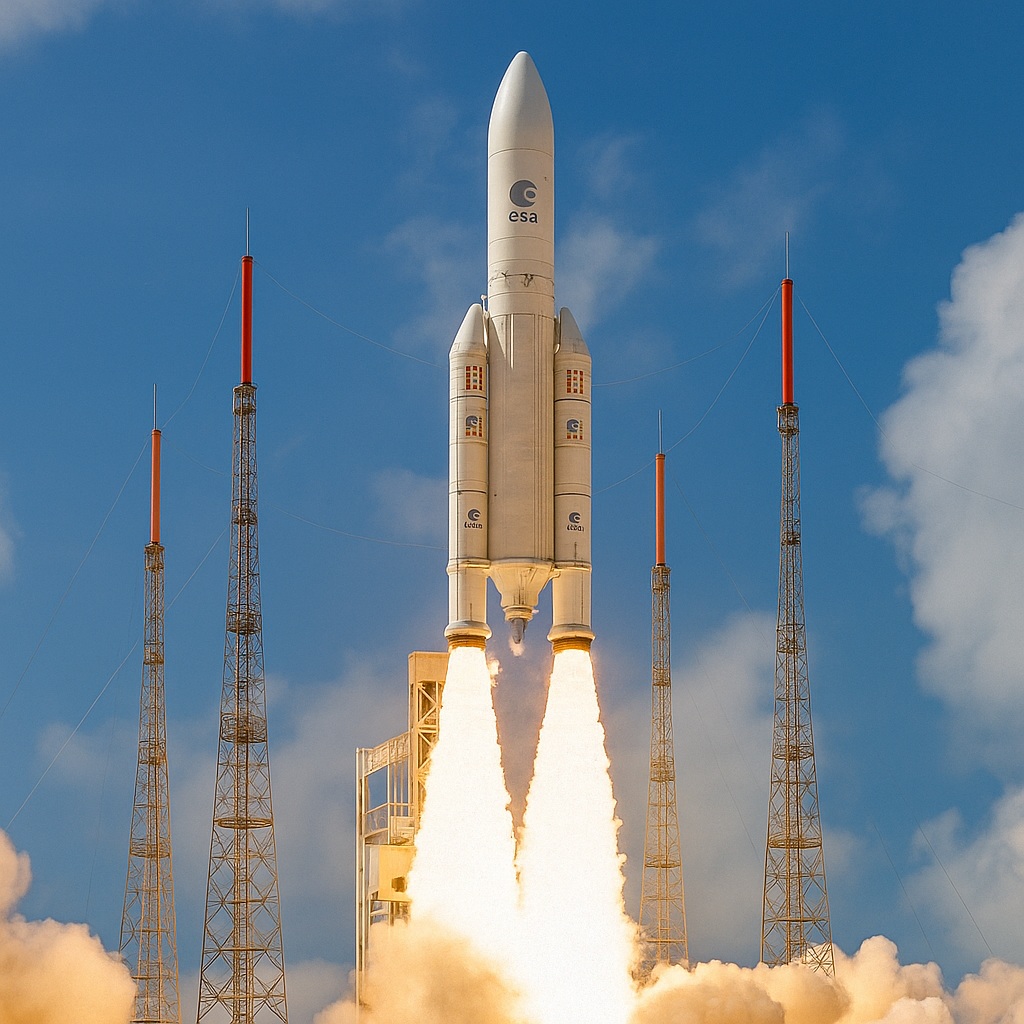
ESA member states approve major multi-year budget hike, signaling rising strategic priorities
Europe has taken another decisive step toward strengthening its position in the global space arena, as member states of the European Space Agency (ESA) agreed on a significant increase in the agency’s multi-year budget. The new commitment raises total funding from €16.9 billion to €22.1 billion, marking one of the most substantial escalations in ESA’s history and underscoring the continent’s growing recognition that space investments now sit at the core of its economic, technological, and geopolitical future.
The agreement, reached after several rounds of negotiations among ESA’s 22 member states, reflects a shift in mindset among European policymakers. Over recent years, space has moved from being a niche scientific pursuit to a strategic domain, touching telecommunications, climate monitoring, security, and industrial competitiveness. The latest budget settlement reinforces Europe’s ambition to remain a central player in this fast-advancing sector.
Officials familiar with the discussions described an unusually unified atmosphere during the talks, a sign of Europe’s mounting urgency to keep pace with rapid global developments. While the geopolitical climate has grown more complex, it has also catalyzed consensus within Europe that fragmented or incremental approaches are no longer sufficient. Member states ultimately concluded that a cohesive and well-funded space strategy would be indispensable for Europe’s long-term resilience.
Much of the increased funding is expected to flow into flagship programs that already form the backbone of ESA’s activities. This includes Earth observation missions, which have become critical tools for monitoring environmental change and informing climate policy across the continent. With more ambitious satellite constellations under study, ESA aims to offer governments and researchers increasingly precise and timely data, improving Europe’s ability to anticipate and respond to evolving environmental challenges.
Human and robotic exploration is also set to receive expanded support. European astronauts have seen rising visibility in recent years, and the new budget framework is designed to strengthen Europe’s presence in future lunar and deep-space missions. Discussions around potential enhancements to Europe’s role in international lunar exploration partnerships have gained momentum, with the new funding providing fresh opportunities for technological contributions.
Another area benefiting from the increased budget is the development of next-generation launch capabilities. Europe has been under pressure to reinforce its autonomous access to space, a topic repeatedly emphasized by national governments. With the commercial space sector accelerating worldwide, the urgency to modernize Europe’s launch infrastructure has become a central theme in ESA strategy sessions. The additional funds will allow ESA to advance reusable launch systems, support industrial partnerships, and accelerate technological testing cycles.
Satellite navigation and secure communications are likewise expected to receive significant attention. With the proliferation of commercial and governmental reliance on satellite networks, ESA’s programs in these domains have assumed heightened strategic relevance. The expanded budget will help Europe safeguard its systems, improve resilience to cyber and physical threats, and develop technologies that can compete globally.
Industry leaders across Europe have welcomed the financial boost, noting that the decision strengthens confidence in long-term research, innovation, and advanced manufacturing. Many companies involved in ESA contracts—ranging from established aerospace giants to emerging space startups—have stressed that sustained public investment is essential for maintaining a healthy ecosystem capable of delivering breakthroughs.
The broader international context has also influenced Europe’s approach. Space-faring nations around the world are ramping up investments, particularly in areas such as lunar exploration, satellite megaconstellations, and defense-related space assets. Policymakers view the new ESA budget as part of a broader European effort to remain competitive while honoring the cooperative spirit that has long defined ESA’s mission. Europe’s emphasis on civilian-focused and science-driven programs remains intact, but leaders increasingly acknowledge that space infrastructure must be resilient in an unpredictable global environment.
The agreement arrives at a moment when Europe is consolidating its long-term technological vision. Senior officials have emphasized that increased investment in ESA is directly connected to wider ambitions: enhancing strategic autonomy, deepening transnational scientific collaboration, and ensuring that Europe remains a leading contributor to global space exploration.
With the new budget cycle approaching, ESA is preparing a series of implementation plans outlining detailed timelines for its initiatives. These plans are expected to highlight how Europe will translate political commitment into operational progress. For citizens, the expanded investments promise a range of indirect benefits—from improved communication networks to better environmental forecasting—strengthening the link between space infrastructure and daily life.
Although challenges remain, the latest decision represents a turning point. Europe has signaled that space is no longer a peripheral priority but a central pillar of its future strategy. By elevating funding and aligning national interests, member states have laid the groundwork for a more ambitious and resilient European space program, poised to shape global developments in the years ahead.




 The Tower Post