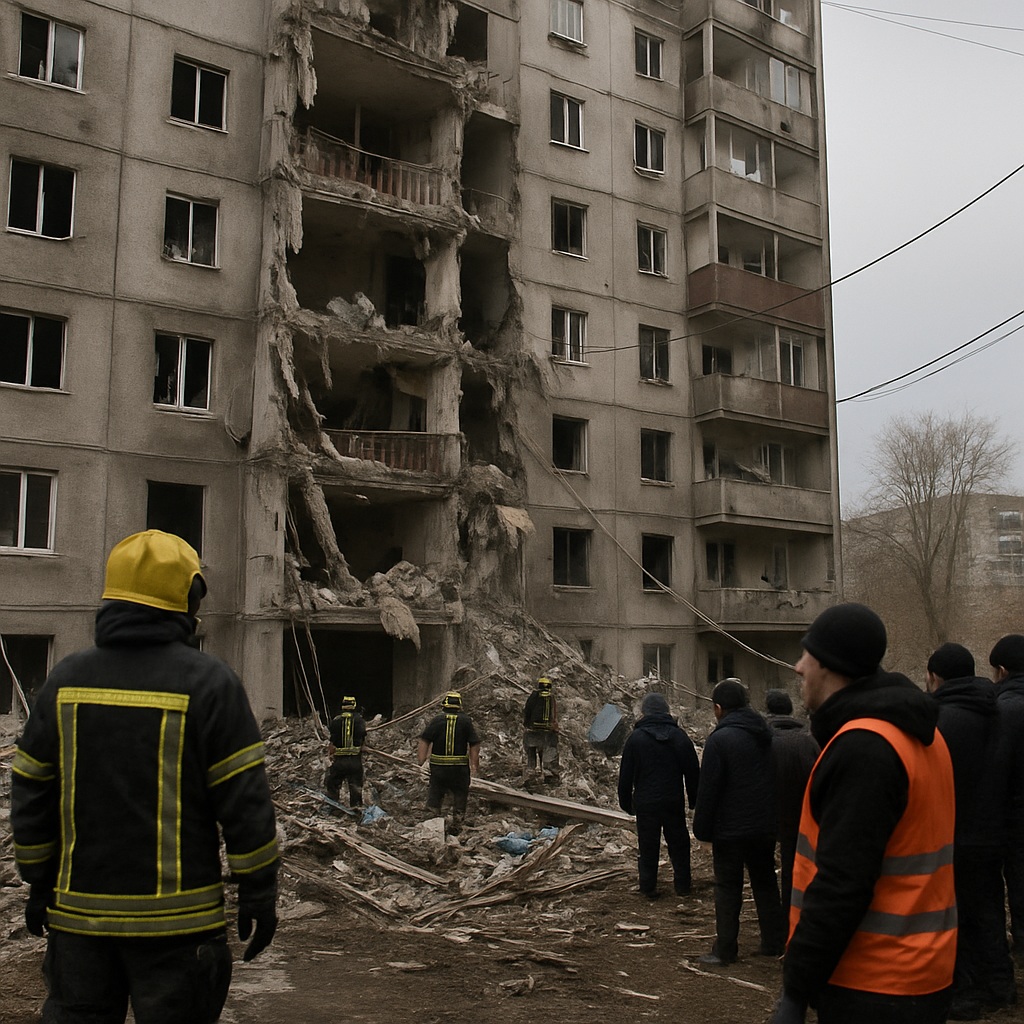
A Russian missile strike devastates a Kyiv suburb, leaving residents reeling amid renewed fears of escalation.

In the quiet pre-dawn hours, Vyshgorod residents were abruptly thrown into chaos as a Russian missile slammed into a residential block, killing at least one person and injuring dozens. The blast tore through the structure with violent force. Children were among the wounded, prompting renewed outrage from officials and humanitarian groups as winter sets in and anxieties rise over worsening attacks.
Eyewitnesses described a moment of disorienting terror—first the whine of incoming fire, then the deafening explosion. Windows shattered across multiple neighboring buildings, and fires quickly ignited in upper floors. Emergency workers rushed through smoke and dust, pulling survivors from collapsed stairwells and buckled rooms.
Local authorities stated that the strike appeared to target civilian infrastructure. Emergency crews worked methodically through debris, still searching for people feared trapped. Residents, many in shock, wandered the courtyard clutching pets, documents, or whatever belongings they could recover as cold winds swept through the exposed interiors.
The blast also created deep fissures in the building’s façade, leaving entire sections uninhabitable. Firefighters battled blazes fed by ruptured gas lines, while medics treated shrapnel wounds and burns in makeshift triage centers. Humanitarian volunteers distributed blankets and hot tea as parents comforted sobbing children.
For many in this suburb north of the capital, the attack rekindled memories of earlier waves of strikes. Community members described the emotional strain of uncertainty—nights spent listening for sirens, mornings waking to news of explosions, and days blurred by fear and fatigue. Some residents had recently returned after temporary displacement, hoping for stability. Instead, they found themselves once more on the front lines of a conflict that continues to grind through civilian life.
Officials condemned the strike, calling it another example of indiscriminate aggression. Aid organizations reiterated warnings that residential areas remain at severe risk as the conflict persists. Medical teams reported surges in trauma cases, especially among the young and elderly, who are particularly vulnerable to blast effects.
Hours after the explosion, smoke still curled upward from the splintered roof as cranes and rescue gear moved into place. The atmosphere blended exhaustion with determination. Volunteers cleared rubble from walkways; neighbors offered shelter to those who lost homes. In the face of destruction, the community moved with a sense of collective resolve.
Though the attack occurred during a period when many hoped tensions would ease, the strike underscored the opposite: an escalating pattern of hostility with profound human consequences. Residents expressed frustration that international appeals for restraint feel distant compared to the immediate reality of broken glass, twisted metal, and children wrapped in emergency blankets.
As the day progressed, investigators examined missile fragments scattered across the courtyard, documenting damage patterns. Structural engineers evaluated the building’s remains, warning that several floors might require full reinforcement or demolition. Authorities prepared temporary accommodation for displaced families, setting up heated tents and coordinating transport to municipal shelters.
The toll of the attack extends beyond statistics. Survivors spoke of interrupted routines—school mornings replaced with hospital visits; workplaces swapped for evacuation centers. Teachers checked in on students who lived in the struck building. Local shopkeepers swept debris from their storefronts. The community vibrated with grief and resilience in equal measure.
By late afternoon, search crews had combed the remaining unstable sections. Officials cautioned that casualty figures may rise pending further assessments. The strike left a scar not only on Vyshgorod’s skyline but on the collective psyche of its residents. Many questioned how long they could endure the cycle of fear, loss, and reconstruction.
Yet amid the devastation, scenes of solidarity emerged—neighbors lifting beams, youth groups distributing water, strangers embracing. It was a testament to the suburb’s spirit, a reminder that even in the shadow of conflict, humanity asserts itself through acts of kindness.
The explosion’s aftermath will likely shape the community for months. Conversations revolved around rebuilding, securing classrooms, and providing trauma support, especially for children who witnessed the blast. Counselors emphasized long-term psychological care, noting that exposure to repeated strikes leaves emotional wounds that linger long after rubble is cleared.
As evening descended on the battered neighborhood, floodlights illuminated the rescue zone. The hum of generators and the distant rumble of emergency vehicles served as background to quiet conversations among families gathered outside their damaged homes. Despite uncertainty, many expressed a shared hope: that the world would not look away, and that the next day might bring calm instead of alarm.
This attack, like so many before it, captured the fragile balance between normalcy and catastrophe in a region worn by conflict. For Vyshgorod, recovery begins again—brick by brick, story by story, family by family.


 The Tower Post