As the bloc edges toward a crucial December summit, the tug‑of‑war between legal risk and collective responsibility threatens European cohesion
A Fork in the Road for Europe’s Ukraine Aid Strategy
In recent weeks, a heated debate has emerged across the European Union over how best to finance continued support for Ukraine amid growing fiscal needs projected through 2026 and 2027. The original vision — repurposing roughly €140 billion of frozen Russian sovereign assets as an interest‑free “reparations loan” to Kyiv — has met stiff resistance, most notably from one of the bloc’s key stakeholders, Belgium.
In response, senior EU officials have begun putting forward an alternative: joint borrowing by member states. Under this model, the EU or a coalition of willing countries would issue new debt on capital markets, raising funds for Ukraine’s defense, reconstruction or social-budget needs — shifting the burden from illiquid frozen assets to shared European liabilities.
What’s at Stake: Assets, Markets, and the Rule of Law
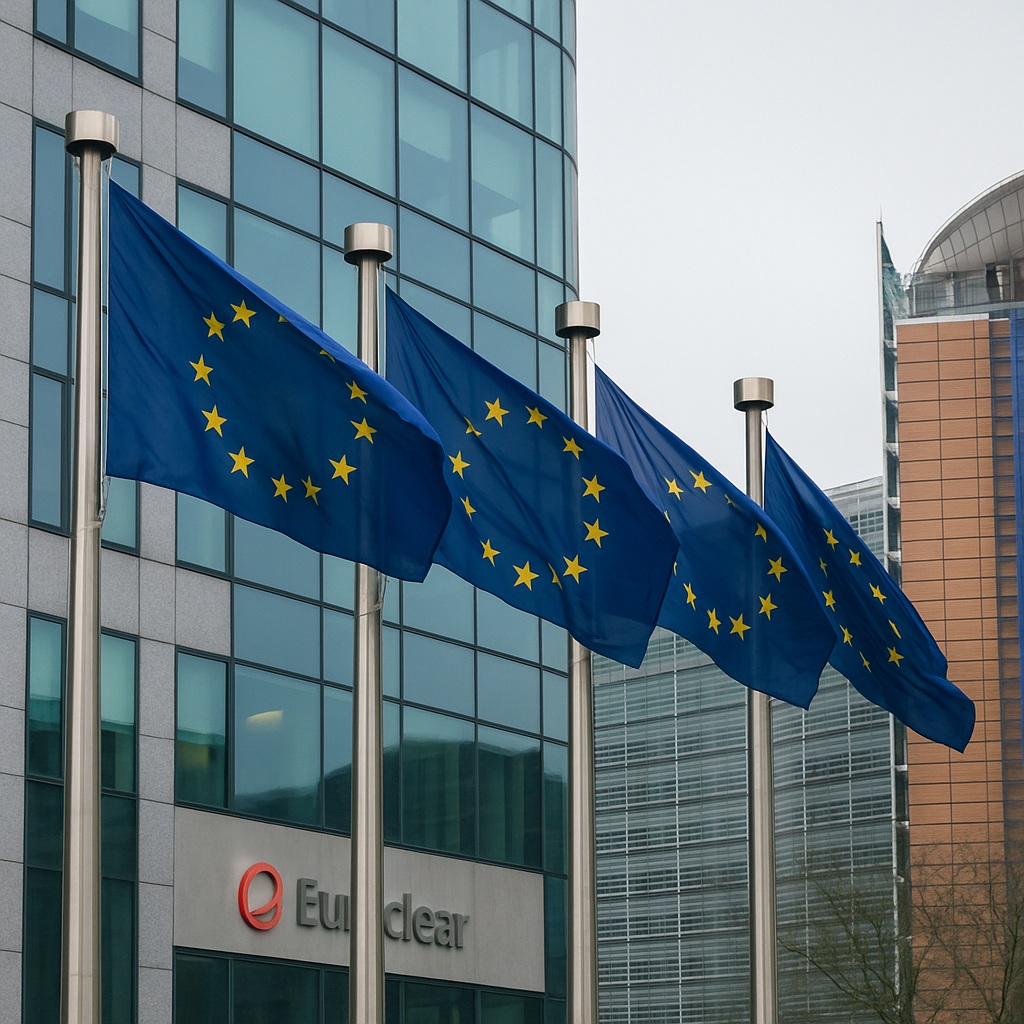
Since 2022, the EU has frozen an estimated €210 billion of Russian sovereign assets within its jurisdiction — including nearly €185 billion held by the Belgian‑based clearing house Euroclear.
The original “reparations loan” plan would have allowed Ukraine to draw on that pool, with repayment contingent on Russia eventually paying war reparations.
But critics warn that such a move risks being legally framed as confiscation — not just freezing — which threatens to undermine investor confidence in European financial institutions. Euroclear has cautioned that using the frozen assets in this manner could destabilize the euro’s credibility, spook central banks and institutional investors, and ultimately raise borrowing costs for the entire bloc.
Further, policymakers argue it could expose countries like Belgium to disproportionate legal and financial liability, particularly if courts across the world — or even in Russia — challenge the move.
These risks have forced some EU leaders to reconsider the “easy” solution of simply redirecting frozen funds; for them, the volatility of markets and the sanctity of property rights outweigh the immediate political gains.
Joint Borrowing Gains Traction — But Not Without Political Costs
Under the newer plan, member states would jointly borrow on capital markets — issuing bonds that would fund Ukraine. The debt would be back‑stopped by the EU budget with the remainder covered by direct national guarantees.
Proponents argue this method spares Europe the legal morass tied to asset seizure and preserves the stability of European financial institutions. A senior EU diplomat reportedly described the trade‑off as “weighing the predictable cost of joint borrowing versus the unpredictable risk linked to a reparations loan.”
Yet joint borrowing has its own costs. It would increase public debt across multiple EU states — a politically sensitive move at a time when many governments are already under pressure from domestic fiscal restraint and inflation concerns.
Moreover, the impact on national budgets could trigger resistance in debt‑averse member states or from those sensitive to increased deficit levels before upcoming national elections. As one EU official admitted privately: “The political downside is not trivial.”
EU Cohesion Under Strain as Legal and Geopolitical Worries Mount
The divergence of views among EU member states over how to proceed evidences deeper fractures: between hard‑line supporters of Ukraine’s financing, who emphasize urgency and moral responsibility, and more cautious states prioritizing legal certainty and financial stability.
For Belgium, which shoulders much of the risk given its custodial role for frozen Russian assets, the stakes are especially high. Its leadership has repeatedly demanded “ironclad guarantees” covering potential litigation, retaliatory actions, and liquidity losses before consenting to any seizure plan.
Some EU capitals also worry that using confiscated assets could set dangerous precedents. If sovereign assets — once under freeze — are treated as up for grabs, other states may retreat from investing through institutions like Euroclear, or shift capital toward alternative non-Western clearinghouses — undermining the West’s financial leverage.
In effect, the frozen‑assets debate is not just about Ukraine: it’s about the long‑term credibility, unity, and financial architecture of the European project.
Looking Ahead: A December Showdown
The next meeting of EU leaders — slated for mid‑December — is being cast as a landmark moment. With Ukraine projected to face a sharp cash shortfall early next year, the pressure to adopt a concrete funding mechanism is growing by the day.
At that summit, Brussels may attempt to salvage both aims: authorizing joint borrowing now — with the frozen‑assets scheme kept alive as a fallback once legal and institutional guarantees are in place.
Whether this hybrid approach will satisfy both pro‑Ukraine hawks and pro‑market realists remains uncertain. But what is clear is that the decision will carry lasting repercussions — not only for Ukraine, but for the EU’s cohesion, its financial credibility, and its capacity to act rapidly and collectively in future crises.


 The Tower Post