
Zelenskiy’s Paris consultations underscore a united European front as the United States quietly tests diplomatic channels with the Kremlin.

In a week defined by parallel diplomacy, European leaders intensified their support for Ukraine’s position in ongoing peace negotiations, even as a senior U.S. envoy departed for Moscow. The dual-track engagement — public solidarity from Europe paired with quiet U.S. outreach to Russia — highlighted the increasingly intricate choreography surrounding efforts to end the war.
Ukrainian President Volodymyr Zelenskiy met with French President Emmanuel Macron in Paris, where both leaders reaffirmed their shared commitment to a settlement that preserves Ukraine’s territorial integrity. According to officials familiar with the discussions, the atmosphere was firm but constructive, reflecting a growing European determination to maintain alignment on Kyiv’s conditions for peace.
Macron, who has become one of Kyiv’s most active advocates within Europe, emphasized that the continent’s stability remains inseparable from Ukraine’s security. His message — resolute support paired with an insistence on strategic patience — signals Europe’s intent to take a more assertive role in shaping the eventual terms of peace.
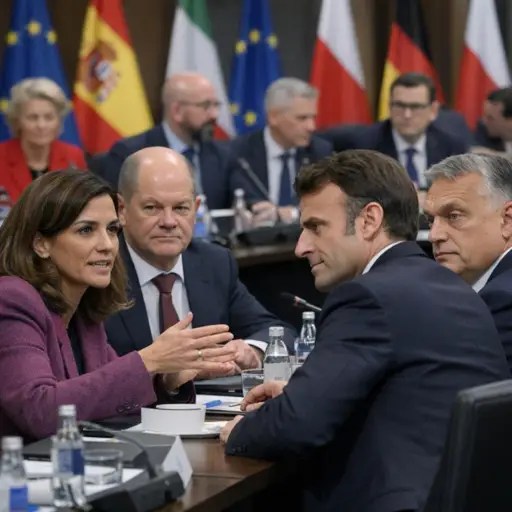
Across the continent, similar language echoed from Berlin, Warsaw, and Rome. European diplomats say leaders are wary of any negotiations that might pressure Ukraine to compromise prematurely, particularly at a time when Russian forces are actively maneuvering near key fronts. “Europe has learned the lessons of past conflicts,” one official said. “Unity is now essential — not only to support Ukraine but to uphold the credibility of European security.”
While Europe coordinated its message of solidarity, Washington quietly set in motion a separate diplomatic overture. A U.S. envoy with experience in strategic arms talks departed for Moscow, marking one of the highest-level direct engagements between the two governments in months. Although the visit is framed as exploratory, it underscores Washington’s interest in assessing Russia’s willingness to discuss parameters for de-escalation.
Analysts caution that the U.S. outreach does not signal a shift away from Kyiv. Instead, it reflects a recognition that sustainable peace will require multiple diplomatic channels operating simultaneously. The challenge lies in ensuring that those channels reinforce rather than undermine Ukraine’s leverage.
For Zelenskiy, the European show of unity offers a critical counterweight. His Paris talks included discussions on air-defense replenishment, reconstruction financing, and political guarantees designed to secure Ukraine’s position both during and after negotiations. Officials described the tone as one of careful optimism, with both leaders aware that the coming months may prove pivotal.
Across Europe, the sense of urgency is unmistakable. Public support for Ukraine remains relatively strong, though governments acknowledge it cannot be taken for granted indefinitely. The renewed focus on diplomacy — backed by tangible military and financial assistance — suggests European leaders are preparing for a long, complex path to peace.
What remains clear is that Ukraine’s Western partners are attempting to strike a delicate balance: encouraging a diplomatic framework without diluting Kyiv’s hand, countering Russian influence without escalating tensions, and maintaining allied unity at a moment when global geopolitical pressures continue to shift. In this environment, every signal — whether a Paris meeting or a quiet trip to Moscow — carries heightened significance.
As winter approaches, the contours of a possible settlement remain uncertain. Yet Europe’s leaders appear intent on ensuring that any negotiation begins with Kyiv’s priorities firmly in place. And while Washington probes the viability of renewed dialogue with Moscow, European capitals are moving decisively to prevent any fissures in the coalition that has sustained Ukraine thus far.
For now, all eyes remain on the interplay between public declarations in European capitals and quieter exchanges elsewhere. The path to peace may not yet be visible, but the diplomatic lines shaping it are increasingly active — and increasingly consequential.



 The Tower Post