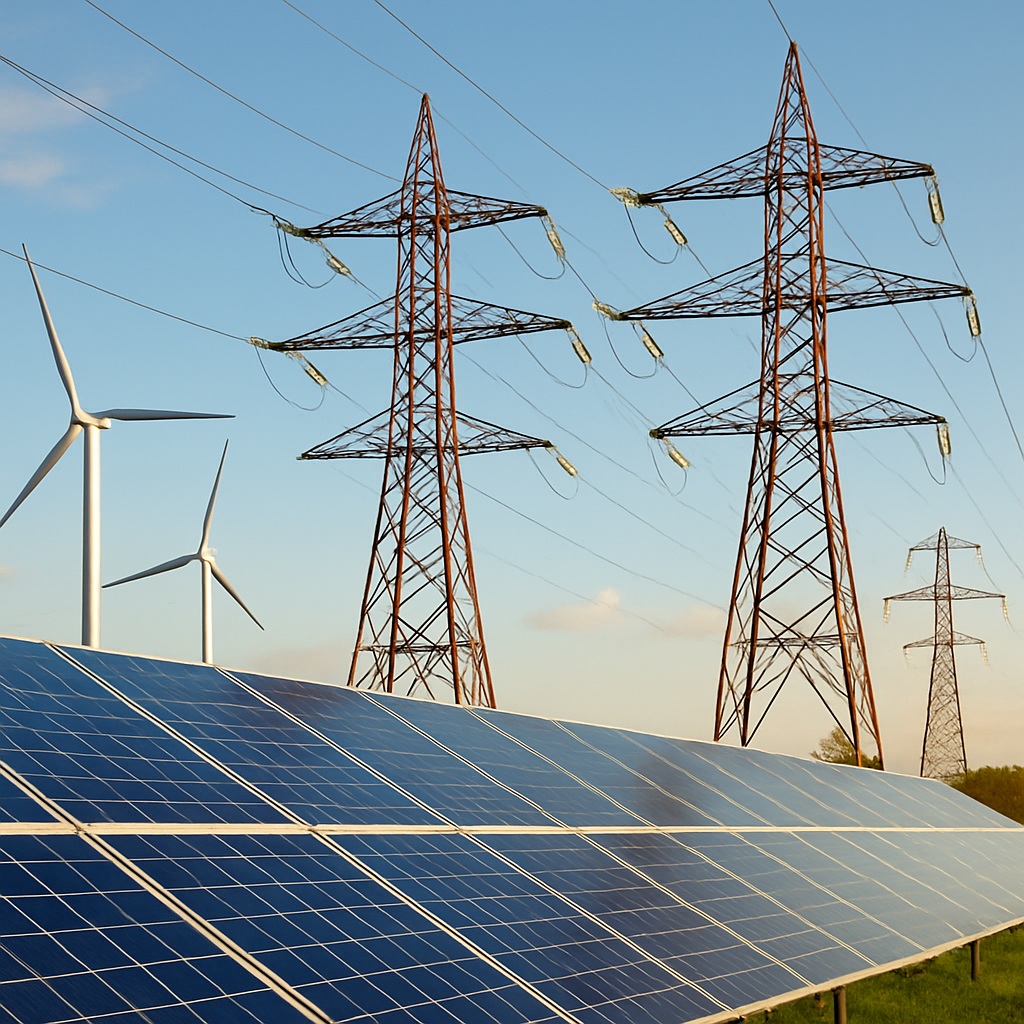
Europe advances a massive portfolio of 235 cross-border energy links to fortify its grid resilience

In a move signaling the European Union’s renewed strategic push for long-term energy security, the European Commission has approved a sweeping package of 235 cross-border energy infrastructure projects. The initiative reflects a continental desire to move beyond past vulnerabilities, strengthen grid stability, and accelerate integration of renewable power across member states.
The announcement, made shortly before early November, underscores how energy interconnectivity has evolved from a technical ambition into a geopolitical imperative. With global energy markets still shaped by turbulence and unpredictable supply chains, EU officials emphasized that the projects represent not only engineering milestones but also political commitments to collective resilience.
At the heart of the decision is the belief that Europe can no longer rely on isolated national grids. Instead, the bloc seeks to weave a dense fabric of interlinked power corridors that allow electricity to flow seamlessly across borders. These corridors—ranging from offshore wind hubs and high-voltage transmission lines to hydrogen backbone routes—are designed to ensure that clean energy can be stored, transported, and shared wherever demand peaks.
Experts note that the newly endorsed infrastructure marks a shift toward long-range strategic planning. Many of the approved plans involve multi-country coordination, complex permitting efforts, and large-scale investment partnerships. The Commission highlighted that the projects were selected for their potential to cut emissions, improve resilience in times of crisis, and prepare the continent for a future where electrification touches every major sector of the economy.
Industry observers point out that the scale of the approvals signals confidence in Europe’s capacity to lead global energy transformation. By fortifying interconnections, the EU aims to secure diverse supply avenues, reduce congestion during periods of high renewable output, and stabilize electricity prices for households and businesses.
Furthermore, grid operators have welcomed the decision, noting that the awarded initiatives will help modernize aging transmission networks. Many of the projects rely on digital optimization tools, new cable technologies, and next-generation substations that can balance intermittent renewable power with increasing reliability.
Governments across the bloc also see the package as a boost for industrial competitiveness. Stronger energy corridors are expected to support the growth of green manufacturing clusters, facilitate the expansion of hydrogen corridors, and improve confidence among investors seeking stable, future-proof infrastructure.
Critics, however, caution that implementation will require careful coordination, community engagement, and long-term financing mechanisms. Several environmental groups have stressed that construction impacts must be managed responsibly, especially in ecologically sensitive regions.
Still, the broader sentiment across Brussels is one of guarded optimism. The approval of the 235 projects signals a unified European front, determined to build an energy system capable of withstanding future shocks while aligning with climate goals.
As Europe prepares for the years ahead, these interconnectors may become the backbone of a cleaner, more resilient energy landscape—one in which borders matter less, and shared commitments matter more.




 The Tower Post