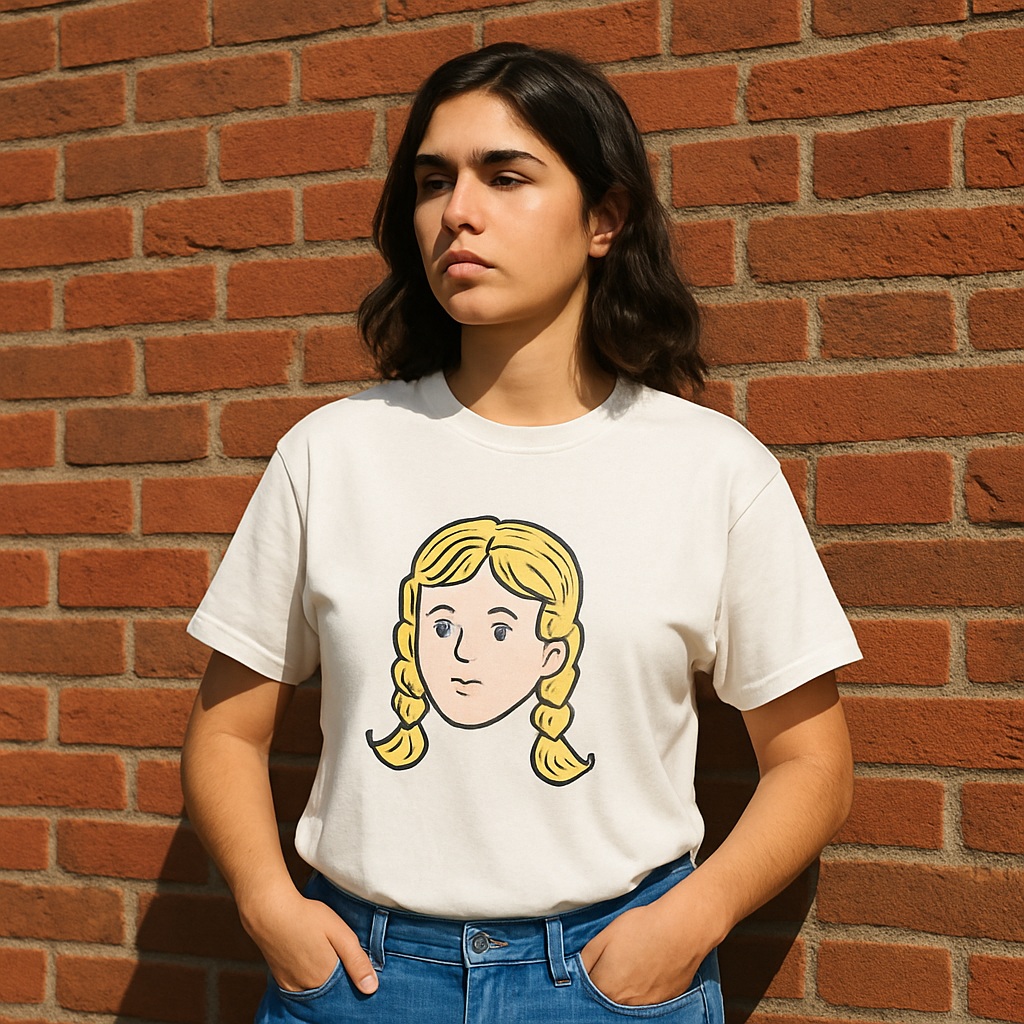
Conner Ives’ cult-favorite design transforms from fashion moment to grassroots engine for trans advocacy and community care.
In the weeks leading into early November, a small cultural shift began taking shape—not on a runway, but on sidewalks, subway platforms, and social feeds across the country. The catalyst was a T-shirt. Specifically, a white cotton tee stamped with a playful, retro illustration and a deceptively simple message: “Protect the Dolls.”
What began as one of Conner Ives’ many nostalgic, Americana-inspired experiments quickly evolved into a powerful emblem of solidarity. The designer, known for blending pop culture references with a sharp understanding of social currents, had initially envisioned the shirt as commentary on the way queer communities—especially trans femmes—have long supported and safeguarded one another through hostile cultural climates. But what happened next went far beyond fashion.
The tee’s sudden visibility was sparked by mutual aid organizers who recognized the phrase as more than a slogan. It was a call to action. Within days, the shirt became unofficial fundraising gear, with activists, celebrities, and everyday supporters using it to amplify a shared message: protecting trans lives requires resources, community, and visibility.
Sales of the design began to funnel into a growing network of grassroots causes, with Trans Lifeline emerging as one of the largest beneficiaries. While no precise numbers have been disclosed publicly, organizers confirm that the collective effort has already generated “hundreds of thousands” in support—an impact driven not by a corporation or a formal campaign, but by people choosing to show up for one another.
The movement gained momentum through images: supporters wearing the tee at rallies, in studio portraits, or snapped casually on afternoons with chosen family. In each instance, the shirt carried the same quiet charge. It signaled care. It signaled protection. It signaled belonging.
Advocates say that relevance matters. At a time when trans people face rising scrutiny, legislative hostility, and social disinformation campaigns, a wearable statement of care functions as both armor and amplification. “When you see someone in the shirt, you know where they stand,” says one community organizer involved in the early fundraising efforts. “You know who’s safe. You know who’s paying attention.”
But the shirt’s viral success didn’t rely on shock value or graphic protest imagery. Instead, its power lies in a softer emotional register—in the language of friendship, of nurturing, of looking out for “the dolls,” a term of affection long used within queer culture. This warm approach, ironically, made the message even more effective. Rather than reacting to hostility, it imagines what safety looks like.
Conner Ives himself has been characteristically understated in discussing the phenomenon. In recent interviews, he emphasized that the project’s impact belongs to the community, not the brand. “Design is communication,” he noted. “Sometimes work resonates in ways you don’t anticipate. If people can use something I made to support one another, that’s the most meaningful outcome.”
The phrase has since taken on a second life beyond the garment. Local arts collectives have started hosting “Protect the Dolls” nights—mixing fundraising with performance art, vogue battles, poetry, and DJ sets. Small businesses from bookstores to nail salons have created limited-run tie-ins, directing part of their proceeds to housing funds, gender-affirming care networks, and crisis support services. Even educators have expressed interest in using the slogan to spark conversations around community care in youth programs.
Observers note that this isn’t the first time fashion has collided with activism, but the organic, decentralized quality of the “Protect the Dolls” moment stands out. There is no corporate sponsorship, no major campaign budget, no glossy rollout. Instead, it mirrors the mutual aid traditions that have long sustained queer and trans communities—rooted in trust, creativity, and the belief that visibility and resource-sharing go hand in hand.
For supporters, the shirt is less a brand item and more a badge. They describe feeling connected to something larger than themselves—a diffuse but determined movement that grew not from institutions, but from shared lived experience. The image accompanying this article, featuring a supporter wearing the tee in a moment of quiet confidence, reflects that sentiment: grounded, familiar, defiantly everyday.
As the year draws closer to its end and attention turns toward cultural retrospectives, many observers are already calling the “Protect the Dolls” tee one of the most unexpected and meaningful symbols of the season. Not because it dominated runways—though its presence has certainly been felt in the fashion ecosystem—but because it demonstrated what happens when style, solidarity, and community care align.
For the people who wear it, the message is simple: the dolls deserve protection, celebration, and joy. And for now at least, a T-shirt has become one of the most visible ways to say so aloud.




 The Tower Post