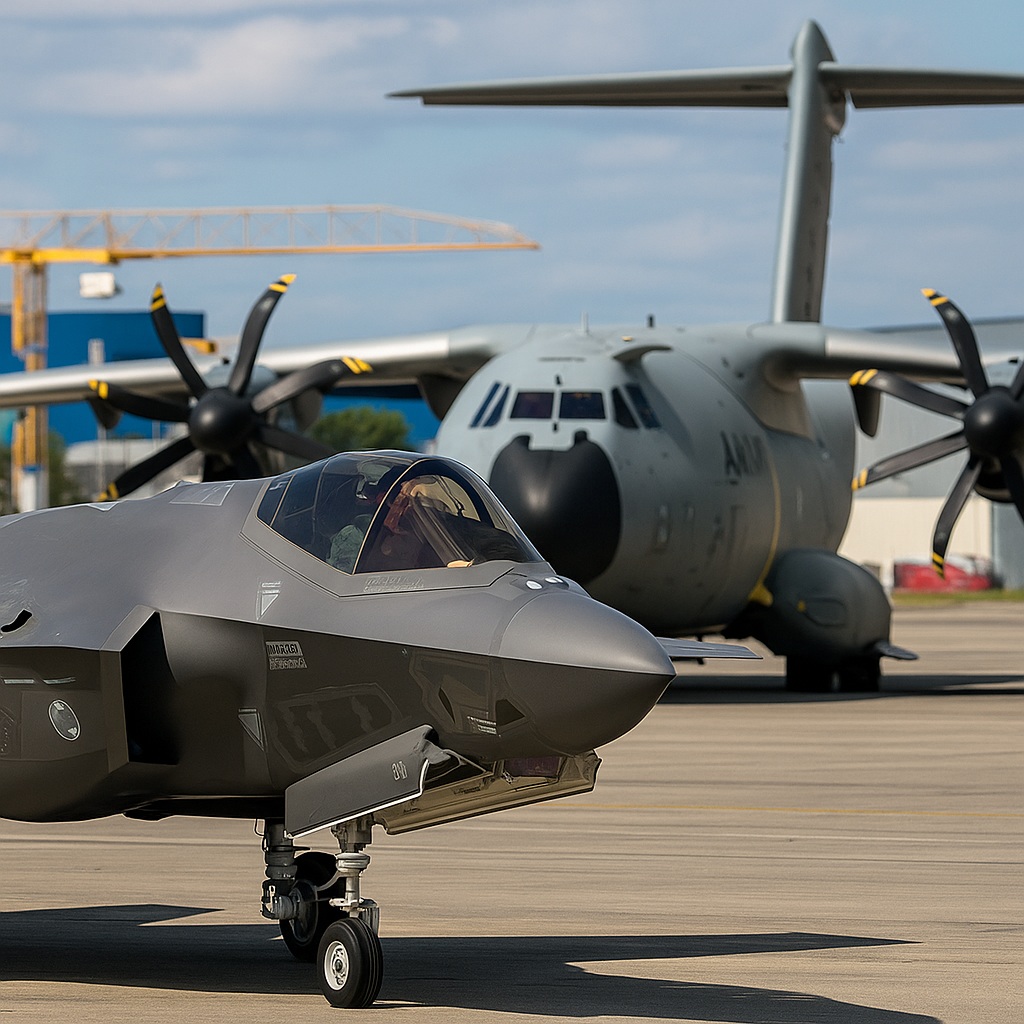
Despite a weakening macroeconomic outlook, Europe’s aerospace and defence sector posts unprecedented resilience, driven by heightened military demand across the continent.
Europe’s aerospace and defence industry closed 2024 with a record-high turnover of 325.7 billion euros, marking one of the most significant milestones in the sector’s modern history. The figures, released this autumn by industry groups and confirmed by European executives, reveal an industry defying the gravity of broader economic uncertainty. While Europe grappled with slowed growth, cautious investment, and pressure on public finances, defence and aerospace manufacturers vaulted ahead—buoyed by a surge in military procurement and sustained demand for next‑generation aircraft.
Executives attribute the growth to a combination of geopolitical instability and structural market transformation. With ongoing conflict weighing on European security calculations, governments accelerated defence modernization programmes. Procurement pipelines expanded not only in frontline states but across Western and Southern Europe as well, reflecting a new perception: deterrence is no longer optional.
Alongside defence, the commercial aerospace segment staged a notable rebound. Aircraft production, though still navigating supply-chain bottlenecks, benefited from revived passenger traffic and a renewed appetite for fleet renewal. Industry analysts note that Europe’s leading manufacturers strengthened their global footprint, even as competition from emerging aerospace hubs intensified.
Employment mirrored this momentum, with the industry’s workforce reaching its highest levels in more than a decade. Thousands of new positions were added in engineering, systems integration, cybersecurity, and advanced manufacturing. Executives say the hiring wave demonstrates both the industry’s confidence and its urgent need for talent to deliver expanding order books.
The sector’s resilience has become a counterpoint to the broader macroeconomic narrative. While European policymakers warn of headwinds ranging from inflationary pressure to energy‑market uncertainty, aerospace and defence leaders describe a market entering a long investment cycle. Observers caution, however, that the boom comes with risks: supply‑chain vulnerabilities, escalating project costs, and the need to reconcile rapid defence spending with political consensus.
Still, the mood among European manufacturers remains decidedly optimistic. The 2024 figures are viewed not as an outlier but as a sign of structural realignment within the continent’s industrial priorities. For many in the sector, the question is no longer whether demand will remain high, but how quickly Europe can scale capacity to meet it.
As the industry prepares for the year ahead, leaders expect the upward trajectory to continue, sustained by long‑term procurement programmes, expanding aerospace markets, and a renewed European commitment to strategic autonomy.



 The Tower Post