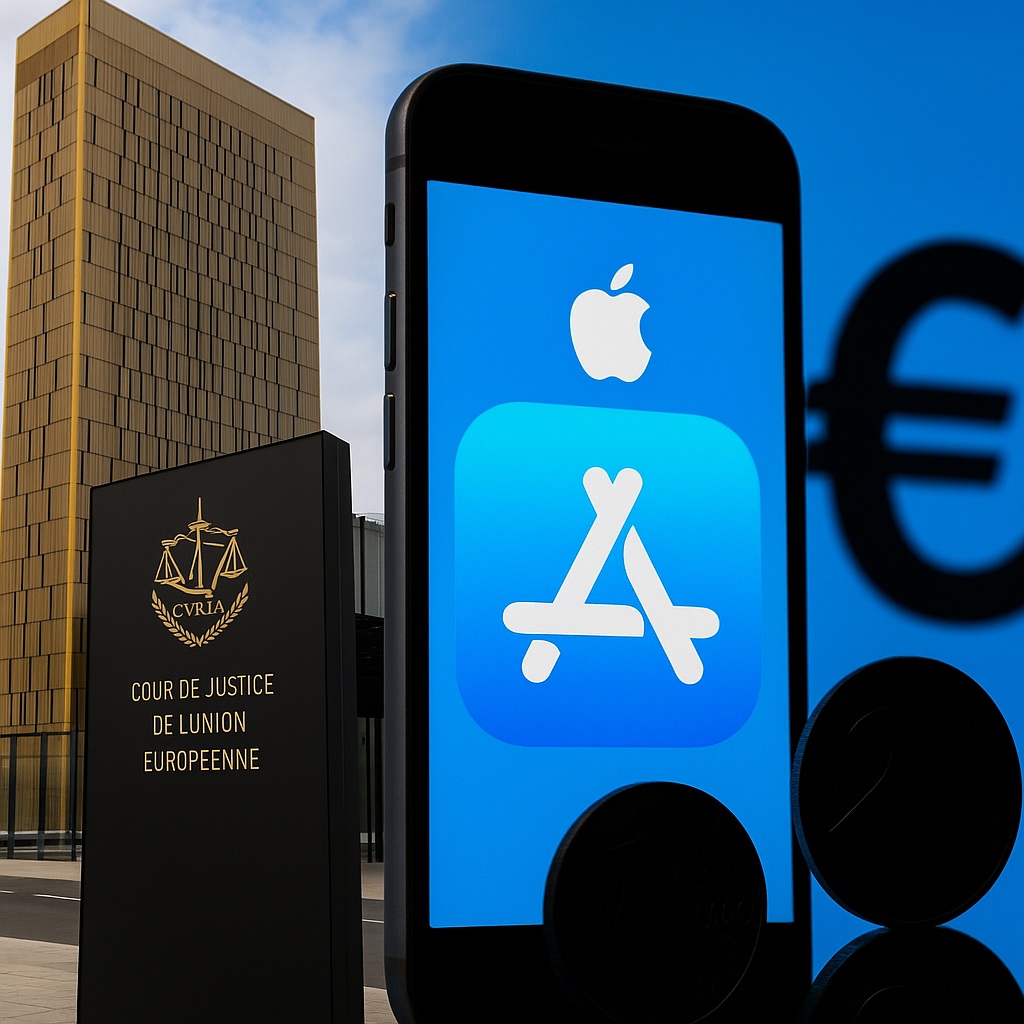
A landmark ruling empowers Dutch courts to hear App Store–related antitrust damages claims, opening the way for large-scale European litigation.
In one of the most consequential antitrust developments Apple has faced in Europe, the European Union’s top court has ruled that Dutch courts are empowered to hear damages claims tied to Apple’s App Store policies. The decision represents a substantial legal defeat for the tech giant, underscoring the mounting legal and regulatory challenges it faces across the continent.
The judgment, issued by the Court of Justice of the European Union (CJEU), concludes that consumer and developer organizations in the Netherlands may pursue compensation for alleged overcharges linked to Apple’s long-standing in‑app payment rules. While the case originated from two Dutch foundations representing millions of users, the implications reverberate far beyond the Netherlands. Legal experts say the ruling effectively clears a pathway for similar claims across the EU, potentially amounting to hundreds of millions in cumulative liability.
A SHIFTING LEGAL LANDSCAPE FOR BIG TECH
For years, Apple’s App Store rules — specifically its requirement that digital services use Apple’s proprietary payment system, combined with commissions of up to 30% — have been targets of regulatory scrutiny. But until recently, much of the pressure came from competition authorities rather than direct civil-litigation pathways.
The EU has spent the last decade evolving the mechanisms through which consumers and businesses can seek monetary redress in competition matters. Following the implementation of both the Damages Directive and the Representative Actions framework, collective legal actions have become easier to organize in national courts. The CJEU’s ruling affirms that these instruments can be fully applied in cases involving digital platforms, even when the alleged harm spans multiple EU markets.
For Apple, which has long argued that any litigation should be tied to its headquarters or the location of its European operations, the decision marks a legal turning point. The court reasoned that Dutch users and developers experienced the economic impact of Apple’s practices locally — particularly since Apple tailors App Store content, pricing, and currency to specific national markets. This, the court said, makes the Netherlands a legitimate venue for damages claims tied to App Store distribution and payments.
CONSEQUENCES EXTENDING BEYOND THE NETHERLANDS
While the ruling pertains directly to Dutch proceedings, the broader signal is unmistakable: any EU member state whose users can demonstrate market-specific harm may now serve as a venue for similar claims. Litigation organizations in Germany, France, and Spain are reportedly reviewing the decision to determine whether parallel efforts could be launched.
Even if only one or two follow-on cases materialize, the financial impact on Apple could be considerable. Analysts note that damages calculations in competition cases often include multipliers and interest that significantly expand the scale of potential liability. The Dutch foundations estimate that the claims associated with this case alone could exceed several hundred million euros — and that number could grow if additional user groups join.
A BUILDUP OF REGULATORY AND LEGAL PRESSURE
The CJEU’s ruling arrives during a period of escalating tension between Apple and European regulators. Throughout the year, various branches of the EU government have scrutinized Apple’s compliance with the Digital Markets Act (DMA), a sweeping set of rules designed to curb the power of major tech “gatekeepers.” Apple has faced criticism — and earlier penalties — for restricting developers’ ability to inform users about alternative payment options outside its App Store.
Separate from DMA enforcement, Apple has also defended itself against claims related to its treatment of app developers in specific sectors. One prominent case involved dating‑app providers, who argued that Apple’s commissions and payment rules forced them into disadvantageous economic terms. A Dutch court previously confirmed findings that Apple’s behavior constituted an abuse of dominance — a judgment now further reinforced by the CJEU’s latest interpretation.
Taken together, these rulings depict a regulatory climate increasingly skeptical of Apple’s platform control and willing to support strong legal remedies.
WHAT HAPPENS NEXT: THE ROAD AHEAD
Now that the jurisdictional question has been resolved, Dutch courts are expected to proceed with full hearings on the substance of the claims. Legal teams representing consumer organizations are preparing extensive economic analyses to demonstrate how Apple’s commission structure inflated prices and limited payment-choice innovation for years.
Apple, for its part, is expected to continue contesting both the legal arguments and the scale of the alleged damages. The company maintains that its App Store commissions reflect the cost of maintaining a secure and globally consistent platform for developers and users. It also argues that recent adjustments to its policies — including new payment allowances introduced in parts of Europe — show that its system is already evolving.
However, legal specialists say Apple’s partial policy reforms are unlikely to shield it from retroactive liability. Courts typically assess whether historical practices violated competition law, regardless of whether the company has since changed its behavior.
A PRECEDENT WITH GLOBAL IMPLICATIONS
The significance of this case extends far beyond Europe. Competition authorities in several other jurisdictions — including the United States, Japan, Australia, and the United Kingdom — are debating or actively investigating similar issues involving app-store fees and payment requirements. If the Dutch case ultimately results in damages, it may provide momentum for litigants elsewhere to pursue comparable claims.
Moreover, a ruling against Apple in the Netherlands could prompt additional representative actions in Europe, enabled by the EU’s increasingly unified approach to consumer and developer rights.
CONCLUSION: A CRITICAL CHAPTER FOR DIGITAL COMPETITION LAW
The CJEU ruling marks a profound shift in the balance of power between large technology platforms and European consumers. What began as a dispute involving app developers and payment rules has evolved into a test case for how global digital markets should be regulated — and how dominant players can be held accountable for practices deemed harmful.
Whether Apple ultimately pays hundreds of millions in damages or successfully limits the scope of the claims, the ruling itself represents a decisive moment in Europe’s ongoing efforts to reshape digital competition. For Apple and other major tech firms, the implications will be felt long after the Dutch courts render their final decisions.
This moment signals a future in which platforms may face not only regulatory penalties but also expansive private litigation — a dual threat that could redefine the economics of app ecosystems for years to come.




 The Tower Post