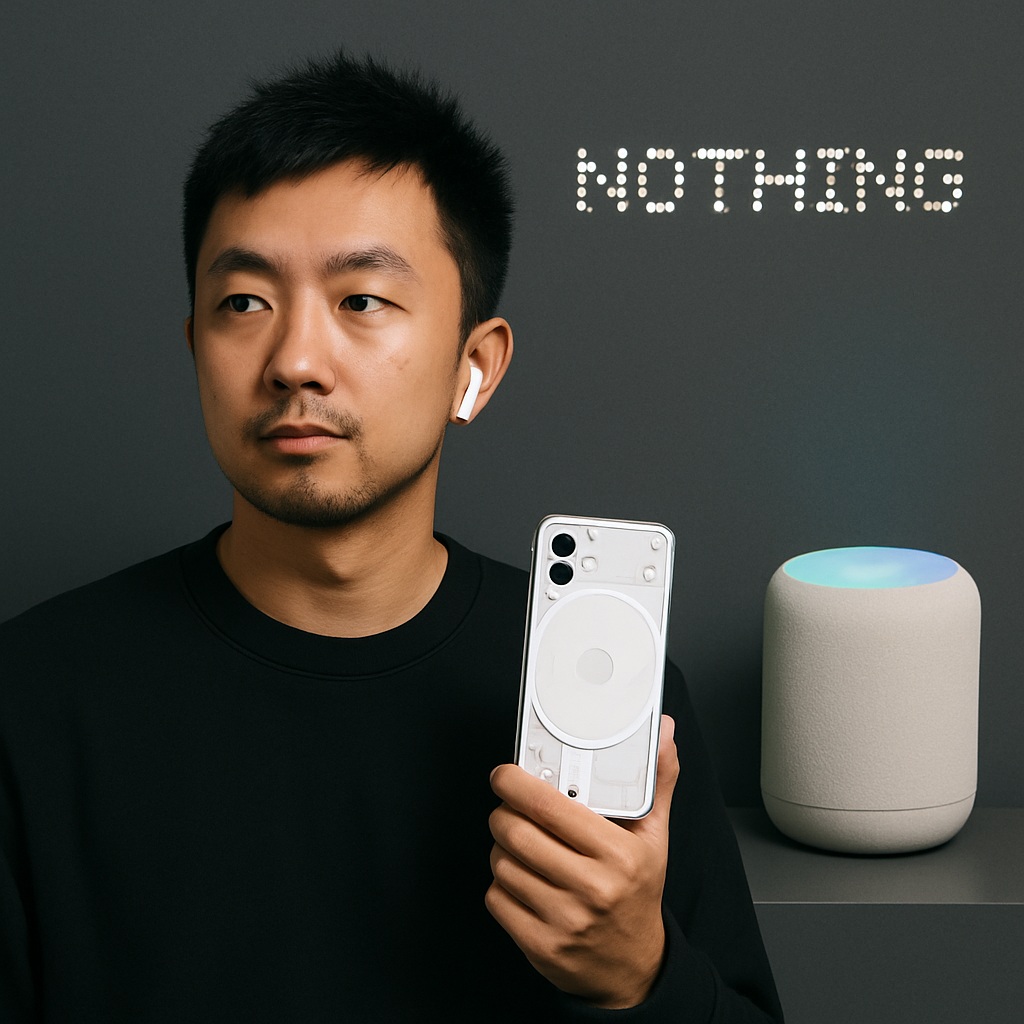
With rising revenue, bold AI ambitions, and a lifestyle-first philosophy, Carl Pei’s London startup is positioning itself as the cultural brand of choice for the next generation.
By early November, the mood inside Nothing’s East London headquarters feels charged with a kind of kinetic optimism. The company—still young but already a fixture in the global tech conversation—has spent the past year transforming from a promising challenger brand into one of the most closely watched players in consumer electronics.
Founded by Carl Pei, the Swedish-Chinese entrepreneur best known for co-founding OnePlus, Nothing has always sought to be more than another smartphone manufacturer. Its ethos is rooted in design purity, cultural fluency, and a belief that technology should feel expressive rather than utilitarian. For a generation raised on TikTok aesthetics, open-source creativity, and a feed-driven understanding of identity, Nothing’s transparent hardware and community-centric messaging have made it something rare in modern tech: a brand that feels authentic.
Now, as the company eyes rapid expansion into AI-driven devices and lifestyle products, insiders say Nothing is on the cusp of a new phase—one where its ambitions extend far beyond smartphones and earbuds.
A Breakout Year and the Road Ahead
Industry analysts have been watching Nothing’s momentum with increasing interest. The company reportedly reached around half a billion dollars in revenue during the previous year, a milestone that would place it among the fastest-growing consumer hardware startups of the past decade. But its leadership is quick to frame that success as merely a foundation.
Throughout this year, Nothing has been laying groundwork for a far more expansive ecosystem. Its existing product line—particularly its phones and audio devices—has established a design language instantly recognizable for its stripped-back transparency and emphasis on visual identity. But the company’s research teams have spent recent months refining prototypes that push the boundaries of what a hardware brand can represent.
Nothing’s evolving philosophy centers on what executives describe as “creative enablement,” emphasizing tools that accelerate self-expression. In practical terms, that has meant deeper investment into AI integrations, particularly those designed to sit seamlessly within everyday creative tasks. While specifics remain closely guarded, sources familiar with early testing describe features that blend real-time assistance with a minimalist interface, keeping the technology present yet unobtrusive.
Designing for a New Generation
Nothing’s strategy hinges on its ability to connect with Gen Z—an audience defined not only by its online-native habits but also by its skepticism of corporate polish. The company’s unconventional marketing, community voting systems, and open engagement on social platforms have set it apart from older rivals.
Rather than designing devices that simply run apps or parse data, Nothing has positioned its products as aesthetic companions—objects that align with the way younger consumers curate their physical environment just as carefully as their digital presence. It’s a philosophy visible in everything from the subtle glow of the Glyph interface to the brand’s collaborations with emerging artists and musicians.
This generation’s values—sustainability, creativity, individuality—also shape Nothing’s product roadmap. Executives cite the desire to build devices that last, can be repaired, and reflect a lifestyle of conscious consumption. That balance of idealism and practicality has become part of the brand’s identity.
The Leap Into AI and Lifestyle
As the tech sector shifts toward AI-centric experiences, Nothing is preparing a significant step into next-generation personal devices. While many competitors frame AI as a replacement for traditional hardware, Nothing sees it as an augmentation of human creativity.
Sources close to the company hint at wearables, compact creative tools, and possibly even home products designed to enhance workflows rather than automate them. The company is studying how emerging AI models can support creative projects—music, video, writing, design—without overshadowing the user’s own style.
This move into lifestyle products is equally deliberate. For Nothing, lifestyle doesn’t mean generic merchandise; it means building an ecosystem where technology and creative culture intersect. The brand’s leadership has referenced inspirations from fashion houses, design studios, and streetwear labels—organizations that understand cultural capital as much as product engineering.
If early development is any indication, Nothing’s future lineup may blur the line between consumer electronics and personal accessories. Expect materials, form factors, and interactions that lean more toward art and wearable expression than traditional tech.
A Global Audience Awaits
With its presence expanding across Europe and Asia—and a particularly vocal fanbase emerging in creative communities worldwide—Nothing’s next chapter looks increasingly international. The company’s community forums, social channels, and event attendance reveal an audience eager for a brand that treats technology as culture rather than infrastructure.
Despite its meteoric rise, the company still faces challenges: supply chain pressures, competition from giants with deep pockets, and the unpredictable nature of global markets. But the mood around Nothing suggests a brand in sync with the zeitgeist.
As the year moves toward its close, Nothing stands poised at an unusual intersection: design-forward elegance, AI-powered utility, and a generation seeking tools that feel personal. The startup’s next moves will determine whether it can transform that promise into a lasting legacy.
For now, one thing seems clear: Nothing is steadily building something very significant for the future of creative technology




 The Tower Post