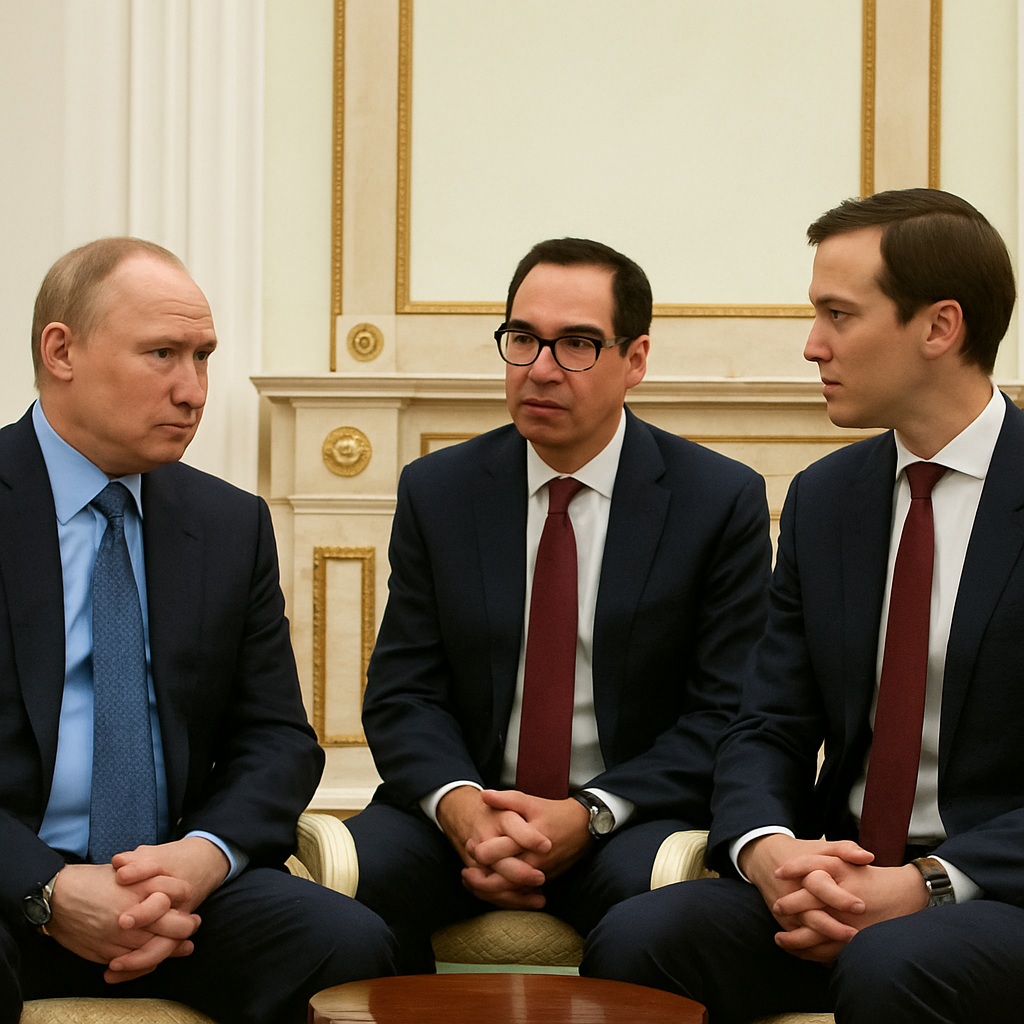
After a marathon discussion between Vladimir Putin and U.S. envoy Steve Witkoff — joined by Jared Kushner — Russia signals selective openness to American proposals but no breakthrough emerges.
In a prolonged five‑hour conversation inside the Kremlin, Russian President Vladimir Putin met with U.S. envoy Steve Witkoff and former White House adviser Jared Kushner in what both sides described as a “serious but inconclusive” round of talks aimed at reducing tensions and exploring the contours of a possible peace framework.
According to officials familiar with the discussions, the U.S. delegation presented a set of de‑escalation steps and political guarantees designed to halt the grinding conflict that has reshaped global security dynamics. Russian negotiators reportedly characterized some elements of the American proposals as “acceptable,” citing potential openings for mutual confidence‑building, while dismissing others as “unacceptable” on the grounds that they undermined Moscow’s strategic interests.
The atmosphere of the talks was described as stark but pragmatic. People close to the Russian delegation emphasized that the presence of Kushner — viewed by Moscow as a channel to influential U.S. political and business circles — signaled Washington’s willingness to diversify its diplomatic pathways. Yet, despite the unusual configuration of the delegation, no major diplomatic shift took shape.
Analysts say the meeting reflects an emerging pattern: the United States testing new informal envoys while Russia probes the limits of what it can gain without offering substantive concessions. With neither side showing readiness to revise its core red lines, the gathering appeared less a breakthrough moment and more a recalibration of expectations.
Still, even the modest acknowledgment that certain U.S. ideas are being explored seriously marks a subtle alteration in rhetoric from Moscow. For months, Russian officials have dismissed overtures from Washington as politically motivated or disconnected from realities on the ground. Now, at least rhetorically, the Kremlin seems prepared to entertain select components of an American framework — though it remains unwilling to signal any structural shifts.
Officials from the U.S. side maintained a cautious tone after the meeting, underscoring that dialogue, however incremental, is preferable to entrenched silence. One senior official described the interaction as “productive in form, limited in substance” but insisted that continued engagement remained vital.
Diplomatic observers are split on whether the meeting may lead to further rounds of talks. Some believe that the unusual combination of figures could pave the way for more flexible back‑channel negotiations. Others argue that without a willingness from either capital to move beyond symbolic gestures, the discussions risk becoming another stalled diplomatic episode.
As the political climate in both nations becomes increasingly complex, the path toward any meaningful agreement remains narrow. The Moscow meeting, though significant in duration and participants, ultimately highlighted the distance that still separates the two powers — and the challenge facing any future peace effort.



 The Tower Post