
How the EU’s plan to leverage frozen Russian assets signals a turning point in global finance and the postwar order
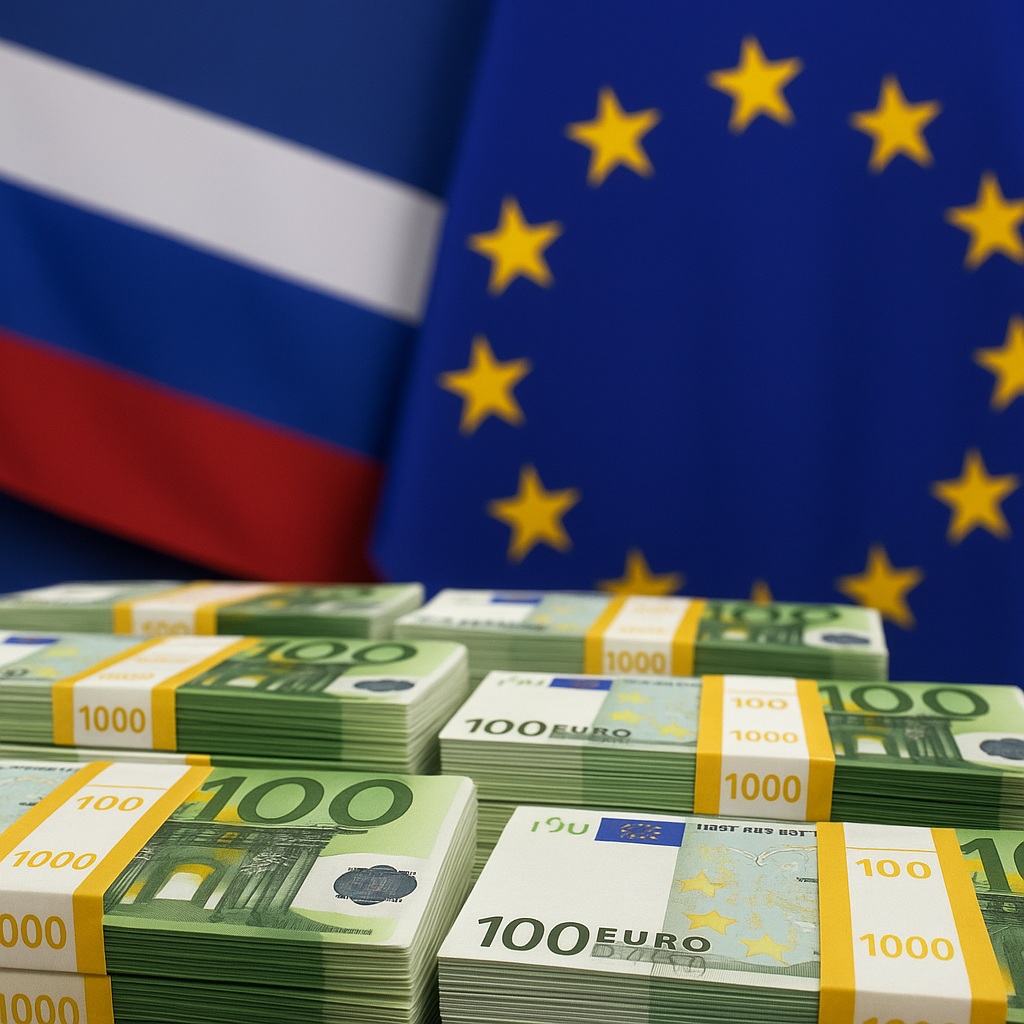
In early November, Europe entered uncharted financial and geopolitical territory. The European Union’s proposed “reparations loan” mechanism — a plan to use profits generated by frozen Russian state assets to fund Ukraine’s reconstruction and defence — represents one of the boldest institutional experiments attempted since the end of the Cold War. It is not only a financing tool; it is a declaration of intent about Europe’s long-term strategic role, Ukraine’s future, and the rules that will shape the postwar world.
For months, diplomats in Brussels had been negotiating the contours of the plan, balancing legal caution with political urgency. The breakthrough came when member states coalesced around a structure that avoided outright confiscation of Russia’s sovereign assets while still mobilizing their financial value. Under the framework, the immobilized reserves — most of them held in European institutions — would generate returns that can be pledged in support of Ukraine’s recovery and military resilience. The interest flows, not the principal itself, would serve as the backbone of an unprecedented multi-year funding scheme.
The move is significant not because it resolves the war — far from it — but because it reflects a new European willingness to use financial power as a geopolitical instrument. The reparations loan signals that Ukraine’s allies are planning for the long arc of reconstruction, not just for battlefield contingencies. It also sends a pointed message to Moscow: the costs of aggression may linger long after the fighting ends.
Yet the initiative is not without controversy. Critics warn that even using income derived from frozen sovereign assets could unsettle global markets and alarm governments that rely on the perceived neutrality of Western financial institutions. Some analysts fear it could push states to diversify away from European custody, potentially reshaping the geography of reserve holdings. Supporters counter that the exceptional nature of Russia’s invasion, coupled with the need to shore up the international system against coercive force, justifies exceptional measures.
Inside Ukraine, the announcement was met with cautious optimism. Kyiv’s reconstruction burden is enormous, and domestic capacity — strained by years of war — cannot meet it alone. The reparations loan offers predictable, multi-year support at a time when global attention is fractured and Kyiv’s international partners face their own political pressures. For Ukrainian officials, the EU’s decision is not merely a financial win but a symbolic one: Europe is signaling that Ukraine’s future lies firmly within its political and economic orbit.
For Washington, the plan arrives amid shifting debates over long-term security commitments. While the United States remains a critical pillar of Ukraine’s defence, European leadership — political, financial, and military — has become increasingly necessary. By pioneering a new funding model rooted in European institutions rather than transatlantic coordination alone, the EU is effectively broadening the architecture of Ukraine’s support.
The ramifications extend well beyond the region. If successful, the reparations loan could become a template for how democracies respond to large-scale violations of international law in an era marked by strategic competition. It may also accelerate the trend toward weaponized finance — the use of monetary tools, reserves, and sanction regimes as instruments of statecraft. Some observers see this as the unavoidable logic of a world where economic interdependence has become inseparable from geopolitical rivalry.
Still, uncertainty looms. Implementation will require legal precision, political unity, and careful communication with international partners. Russia has denounced the plan and is likely to mount diplomatic and legal challenges across multiple jurisdictions. Global financial actors, meanwhile, are watching closely for signs of risk, precedent, and potential contagion.
As Europe prepares to operationalize its reparations loan framework, one fact is already clear: the decision marks a turning point. This is not only about how to fund Ukraine’s survival and eventual recovery. It is about the kind of order that will emerge from the war — and the role Europe intends to play within it. The EU has chosen a path that blends financial innovation with geopolitical resolve. The rest of the world will now have to decide how to respond.

 The Tower Post