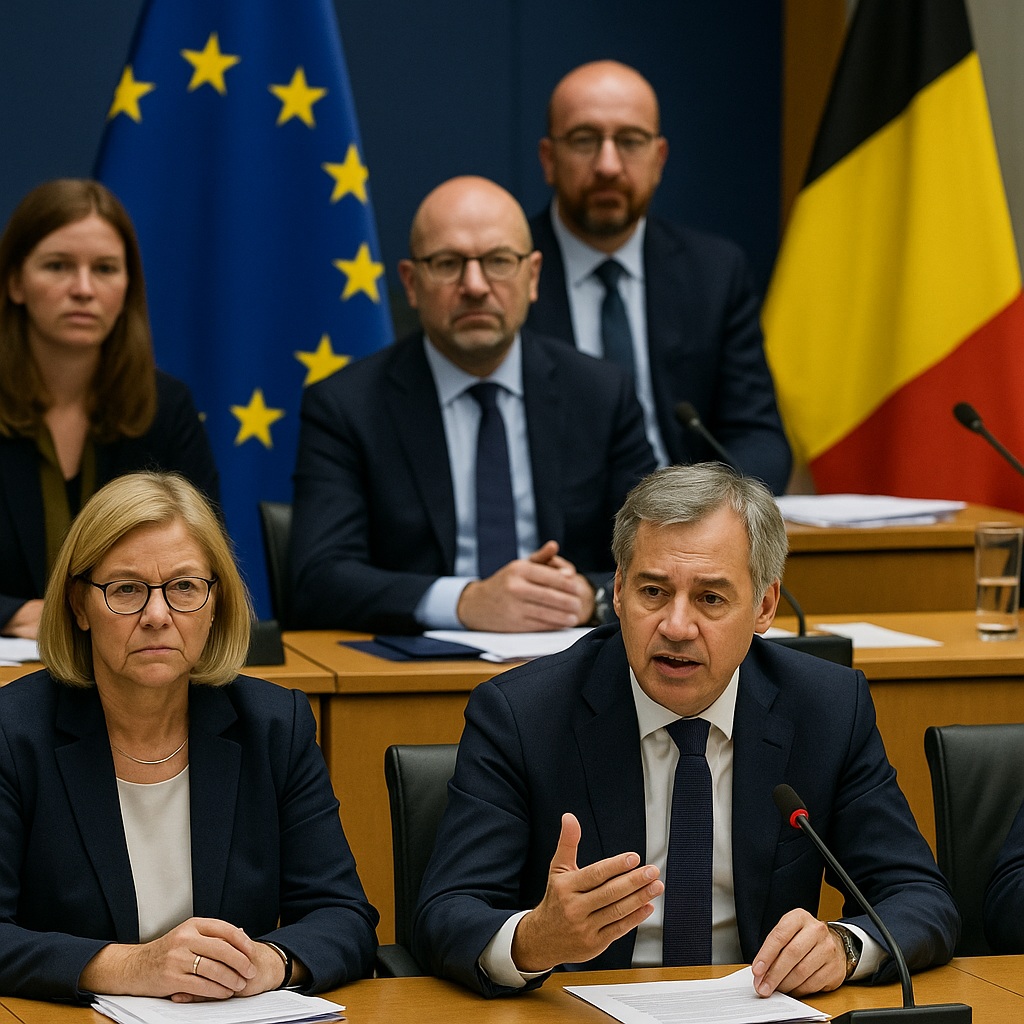
As some member states push for bold action, Belgium warns of legal and political fallout, revealing growing friction in EU economic policy circles.

In Brussels, debate over the future of frozen Russian assets has widened into one of the most sensitive rifts inside the European Union. As policymakers assess how those funds might be leveraged to support Ukraine’s reconstruction and Europe’s long-term security commitments, a new wave of resistance is emerging from inside the bloc itself—led most prominently by Belgium.
Several EU governments have argued that the Kremlin’s asset freeze should become a cornerstone of Europe’s strategy to hold Russia accountable and reduce the financial burden on member states. They frame it as a geopolitical necessity and a demonstration of Europe’s capacity to act with strategic purpose.
But Belgium, acting both as host to major clearing infrastructures and as a guardian of legal caution, has become the leading voice warning that the EU risks overstepping the limits of international law. Belgian officials point to potential lawsuits, diplomatic backlash, and long-term implications for the stability of European financial markets if the assets are misused or forcibly redirected.
Behind closed doors, the friction is causing unease among diplomats who fear the issue could widen existing divisions among member states. Some worry that fragmented approaches to the asset question could weaken the EU’s credibility, especially at a moment when global powers are watching how Europe confronts complex post-war financial challenges.
Financial institutions have also quietly expressed concern. While few speak publicly, several warn that a precedent-setting seizure could raise questions about the neutrality and reliability of European markets. Belgium has emphasized that any EU decision must withstand court challenges not only within the bloc but in international jurisdictions.
Supporters of a more assertive approach counter that failing to use the assets handcuffs the EU at a crucial moment. They argue that Europe cannot afford protracted indecision while Ukraine faces vast reconstruction needs and ongoing instability. These states see the assets as a means to maintain pressure on Moscow without asking European taxpayers to shoulder the full cost.
The debate has intensified as economic policymakers grow increasingly frustrated by the slow pace of consensus-building. Senior officials privately admit that this disagreement reflects deeper tensions over how far the EU should go in rewriting financial norms to meet geopolitical threats.
As discussions continue, diplomats say the path forward will require not just legal finesse but political compromise. Whether the EU can balance caution with ambition will determine how this debate shapes its evolving role in global economic governance.
For now, the dispute underscores an uncomfortable truth: even in moments of shared purpose, the EU’s unity can be tested from within—and its next steps could set a precedent felt far beyond Europe’s borders.



 The Tower Post