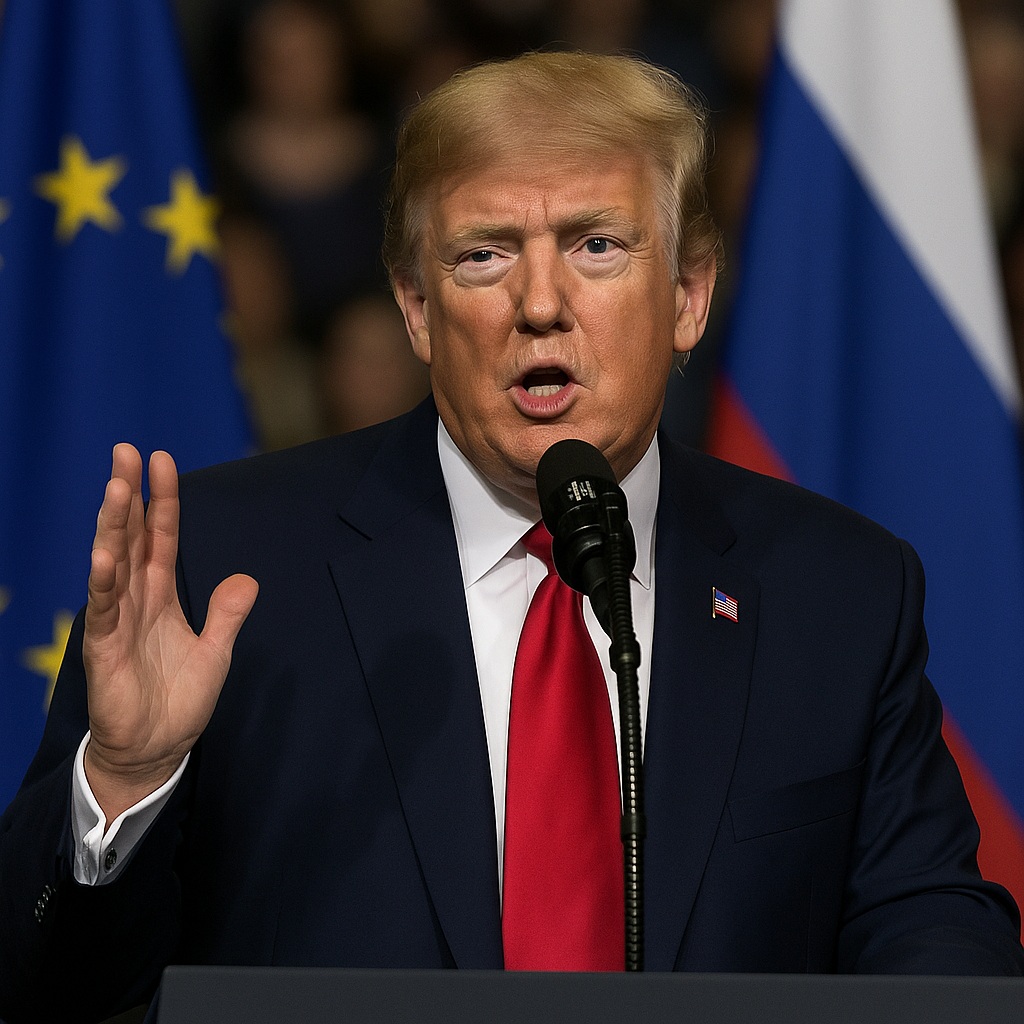
New multi-nation survey finds nearly half of Europeans now view Donald Trump as an “enemy of Europe,” reflecting escalating anxieties over security, U.S. politics, and the EU’s future.
Across Europe, unease is hardening into something closer to alarm. A fresh poll conducted across nine countries reveals a continent increasingly anxious about global instability, with nearly half of respondents labeling former U.S. President Donald Trump an “enemy of Europe.” While opinions remain divided, the finding underscores a dramatic shift in how Europeans perceive transatlantic relations at a moment of heightened geopolitical tension.
The survey, carried out by a consortium of academic institutions and research groups, paints a picture of a Europe grappling with external threats, internal fractures, and a public that fears the possibility of a large-scale conflict. Among the most striking results is the widespread belief that the risk of war with Russia is high—a sentiment shared across eastern and western member states alike, though more intense in countries closer to the frontier.
Researchers note that this apprehension is driven by several intersecting factors: Russia’s ongoing military assertiveness, doubts about the reliability of traditional security partnerships, and domestic political movements in Europe that question long-standing foreign policy assumptions. In the backdrop lies the specter of a renewed U.S. leadership under Trump, whose previous term strained diplomatic ties and unsettled European policymakers.
The poll indicates that trust in U.S. security commitments has eroded noticeably. While many Europeans continue to see the United States as an indispensable ally, a growing segment fears that Washington—under a Trump presidency—would abandon Europe in a moment of crisis. Several respondents invoked concerns about abrupt policy shifts, transactional diplomacy, and what they perceive as Trump’s disregard for multilateral institutions.
At the same time, the survey highlights an internal reckoning within the European Union. Anxiety over security has become intertwined with renewed debates about EU membership, defense integration, and national sovereignty. In several countries, support for deeper EU cooperation in security and defense has surged, even among traditionally euroskeptic communities. Yet the poll also reveals pockets of resistance, with some citizens questioning whether the EU is capable of protecting its member states in an increasingly volatile world.
Political analysts argue that these mixed sentiments reflect Europe’s strategic crossroads: caught between an assertive Russia, an uncertain United States, and domestic political fragmentation, the EU faces pressure to redefine its approach to collective defense. Calls for accelerating joint military capabilities, strengthening cyber resilience, and establishing more autonomous deterrence mechanisms have grown louder in political circles.
But anxiety does not necessarily translate into cohesion. The survey shows that public confidence in national governments varies sharply across the continent. In some states, citizens express strong faith in their leaders’ ability to manage crises; in others, distrust runs deep. This divergence complicates efforts to craft unified policies, especially as debates over migration, energy security, and economic stability remain deeply polarized.
What is clear is that Europeans increasingly view their security environment as unpredictable—and their collective future as uncertain. For many respondents, Trump’s political resurgence symbolizes the fragility of alliances once considered pillars of the postwar order. Whether this perception reflects a temporary emotional reaction or a lasting shift in European strategic identity remains to be seen.
As Europe approaches a crucial political season, the survey’s findings offer both warning and opportunity. Leaders who can articulate a credible security vision may find receptive audiences. Those seen as complacent or disconnected risk losing trust at a moment when public confidence is already fraying.
The poll’s overarching message is unmistakable: Europe is alert, uneasy, and searching for stability in a world where the familiar guardrails appear less reliable than before. Whether the continent can turn that anxiety into unity—or succumbs to further fragmentation—will shape its role in global affairs for years to come.



 The Tower Post