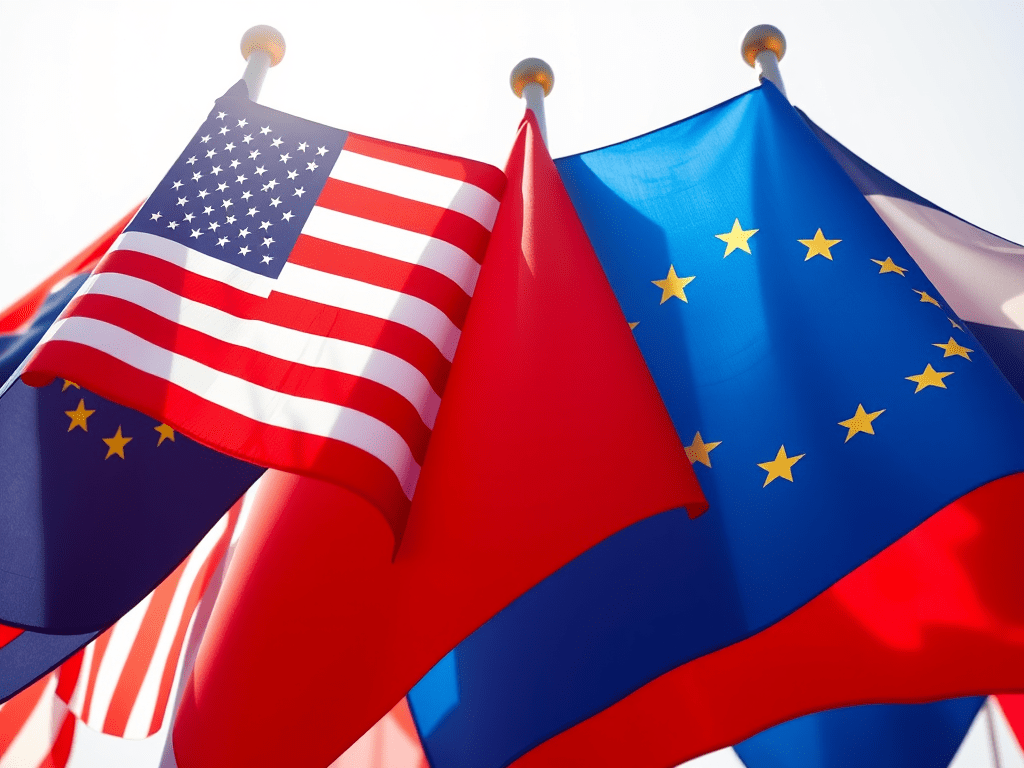
Growing unease in Europe as back-channel diplomacy accelerates while Kyiv’s key security guarantees remain unresolved
In several European capitals, senior officials are voicing unease over a series of discreet U.S. diplomatic exchanges with Russian counterparts—meetings that, according to multiple European diplomats, have intensified in recent weeks. While Washington insists the contacts are exploratory and aimed at de-escalation, European leaders fear that the renewed back-channel diplomacy could compromise a fragile, hard-won consensus on Ukraine’s security needs as discussions about a future settlement continue.
The warnings come at a delicate moment. Across Europe, officials describe a sense of strategic drift: the war has entered an exhausting stalemate, humanitarian pressures are rising, and political transitions on both sides of the Atlantic have left key policy positions unsettled. Against this backdrop, the news that U.S. envoys have quietly met Russian representatives in undisclosed locations has triggered alarm, particularly among governments that believe any negotiation not anchored in Kyiv’s priorities risks fracturing Western unity.
European diplomats say their concern is not that Washington is engaging Moscow—private channels have existed for months—but that the substance of the exchanges remains opaque at a time when Ukraine is pushing for firm, binding security guarantees and a clear roadmap for reconstruction. Without clarity, some fear Russia could exploit diplomatic ambiguity to re-shape the political terrain and pressure Ukraine into concessions that it has repeatedly rejected.
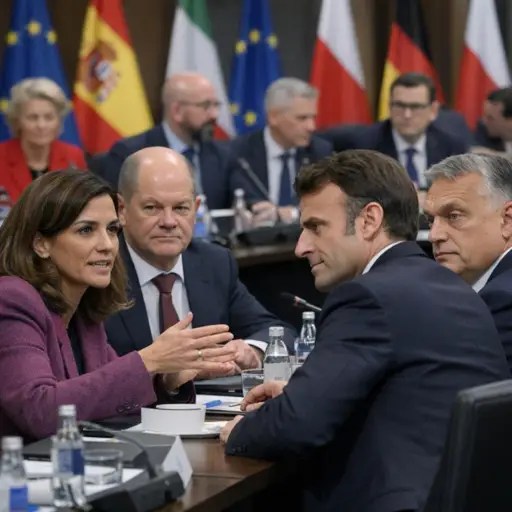
Officials in Berlin, Warsaw, Paris, and several Baltic capitals have emphasized that the cornerstone of Europe’s position remains unchanged: no arrangement should be pursued without Ukraine’s explicit involvement and consent. But leaders privately acknowledge that with battlefield momentum stalled, Kyiv’s leverage has weakened, increasing the temptation in some quarters to explore alternative frameworks for halting the conflict.
According to European sources briefed on the recent U.S.–Russia contacts, the discussions have focused on practical de-escalation mechanisms rather than territorial or political concessions. Still, the lack of visible progress on Ukraine’s core demands—including long-term defense guarantees, sustainable military financing, and protections against renewed Russian aggression—has amplified worries that the diplomatic process may be drifting away from Ukraine’s stated goals.
Some European officials also point to internal political pressures within Washington. With policymakers balancing global crises and legislative uncertainty, there is growing speculation that the U.S. may be seeking a pathway that reduces direct American exposure without committing to the extensive, multi-year security architecture that Kyiv and many European states consider essential. European leaders argue that such a shift—if real—would come at precisely the wrong moment, potentially giving Moscow the impression that Western resolve is weakening.
In Kyiv, the reaction has been cautiously restrained. Ukrainian officials say they have received assurances from Washington that all U.S. discussions with Moscow are coordinated with Ukraine and anchored in the principle that no agreement will be explored without Ukrainian input. Yet some Ukrainian policymakers express frustration at the slow pace of progress on security guarantees and reconstruction commitments from Western partners, noting that the country cannot be expected to negotiate from a position of vulnerability.
The complexity of the moment is further compounded by the humanitarian situation. Major international organizations report that millions remain displaced, infrastructure losses continue to mount, and Ukraine’s energy grid—while more resilient than in past years—remains vulnerable to renewed attacks. European governments argue that any diplomatic framework must include robust protections for civilian infrastructure and accountability mechanisms for violations of international law.
Despite the growing unease, there is no indication that Europe’s fundamental alignment with Washington is at risk. Officials stress that transatlantic coordination remains strong and that the dispute revolves more around process and transparency than divergent strategic goals. Still, as winter sets in and political calendars shift toward electoral cycles, diplomats warn that the window for a coherent, Ukraine-centered peace strategy is narrowing.
European leaders insist that the coming weeks will be critical. They are pushing for clearer communication from Washington, stronger guarantees for Kyiv, and a reaffirmation that any eventual settlement must reflect Ukraine’s territorial integrity and sovereign decision-making. Without such clarity, they fear that the accumulating diplomatic shadows may embolden Moscow and erode confidence in the collective Western strategy.
For now, the message from European capitals is blunt: secret talks cannot become a substitute for a stable, transparent, and Ukraine-led negotiation framework. As one senior diplomat put it, “Quiet channels have their place, but peace built in the dark seldom lasts.”



 The Tower Post