
Trump Administration’s New National Security Strategy Draws Fierce Criticism Over Immigration Warnings and Fears of ‘Civilizational Erasure’
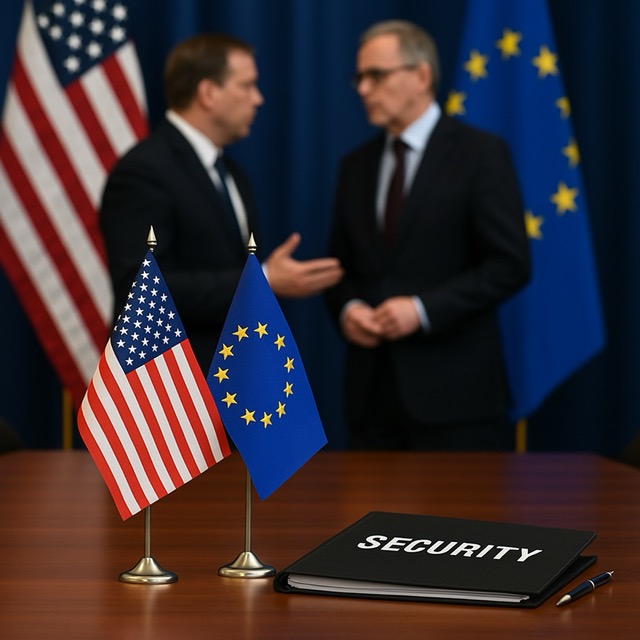
As Washington resets its global priorities, the Trump administration’s newly revised National Security Strategy (NSS) has ignited a fresh wave of tensions across Europe. The document, released this week, delivers one of the most pointed critiques of European immigration policies ever issued by a U.S. government, warning that the continent faces the threat of “civilizational erasure” if it fails to take stronger action on border control and cultural integration.
The strategy marks a sharp departure from previous U.S. approaches, which emphasized multilateral cooperation and European stability as foundational elements of Western security. Instead, the Trump administration’s tone emphasizes national sovereignty, cultural preservation, and stringent immigration enforcement—principles that align far more closely with the political right in Europe than with many current governments.
European leaders reacted swiftly and with concern. In Berlin, officials expressed “deep unease” at the framing of immigration as an existential civilizational threat. French diplomats, meanwhile, privately described the document as “alarmist” and “designed to escalate cultural fears rather than address security realities.” Brussels, already navigating internal debates over asylum reform and external border management, now faces a new complication: an emboldened Washington pushing Europe to adopt harsher immigration stances.
The NSS argues that uncontrolled migration has weakened Europe’s institutions and social cohesion, claiming that permissive asylum policies have created vulnerabilities that foreign adversaries could exploit. While the document stops short of naming specific European governments, it singles out the surge of migrants during the 2015–2016 crisis as a turning point that “reshaped the strategic landscape” and left the continent exposed to demographic and cultural shifts.
“The United States cannot ignore the trajectory of its closest allies,” the strategy states. “For the transatlantic partnership to endure, Europe must commit to preserving the cultural foundations that made Western civilization successful.” Such language is unprecedented in an official U.S. security framework and has fueled accusations from critics that the administration is adopting rhetoric more commonly associated with nationalist or identitarian movements.
European Union officials were especially troubled by references to “civilizational erasure,” a phrase they say echoes extremist narratives and undermines the values of pluralism and inclusion that define the EU project. “It is not the role of the United States to lecture Europe on civilization,” one senior EU figure remarked under condition of anonymity. “This approach risks fracturing, rather than strengthening, the transatlantic alliance.”
The timing could hardly be more delicate. Europe is preparing for elections in several key states where immigration—and the cultural anxieties surrounding it—is expected to dominate debate. Analysts warn that Washington’s new stance may bolster far-right parties, which have long argued that U.S. leadership supports their hardline policies. In Italy, Austria, and parts of Scandinavia, populist leaders were quick to praise the NSS, calling it a “validation” of their long-standing positions.
Meanwhile, NATO officials are attempting to minimize the potential fallout. While the NSS reaffirms America’s commitment to the alliance, it also insists that member states must do more to confront ideological and demographic threats—not just military ones. Diplomats worry that this pivot risks blurring the line between cultural policy and strategic defense, potentially pulling NATO into political debates it has historically avoided.
Critics in the U.S. have likewise questioned the strategy’s tone, arguing that framing cultural preservation as a national security priority marks a shift toward identity-based policymaking rather than evidence-driven analysis. Former State Department officials warn that such rhetoric may alienate democratic allies at a moment when Washington needs strong coalitions to counter rising authoritarian powers.
Yet supporters of the strategy insist that the warnings are overdue. They argue that Europe has struggled to integrate large numbers of migrants, leading to social tensions, political polarization, and the growth of parallel communities that challenge national cohesion. By calling for stronger borders and clearer integration benchmarks, they say, the U.S. is helping Europe confront realities long ignored by its political establishment.
Still, the overall diplomatic impact remains uncertain. European capitals are now weighing how forcefully to respond. Some may opt for cautious public statements coupled with private reassurances, while others—particularly in northern and western Europe—may push Washington to clarify or soften the document’s language.
What is clear is that the transatlantic relationship faces a new test. The NSS not only outlines U.S. strategic priorities; it signals a deeper philosophical shift in how Washington views its role in shaping Western identity and global leadership. Whether this shift strengthens or strains the partnership will depend heavily on the months ahead, as Europe grapples with internal pressures and the United States navigates its evolving global role.
For now, European leaders are watching closely, wary of a future in which cultural debates overshadow shared strategic goals. As one senior diplomat in Paris remarked, “Security is about cooperation, not division. If this becomes a battle over who defines Western civilization, we all lose.”




 The Tower Post